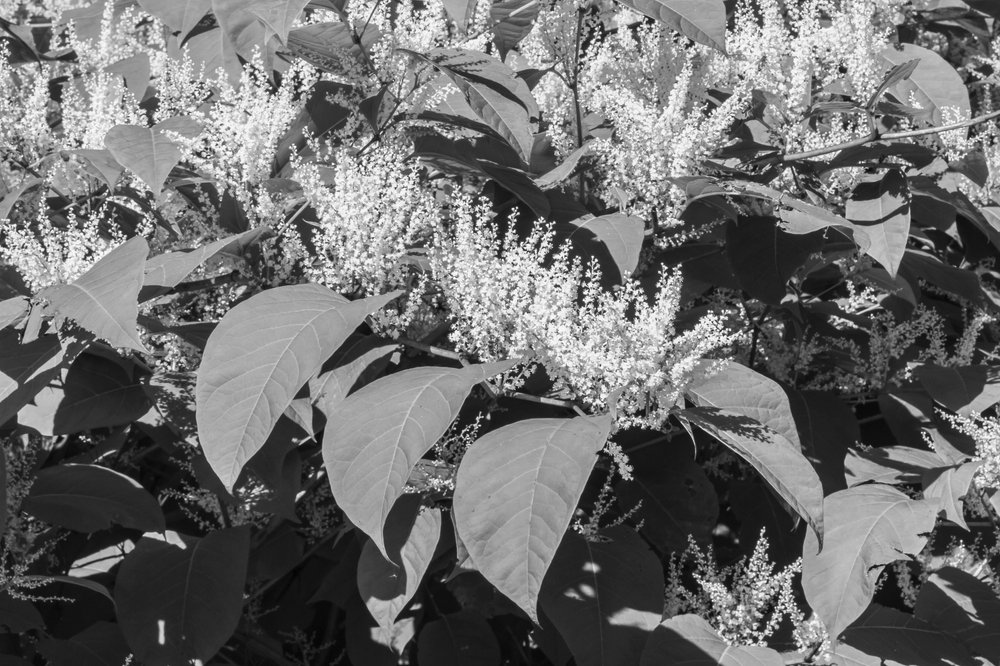
THE Fabian Society’s emblem of a wolf in sheep’s clothing was a confession disguised as a joke. But the wolf is a recognisable predator. The truer, more insidious metaphor is botanical: Japanese knotweed.
This Asian perennial is the perfect analogue. Introduced to Britain by well-meaning Victorians for its ornamental appeal, it shares the Fabian genius for silent, systemic conquest. It does not storm the garden: it infiltrates, its progress measured in decades, not days. Its power lies in a vast subterranean network of rhizomes – a hidden system that can lie dormant for years before erupting through tarmac, fracturing foundations, and choking native life. Sidney Webb, the society’s chief architect, called this method ‘permeation’. It is the politics of the rhizome.
Initially, knotweed appears manageable, even desirable. So too did the Fabians. While Bolsheviks ignited revolution and fascists marched, the Webbs and Bernard Shaw hosted polite salons. They spoke of ‘the inevitability of gradualness’ – a phrase as patient and sinister as a root creeping through a wall. They held no faith in the soil of democracy; Shaw openly desired a ‘eugenic religion’ and Beatrice Webb confessed a profound distrust of the common man. Their goal was not to cultivate a vibrant public square but to manage a controlled, mono-cropped landscape.
Their success is a testament to their method. They drafted the DNA of the Labour Party, the welfare state, and the NHS. Their rhizomatic influence spread globally, taking root in the administrations of Nehru and Nyerere. This is knotweed’s defining trait: it doesn’t need to win a war; it simply becomes the environment, weakening the very structures it inhabits.
The founders understood their target: a conservative Britain built on common sense and self-reliance. Their movement was built for subterfuge, designed to systematically disprove the average Briton’s deepest convictions.
Today, the plant has breached the final wall. Keir Starmer is the first Prime Minister to sprout directly from the Fabian executive. He is not a charismatic weed, but the ultimate expression of the knotweed’s character: structural, grey and inexorable. His government is not an ideological revolution; it is a managerial infestation.
Knotweed’s danger is not merely its aggression, but its toxicity. It exudes chemicals that poison the soil for competitors. Fabianism possesses a similar toxin: an obsession with control, administered as compassion. Its language of ‘fairness’ and ‘managed migration’ is a herbicide aimed at organic, human freedom.
Observe the new approach to immigration. The flamboyant Rwanda scheme was a clumsy, foreign weed-killer. Starmer’s ‘Border Security Command’ and digital ID proposals are the knotweed solution: a bureaucratic rhizome designed to monitor and manage human movement at the root level. His warning of an ‘island of strangers’ is the political equivalent of poisoning the soil to ensure only approved, manageable species can grow.
It is the fulfilment of H G Wells’s description of the Fabians as an ‘elite of samurai’ – now armed with a risk-assessment form and a diversity quota. Mere ‘rebranding’ is like cutting the visible stems of knotweed; the rhizome laughs beneath the soil. The society’s recent response to scandal – age limits and co-chairs – is a pathetic pruning. True eradication requires a more radical protocol:
• Full Exposure and Mapping (sunlight as disinfectant): The first step is to relentlessly expose the rhizome. A public audit, not of finances, but of influence. Every policy paper, every secondment, every Fabian Society member placed within a Whitehall department, quango, or special adviser role must be dragged into the light. The connections must be mapped and published, revealing the true scale of the infestation. Sunlight is the best disinfectant.
• Legislative Glyphosate (the Anti-Permeation Act): Laws must be passed establishing an unbreachable firewall between partisan societies and the civil service. A ‘cooling-off period’ of at least five years should be mandated for anyone holding a senior role in a political society like the Fabians before they can take a senior civil service or policy advisory role. This breaks the cycle of permeation.
• Cultivate Competitive Flora (revive democratic pluralism): The state, via a philanthrocapitalist fund, should actively fund and support a diverse ecosystem of think-tanks and policy institutes from across the political spectrum. The goal is to break the knotweed’s monopoly. By nurturing a hundred different flowers – from localist groups to liberal and conservative thinkers – the soil becomes resistant to any single, monocultural takeover.
• The Orwellian Gardener (vigilant public discourse): Finally, we must become gardeners of liberty, armed with Orwell’s spade. His life’s work was a warning against this velvet totalitarianism. We must reject the managed language of ‘gradualness’ and ‘permeation’ and call it what it is: an anti-democratic coup by the committee. We must champion messy, argumentative, and truly representative democracy over the silent, grey dominion of the expert.
The Fabian Knotweed will not die easily. It has spent a century digging in. But to accept its dominion is to accept that the British state is no longer a foundation for free life, but a structure owned by a silent, strangling vine. The choice is between being a managed plant in their garden, or a citizen who reclaims the soil.
This article appeared in Country Squire Magazine on September 30, 2025, and is republished by kind permission.