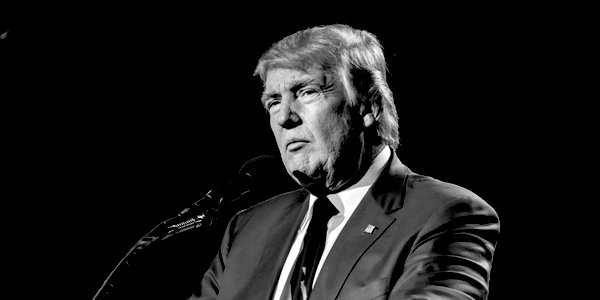
HAVING not long ago urged Ukraine to fight on and not hand over territory, and suggested that European countries should shoot down Russian aircraft and drones in their airspace, President Trump appears to have made yet another policy U-turn. His most recent utterances have returned to his earlier position, that Ukraine will have to give up its occupied territories and strike a deal to end the war – which will be on Putin’s terms. Nor will Ukraine be given long-range Tomahawk cruise missiles, capable of striking logistic installations, military depots and factories deep inside Russia. What is not stated is that the use of cruise missiles would be possible only with American targeting data.
What are we to make of this? What follows is, I must tell my readers, informed guesswork. However, the clues lie in Trump’s ambitions to establish a legacy on the international stage. The first step in this process was the Gaza Agreement, which no one but the US President could have made possible, bringing every Arab state, the EU, the UK, Israel and Hamas to a position where an deal could be made and the money promised to implement the reconstruction and development required, subject to the conditions of Phase 2 of the Agreement – Phase 1 being an Israeli withdrawal and the handing over of hostages, dead and alive.
On the wings of this success, it is possible that the President feels that he can use the same stick-and-carrot treatment towards both sides in the Ukraine war to bring about at least a ceasefire, which, as I have noted before, must be the first stage in any peace settlement. The stick for Ukraine is the withdrawal of funds and support such as Tomahawks, but this stick could be magically turned into a carrot if the Russians prove intransigent. The carrot for Russia appears to be territory, although no European country would ever recognise Russia within such boundaries, as Finland’s President made clear in a superbly informed, cogent and clearly delivered interview recently. The stick is yet to be produced, but it could include further sanctions, the seizure and loan of frozen Russian assets to Ukraine and the resumption of other aid.
Would this work? So far, every escalation by the West has been met with a countermove from Russia. However, several things have changed. First, the Russian economy is not doing well – its GDP is smaller than that of Italy, and most European countries have cut their reliance on Russian oil and gas by 80 per cent, with the exception of Hungary and Slovakia. Secondly, the Russians are no longer advancing into Ukraine but edging forward at best. Last, Putin as a strategist has so far failed: he has failed to divide Nato, failed to divide Europe, failed to prop up his surrogates in Syria and failed to conquer Ukraine. Offering Putin the chance to emerge with some sort of strategic result might just be enough. The difficulty here is the Russians’ legal moves to incorporate the occupied territories into Russia, thus making them non-negotiable, which has painted Putin into a corner from which he cannot emerge undamaged.
On balance, therefore, the likelihood is no deal on Ukraine, which will anger President Trump and perhaps produce yet another U-turn. The likelihood of Phase 2 of the Gaza Agreement ever being achieved is also, to me, unlikely as it is not in the long-term interests of either Israel or Hamas. Hamas will never disarm, it cannot – its declared objective is the destruction of Israel and the murder of every living Jew. This Israel can never tolerate. Having got its hostages back and faced with a resurgent Hamas, reinforced by captives released from Israeli custody under Part 1 of the Agreement, there will be immense pressure to finish the job. Given its track record, Hamas will hasten this direction of travel by some act of extreme violence. In which case, President Trump will be called on to honour his pledge: that if Hamas does not disarm, it will be disarmed by force.