RACHEL Reeves, our Chancellor, has much to ponder ahead of her Budget next month.
Larry Summers, an economist, noted a few years ago that the country was ‘behaving like an emerging market’. He was talking not about rape gangs, shoplifting, or burglaries, though he might have thought it. He was referring specifically to our financial situation.
Professor Jagjit Chadha from the National Institute of Economic and Social Research thought the description inaccurate. Such countries generally move forward.
‘We are going the other way,’ he said. Great Britain is a ‘submerging market,’ he added, without quite capturing our situation.
Our fall into the quagmire of the deepest self-inflicted mediocrity has few historical precedents.
The British establishment, backed by a cocksure expert class, dismantled the only European country to have survived World War II with its legitimacy intact and enhanced.
But change was wanted. So out with Burke; in with Progressivism.
Rather than look to the past as a cautionary tale in which Nemesis is predestined to catch up with Hubris, our expert class decided to force its erasure, better to enforce the changes their theories demanded on an unwilling and tradition-bound population.
Our country would ignore thousands of years of accumulated understanding and knowledge and live on the cultish belief that ‘this time is different’.
Everything was thrown upside down. Theft became good; women, men; borders and flags ‘racist’; aggression, victimhood; our culture, forged in the crucible of a perilous history, of no more value than that of countless others, mostly failed ones; and debt, wealth.
While the re-ordering of our inherited moral view of the world was taking place, the country accelerated towards a wall of irrelevance—financially destitute, morally broken, and societally lost.
On the economic front, our national debt rocketed by over 500 per cent to close to £3trillion in the 20 years to 2025, with virtually no productivity gains to show for it in that period.
Our debts now equal our output. It is set to get much worse as over half our population, native or imported, receive more in benefits than they pay in taxes.
Growth, if any, was fuelled by mass immigration and government spending.
Andrew Bailey, Governor of the Bank of England, said at a press conference that the situation ‘goes back to four or five years actually’.
He was being too circumspect, trying to hide, perhaps, his and his institution’s role in the matter.
Indeed, much of the last 20 years was a fiscal sleight of hand, the sobriquet for which was Quantitative Easing.
The Treasury printed debt that the Bank of England bought, much as a cat eats its own vomit.
The Bank of England ‘hoovered up £875billion’ of government bonds between 2009 and 2021 to support the United Kingdom, artificially keeping interest rates low.
Quantitative Easing became a comfort blanket to be reached for whenever political expediency demanded it. With time, it turned into a tic.
With each new ‘programme’, the credibility of Sterling and our combined wealth took a nosedive.
Among the many distortions money-printing brought, alongside currency devaluation, was the conveniently seductive idea, circulating in lofty places, that governments could spend money with gay abandon, without consequences.
The money-printing Rubicon was crossed in the aftermath of the Lehman’s bankruptcy in September 2008.
In so doing, the debt constraint was removed.
Our leaders never looked back.
While before the 2008 crash ‘balancing the books’ between revenue and expenditure was a fundamental requirement, afterwards it just became a superfluous talking point.
The solution to a debt crisis was solved by increasing dependency on debt, impoverishing most in the process.
History and her lessons were ignored.
Destroying Britain’s long-term credibility and its currency, Gordon Brown, Prime Minister at the time, earned praise from the usual suspects at the Economist and the Financial Times for saving the world from a banking collapse. He did so by flooding the world with printed money.
Where he went, playing funeral marches on his flute, many followed.
By entering the Quantitative Easing games and supporting failed financial institutions, he politicised finance and sounded the death knell for Britain and Europe in the world.
Unable to change its ways, hooked on easy money, and blind to the loss of credibility Quantitative Easing engendered, he accelerated the transfer of economic power from West to East, applauded by experts.
Before earning his laurels as the Saviour of the World, he was lauded for selling much of Britain’s gold reserves.
The idea, supported in the hallowed circles of the well-educated, was to diversify into interest-bearing assets such as government bonds and currencies with ‘the proceeds’ to be ‘reinvested into liquid securities’, as Elisabeth Dellinger, a portfolio manager at Fisher Investments, wrote in a note last February.
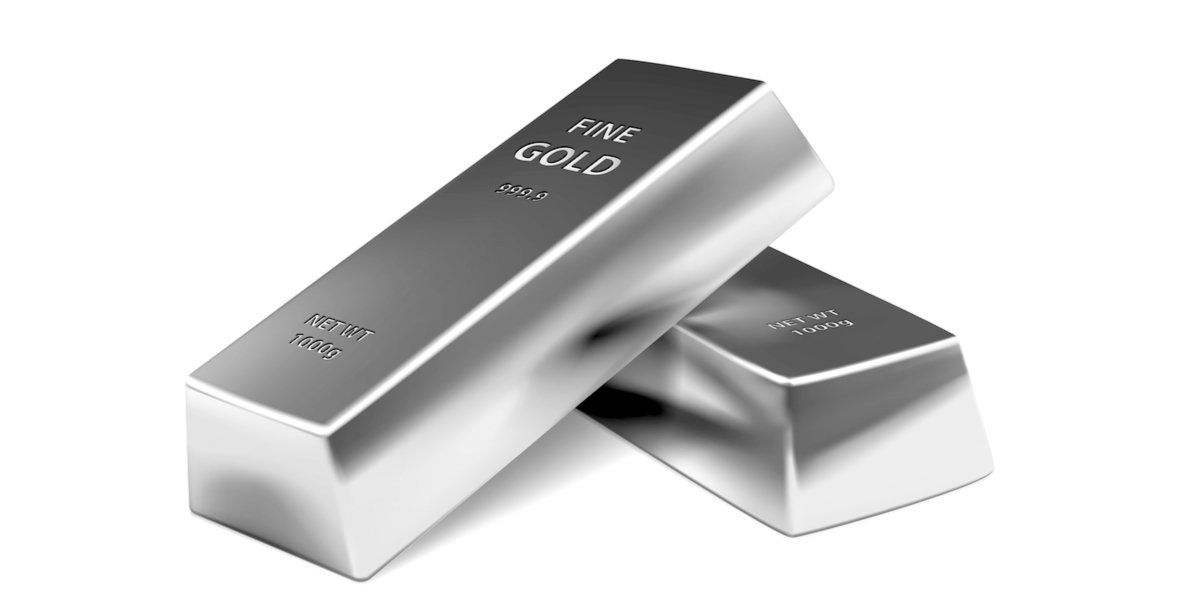
He sold 394 tons of our gold for $3.5billion, or $275 per ounce, between July 1999 and March 2002, at a 20-year low, now remembered fondly by traders as ‘Brown’s bottom’.
Gold today, at around $4,200 an ounce, is 15 times more expensive than it was then, reminding everyone that scarcity and value go hand in hand.
It could easily keep its upward trajectory, not least because central banks around the globe are holding ever-increasing amounts of the metal as printed money loses a credibility it should never have had.
Be that as it may, Britain’s GDP per capita in gold terms is 12.88 ounces today; it was 101 in 2000. From that perspective, we are at least ten times poorer now than then, something many of us feel deeply.
The story of gold and its comeback is indicative of a failed experiment in fiat currencies, based on the odd notion that one should trust governments with fundamental stores of value.
Sterling has fallen by 99.5 per cent against gold since 1971; a plunge matched by and linked to its loss of credibility around the globe.
Rachel Reeves, though, has a plan, to be revealed in her autumn pronouncement.
Spoiler alert: It will be more of the same – tax, spend, and open borders.
Britain is up the creek without a paddle.
In our kingdom, those who see are run by the self-righteously blind.
This article appeared in Country Squire Magazine on October 22, 2025, and is republished by kind permission.