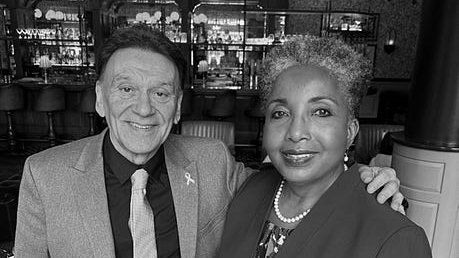
I RECENTLY had the privilege of interviewing Dr Carol Swain ahead of her appearance at the Cambridge University Union, where she opposed the motion ‘This House Believes Black Lives Matters’ Intentions Were More Important Than Its Methods’.
Dr Swain is one of America’s most respected conservative scholars, a woman whose life embodies grit, faith, and a fearless commitment to truth. Born in rural Virginia in 1954, the second of 12 children, she grew up in abject poverty, left school early, married at 16 and became a mother at 17. Yet against all odds, she earned five university degrees while working full-time and bringing up a family, eventually earning tenure at Princeton and later serving as Professor of Political Science and Law at Vanderbilt University.
Her seminal 1993 book Black Faces, Black Interests: The Representation of African Americans in Congress broke with the prevailing orthodoxy of racial politics. It argued that genuine representation transcends race, a message that infuriated progressives but won widespread acclaim, including citations in US Supreme Court decisions.
The book resurfaced 26 years later when evidence emerged that Harvard President Claudine Gay, who had long opposed Swain’s views, had plagiarised portions of it in her doctoral thesis. The plagiarism scandal, coupled with Gay’s handling of anti-Semitism on campus, ultimately led to her resignation in 2024. Swain chronicled this saga in her 2025 book The Gay Affair: Harvard Plagiarism and the Death of Academic Integrity, which exposes not only Gay’s misconduct but the deeper rot of academic corruption and ideological conformity within elite universities.
In our conversation, Dr. Swain spoke candidly about her journey through academia, and the price of being a conservative black scholar in a system dominated by progressive dogma.
As an example of her PhD research findings (which were the basis for her book Black Faces, Black Interests) she says: ‘If it was a black representative of a white district that person always had a white legislative assistant, but for white representatives of black districts it was the opposite – always a black legislative assistant.’ About the book she says ‘People would tell me, “You can’t tell your race by reading your book”. Well, why should you be able to tell my race by reading my book?’
Swain earned early tenure at Princeton, rejecting race-based affirmative action for a merit- and means-tested approach. That refusal to be boxed in by identity politics made her a target. As Swain rose to prominence, progressive academics (both black and white) sought to marginalise her. ‘When progressive white people want to get at black people they disagree with, they elevate a black progressive from within their group to carry out the execution,’ she said. Claudine Gay, she noted, became the establishment’s chosen alternative voice: a ‘safe’ black progressive who would counter Swain’s conservative scholarship.
When plagiarism allegations against Gay finally surfaced in 2023, Swain found herself reluctantly thrust back into the spotlight. Concerns about Gay’s plagiarism had been raised several years before, but Harvard had managed to suppress these stories. But after Gay’s disastrous performance in the Senate hearing on anti-Semitism at Harvard, her work came under much greater public scrutiny. Researchers found that Gay had plagiarised copious amounts from multiple authors including Swain. The intellectual theft was undeniable, and symbolic of a culture that prizes ideology over integrity.
In Swain’s case there were only five relatively small direct instances of plagiarism, but she felt that Gay would have had no thesis without the core ideas in her book, which was never properly cited.
Harvard’s response was telling. Rather than admit wrongdoing, the university dismissed the evidence as mere ‘duplicative writing without attribution’. Swain considered legal action, but Harvard’s lawyers warned that any lawsuit she filed would be frivolous and under copyright law the loser pays. A trial would have cost Swain a minimum of $250,000. She did not want to risk losing a case and being asked to cover Harvard’s legal expenses. Instead, she turned the ordeal into The Gay Affair, a powerful exposé of academic rot and the dangers of politicised scholarship.
Having achieved everything academia could offer, Swain says she found herself deeply unfulfilled. ‘After tenure and promotion, I was miserable,’ she said. She suffered from depression and suicidal gestures. This was eventually overcome once she rediscovered her faith in Christ. Her faith also cured her chronic shyness. Swain’s Christian conviction now anchors her fight against the ideological decay she sees in America’s universities.
She also spoke about the growing backlash against left-wing indoctrination on campus. ‘Major donors are withdrawing funding, parents are losing faith in universities, and many young people are turning to alternative forms of education,’ she noted. ‘People are waking up.’
At the Cambridge Union debate, Swain’s critique of Black Lives Matter was as incisive as ever. She said: ‘Consider the fact that the slogan “Black Lives Matter” is a true statement about the value of Black human life. BLM, the organisation, however, is a different animal. The two are not morally equivalent. BLM stated an intention to end systemic racism and police brutality – worthy goals to the extent these problems still exist – but its methods contradicted these aims.’
Despite facing a largely unsympathetic student audience, Swain and her fellow speakers ultimately prevailed and the motion was defeated by a large margin.
Her victory, modest as it may seem, symbolised something larger: a growing weariness with progressive orthodoxy and a renewed appetite for moral clarity, intellectual honesty, and courage in public life.
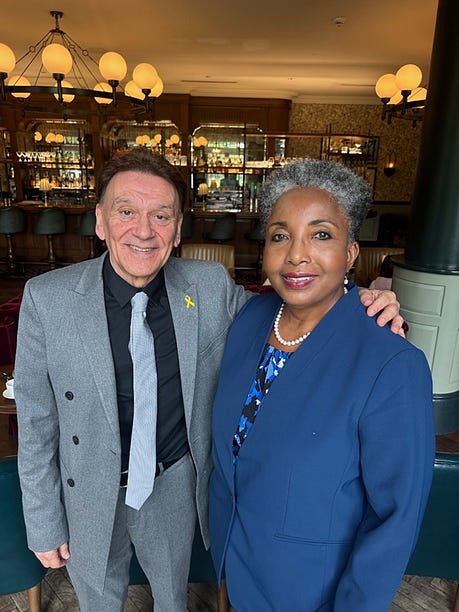
Clips from interview
Securing Princeton post based purely on merit not affirmative action:
Curious reactions to the book Black Faces, Black Interests:
The Gay Affair including the legal battle with Harvard:
‘Replacement theology’ as pushed by the likes of Candace Owens and Tucker Carlson and its impact on increased anti-Semitism:
Finally, concerns about BLM: