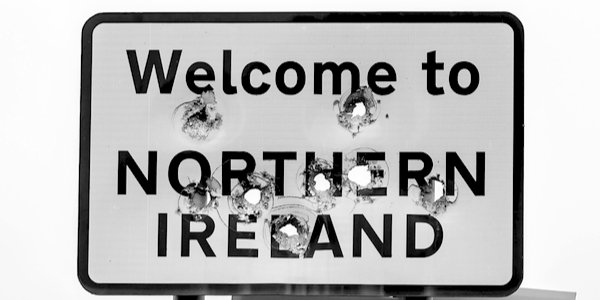
AFTER fifty years, the prosecution of Soldier F has finally fallen on its face this week. The events of so-called Bloody Sunday have been subject to multiple inquiries, including one that took 12 years to complete and cost £400million. The events of that day involved a direct chain of command starting at cabinet minister level and descending through the General Officer Commanding in the Province, down to the Londonderry brigade commander, the Parachute battalion’s commanding officer and company commander. Yet the only person being held to account was this solitary lance corporal.
What no one should doubt throughout this process was that the original civil rights campaign in Northern Ireland was entirely justified: the way that discrimination was used to keep British citizens who espoused the Catholic religion as third class subjects was wrong.
However, as to the events of ‘Bloody Sunday’, the case was tried without a jury using the court model known as ‘Diplock’. These courts were designed to ensure that juries could not be intimidated into returning a particular verdict, and are still used in terrorism-related trials in Northern Ireland. The senior judge in the case, Patrick Lynch KC, did not absolve members of the Parachute Regiment from acts of indiscipline on the day but pointed out that there is no concept of ‘collective guilt’ under the law. He was also clear that the evidence presented by the prosecution fell well short of the standard of proof in a criminal case – that is, proof beyond reasonable doubt.
The nature of this case has highlighted once more the one-sided approach to the events of Bloody Sunday in particular, and to the violent history of Northern Ireland during the Troubles in general. At no point in any of the inquiries were members of the Provisional IRA or Provisional Sinn Fein required to explain their actions on that day; the ‘evidence’ in this case was two statements from other soldiers, which were full of contradictions – and no surprises there, since there are always as many versions of an event as there are witnesses. But this is also an example of how statements made by veterans who tried to co-operate with the processes of inquiry were turned against them and their comrades. There has been an increasing number of cases of veterans being approached by the Police Service of Northern Ireland (PSNI), or by local police forces on the PSNI’s behalf, and put under pressure to attend interviews ‘voluntarily’. Often these requests are based on wholly false information.
Until December 2020, there were numerous cases where veterans agreed to be interviewed about matters which, like Bloody Sunday, took place many years ago, and of which their memories were at best patchy. They did so without legal representation: they could not afford it, their regimental associations could not help, and Ministry of Defence policy provided advice only once a caution had been issued. However, to be fair, this situation eventually changed when the MoD, with assistance from regimental associations, did pay for legal assistance to those involved in the Ballymurphy Coroner’s Inquiry. But the more serious result is that veterans who went unaided for a voluntary interview have ended up being charged with an offence for which, if found guilty, they would go to prison. In December 2020, the Army Board agreed that legal aid should be provided in such cases; however, it has been suggested by some sources that other, unidentified, departments within the MoD have insisted that this is not publicised. Natural justice demands at the very least that in all cases where veterans are ‘invited’ to be interviewed, they should be notified of their right to legal aid, and the means of getting it.
And of course, while Soldier F was on trial and others under investigation, terrorist murderers walked free, allowed to do so by Tony Blair’s ‘letters of comfort’. , Following this tradition of betrayal, Labour has already scrapped plans by the previous Conservative administration to offer immunity to veterans. Most recently, Northern Ireland Secretary Hilary Benn and his boss Starmer are attempting to push through the Northern Ireland Troubles (Legacy and Reconciliation) Act, as I have reported elsewhere in this column. In this context, in spite of the failure of this particular attempt to scapegoat one 70-year-old soldier, there will be more prosecutions of British soldiers – but none of Irish terrorist murderers. So much for the Military Covenant, which if Labour thinks it can get away with it will at some point be scrapped.
And what of Soldier F? Potentially, he could bring a case for false accusation against the Government and claim substantial damages for the attack on his reputation and the 50 years of harassment he has suffered. This is only fair: the families of nine of those killed on Bloody Sunday received £75,000 each and another five wounded received £50,000. He may be safe, but there will be other assaults on veterans. I rarely agree with any Tory politician, but Robert Jenrick, shadow justice secretary, is quite right: ‘There are going to be many more prosecutions brought like this because Keir Starmer plans to scrap the protections brought in through the Legacy Act. The treatment of our brave veterans brings shame on our country.’