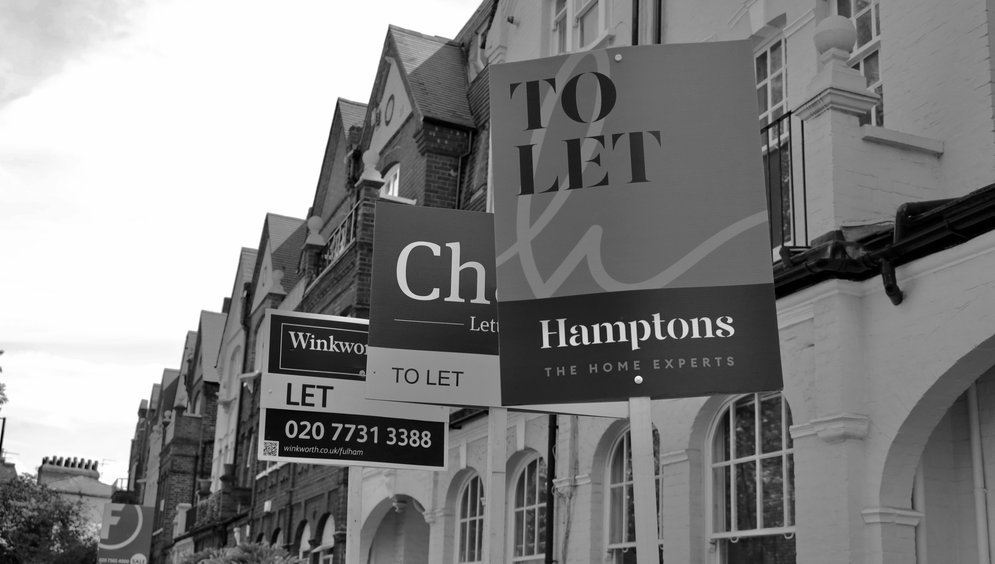
THERE has been a huge fuss over the failure of Rachel Reeves to obtain a ‘selective licence’ allowing her legally to rent out the family home while they live in the Chancellor’s accommodation at 11 Downing Street.
In the part of the London borough of Southwark where the Reeves house is, failure to obtain this licence is considered a criminal offence, punishable by a fine of £30,000 or a year’s rent refundable to the tenants.
I know something about these licences as I was required to get one in 2024 for my Oxford flat which I had successfully let for the previous 13 years.
And although Rachel Reeves, her husband or their letting agents should have ensured that this licence was in place, especially as Reeves was one of the MPs rooting for it in the first place, the licence itself is one of the most useless and unnecessary pieces of legislation ever perpetrated. It achieves nothing, is expensive and the forms are a nightmare to fill in.
The purported reason behind these licences was to ensure that all rented accommodation was safe, not overcrowded and of a suitable standard. But already many licences and certificates are required to ensure this. If there is gas in your property you must have an annual gas inspection and certificate. Then there is the electrical certificate which has to be renewed every five years. On top of that there is the Energy Performance Certificate which lasts for ten years. No reputable letting agency will take on a property without these certificates being up to date.
Then the letting agencies conduct inspections of potential properties before they will agree to take them on their books. Reputable agencies will consider only properties that are smart, clean and well-maintained. They will take photos and draw up floor plans, suggest a monthly rent and then market the property as being suitable for individual occupation, a couple, as a house share or for a family, as the case may be. The agencies conduct all the checks needed; after all, their reputation depends on it. If they became known for marketing substandard properties or for crowding more people into the accommodation that it could comfortably stand, they would soon be out of business.
For the landlord’s peace of mind – after all, it is the landlord who is paying the lettings agency – checks are also conducted on potential tenants. They must be in a financial position to pay not just the rent but also the bills such as council tax and utilities. All this is to ensure that tenancies proceed smoothly, and mostly they do, without any need for a selective licence.
The perceived need for the ever-proliferating certificates – and we haven’t finished yet – is one reason why renters complain that rents are sky-high. All these certificates cost money and if, for instance, your gas or electrical inspection fails, you will have to spend money bringing it up to scratch before the certificate can be issued. The fee for Rachel Reeves’s selective licence has been quoted as £900. Mine cost more: around £1,200. And for what? Absolutely nothing. It was just a load of bureaucratic fuss and bother.
The Renters’ Rights Bill has just become law and it does away with the Assured Shorthold Tenancy arrangement, which in most cases has worked perfectly well, and replaces it with a periodic tenancy, which can be ended by either party in one or two months, rather than both parties having to adhere to a fixed-term agreement. The idea behind this is to give renters security of tenure which in most cases they have had anyway. I have often had the same tenants in my flats for up to five years. And although the fixed-term tenancy was a binding contract, if my tenants wished to leave early for any reason, I allowed them to break the agreement.
Now that the Renters’ Rights Bill is in place, landlords can evict tenants only for a specific reason, such as anti-social behaviour, however that may be defined, or non-payment of rent. But most landlords, myself included, are keen to hang on to good tenants for as long as they want to stay.
In 2007 a law came in requiring landlords to protect tenants’ deposits – usually consisting of five weeks’ rent – in one of several government-approved schemes. Once again, letting agencies insist on this and demand to see the protection certificate. Yes, it’s yet another certificate!
Finally, if you are renting out your own home and there is a mortgage on it, you will have to obtain permission from the mortgage company to do this, as it constitutes a change in occupation. In this case, the mortgage lender will often add an extra 0.5 per cent interest rate on to the monthly repayments.
Now I am not condoning Reeves for failing to obtain a selective licence, especially when she knew perfectly well, as illustrated by various emails, that such a licence was required in her district.
What I am saying is that this case should pave the way for abolishing yet another layer of bureaucracy on rental properties, especially when the only point of these licences is to create more revenue for local councils. There is no possible benefit either to the landlord or to the tenant from this legislation. It’s just interference and needless red tape, and its only result will be to reduce the amount of rental properties coming on to the market, as potential landlords will wonder whether they can be bothered with all the hassle.
As it is, ever more landlords are going over to short-term or holiday lets as in most cases you don’t need to obtain a selective licence for this type of rental.
Selective licences should go the way of Home Information Packs (HIPS – remember them?) They were abolished in 2010 and formally repealed in 2012 as an unnecessary cost and layer of bureaucracy that was hindering the housing market. HIPS have become a bad memory, and selective licences should become the same.