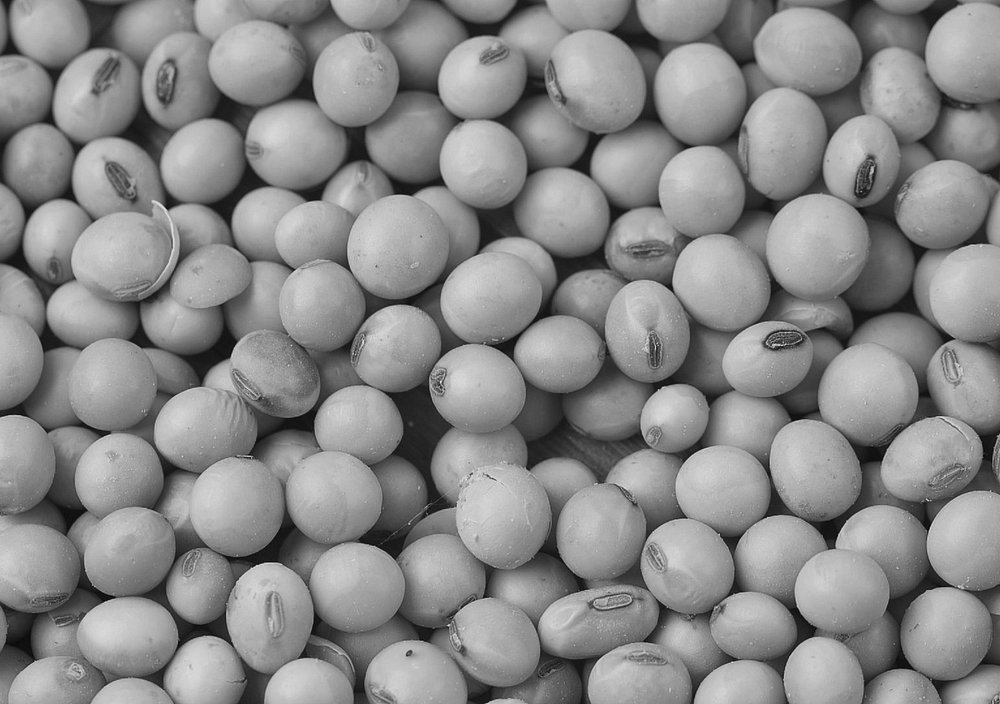
THE soy bean is used largely for animal and fish feed but is also known in our supermarkets for soy ‘milk’ and other derivatives such as tofu and tempeh. Such is the demand for vegetarian and vegan alternatives that soy poses a huge threat to the Amazon rainforest.
Brazil dominates the soy bean market, accounting for around 40 per cent of global production. The crop covers an area larger than Germany, while Brazil clears 500,000-800,000 hectares annually for expansion, equivalent to the size of Cyprus.
As we approach the COP30 climate change conference in Belém, Brazil, which starts on Monday, there is a deep irony that Brazil’s competition authority, CADE, has ruled that the Amazon Soy Moratorium is illegal. This voluntary agreement established in 2006 between major grain traders, environmental groups and the Brazilian government prohibited soy purchases from farms which cleared Amazon rainforest after July 2008.
Over nearly two decades, the world’s most successful private-sector conservation initiative has prevented around 18,000 square kilometres of Amazon deforestation – an area the size of Portugal – while allowing Brazilian soy production to expand dramatically on land previously cleared.
The moratorium became the gold standard for zero-deforestation commitments worldwide, inspiring similar agreements in cattle, palm oil and other sectors. It demonstrated that environmental protection and agricultural expansion could co-exist, providing a model for sustainable commodity production that protected critical ecosystems while maintaining global food security.
The voluntary moratorium was important because of the environmental harm that the soy bean delivers. The yield is mediocre, so it requires a vast amount of land. Soy for oil production is planted in an area of 125million hectares, or almost 30 per cent of the oil crop area worldwide, while supplying 28 per cent of the vegetable oil demand.
Soy production is a major driver of deforestation, especially in South America where the Amazon is coming under increasing strain. The inconvenient truth for soy users is that the clearing of forests for soy production releases greenhouse gases into the atmosphere and contributes to the loss of biodiversity.
Soy production requires a lot of water, and the use of pesticides and fertilisers can pollute waterways. This can lead to eutrophication, which is the growth of algae that can deplete oxygen levels in the water and kill fish and other aquatic life. It also requires a lot of water to grow. This can be a particular problem in areas where water is already scarce, such as in the US and the semi-arid regions of South America, and that is why the Amazon rainforest is chosen for its production.
The production of soymeal and soy oil, which are used for animal feed and biodiesel respectively, is particularly emissions-intensive, making it a significant source of greenhouse gas emissions.
The production can lead to the loss of biodiversity, as it often involves the clearing of natural habitats. This can have a negative impact on wildlife, as well as on the people who depend on these ecosystems for their livelihoods. The use of pesticides and fertilizers in soy production can have a negative impact on the environment. These chemicals can pollute waterways, harm wildlife, and contribute to the development of antibiotic resistance.
The impact on communities can also be harmful; the expansion of soy production can lead to the displacement of people and the loss of traditional livelihoods. This can be a particular problem for indigenous peoples, who often depend on forests and other natural habitats for their survival. While it can create jobs and boost economic growth in some areas, it can also lead to the displacement of people without their agreement.
Why is there such demand for soy? China is the world’s biggest importer of soy, accounting for 73 per cent of Brazil’s total soy bean exports by value. Spain is the second-largest. In part because of its poor yield, the daily expansion of soy farming in Brazil totals 3,836 hectares per day (around three times the size of London’s Heathrow airport) to meet growing demand as a supposedly environmental friendly alternative to meat. Yet paradoxically, soy creates its own environmental scar on the face of the Earth.
As ever with the annual United Nations climate change conference, hypocrisy is self-evident, and it’s not just the untimely ending of the soy moratorium. COP30’s core themes are ‘preserving forests and biodiversity’ and ‘climate justice’ – but to stage the event an eight-mile highway has been cut through the rainforest so that 50,000 disciples can be driven from the airport to the venue. Others such as the Prince of Wales and Sir Keir Starmer will no doubt use helicopters to avoid the embarrassment (having flown by private jet to Belém airport).
In his 2023 inaugural speech, Brazil’s President Lula said: ‘Our goal is to achieve zero deforestation in the Amazon’ – yet this highway was built under his watch. While Brazil calls it ‘sustainable infrastructure’ with wildlife crossings and solar lighting, environmental scientists call it ‘ecological destruction disguised as conference logistics’.
This highway represents perhaps the most visually striking symbol of climate hypocrisy in modern history: destroying the ‘lungs of the Earth’ to host a conference about saving the planet. Every delegate will drive over cleared Amazon rainforest to attend discussions about preventing deforestation. The project perfectly encapsulates the gap between climate rhetoric and action as Brazil markets itself as an environmental champion.
Only at a climate change conference would 50,000 world leaders and climate activists use a highway built through destroyed Amazon rainforest to attend a conference about ‘protecting forests’.
This article appeared in Global Britain and is republished by kind permission.