THE Chinese Book of Prophecies comprises two ancient texts, I Ching (Book of Changes) and Tui Bei Tu. The Zhou dynasty texts dating from the 9th century BC makes predictions about China’s future. The 46th chapter predicts the demise of paramount leader Xi Jinping at the hands of a warrior carrying a bow. The highly superstitious Xi is likely to have taken note. Fortune tellers have been quick to point out that General Zhang Youxia’s name includes Chinese characters for the word ‘bow’. Zhang is the man who, in 2024, launched the secretive military coup that many China watchers believe has defenestrated Xi Jinping.
The I Ching prophecies seem to have come to pass. If evidence were needed of Xi Jinping’s diminished power, the last few weeks, culminating in his ‘trade deal’ meeting with President Donald Trump, have provided ample proofs – rare in the opaque world of Chinese politics. On the last working day before the Chinese Communist Party’s (CCP) 4th Plenum, the Ministry of Defence published the names of nine top generals who had been arrested, criminally indicted and expelled from Politburo membership and the party. Most importantly all nine were Xi Jinping loyalists.
The purged generals were accused of ‘seriously violating party discipline and are suspected of serious duty-related crimes involving an extremely large amount of money’. As well as corruption, the PLA Daily (People’s Liberation Army) more than hinted at treason: the generals’ actions, it wrote, ‘seriously undermined the principle that the military must be loyal to the CCP.’ These are most unusual charges.
Some sources have suggested that Xi’s closest military allies, Generals He Weidong (2nd Vice Chairman of the Central Military Commission (CMC) and Miao Hua (CMC’s political work department) were discovered to have been building what was in effect a private army close to Beijing under Xi’s direct command. No wonder then that General Zhang, having fallen out with Xi, took the opportunity of Xi’s stroke in 2024 to protect himself and the party by ridding the army of his loyalists.
The 4th Plenum of the 20th National Congress of the CCP that followed was slated to have economic policy as its main theme, setting the agenda for the 15th five-year plan slated to start in 2026. This may have been the official agenda, but was it the main agenda?
Some commentators have compared it to the 3rd Plenum of the 11th National Congress in 1978. At this seminal meeting, two years after the fall of Mao Zedong, hardcore Maoism was dumped. Behind closed doors (Plenums are always held in absolute secrecy) Deng Xiaoping, supported by the army, argued and won the ideological battle; his pragmatic concept of a ‘free market with socialist characteristics’ subsequently laid the foundations for China’s astonishing economic advance.
It is an economic advance that has foundered under Xi Jinping; in his 13 years in power, totalitarian Maoist ideology has been prioritised over economic pragmatism. The result has been a collapse in foreign direct investment, a rise in youth unemployment to nearly 20 per cent and a dramatic slowdown in economic growth.
At the Plenum which ended on October 23, it is rumoured that Xi Jinping’s de facto removal from power was formalised. It is even suggested that he resigned as a quid pro quo for the dropping of an investigation into the suspicious death of Xi’s former premier, Li Keqiang. If he really has been politically neutered, why is Xi Jinping still the official General Secretary of the Party, and why was he allowed to meet Trump last week? The answer is the preference of the party elders that the party should at least preserve a veneer of unity and constitutionality. They seem therefore to have chosen the ‘Hua Guofeng’ model of CCP power transition.
In 1976 Hua Guofeng was chosen by Mao as his successor. Hua’s immediate problem was how to deal with the ‘Gang of Four’, the name given to the ultra-leftists led by Mao’s fourth wife Jiang Qing. The members of her quartet wanted to continue the depredations of the Cultural Revolution. To curtail this catastrophe Hua allied with Wang Dongxing, Mao’s head of security, and Ye Jiangying, vice chairman of the Central Military Commission (CMC). They arrested Qing as she entered the Zhongnanhai government compound on October 6, 1976. The Gang of Four were locked away.
Thereafter the army backed Deng’s reformist agenda. After the third Plenum Hua Guofeng, a hardline Maoist, kept his titles and remained a figurehead leader, but was gradually sidelined. Covertly Deng replaced him as paramount leader and held the reigns of military power as head of the CMC; meanwhile Hu Yaobang became the shadow general secretary of the party.
According to the Xinhua News Agency, on June 30 this year the CCP announced the creation of the lugubriously named Central Party Decision-Making, Deliberation, and Co-ordination Body (CPDDC). It seems likely that this organisation was created to bring ‘the Elders’ such as former premier, Wen Jiabao, back to the political centre. A similar council – one could describe it as a Chinese Areopagus – was established by Deng Xiaoping in 1982 as a means of bringing the party Elders, mainly China’s red aristocracy, back to power. For the time being, probably until the next CCP National Congress in 2027, the CPDDC would appear to have superseded the Politburo’s Standing Committee.
So, who is running China day to day? Rumour has it that former vice-premier Wang Yang, long considered to be a future general secretary candidate, is the new de facto paramount leader. Long considered to be a future CCP general secretary candidate, he was passed over in the Xi era because of his aggressively liberal-reformist track record. It is thought that Wang has been brought out of retirement by the party elders to quarterback Xi Jinping. Wang Yang, whose visibility suddenly rose in the Chinese media during the summer, is expected to fulfil the shadow power role that Hu Yaobang played in the late 1970s.
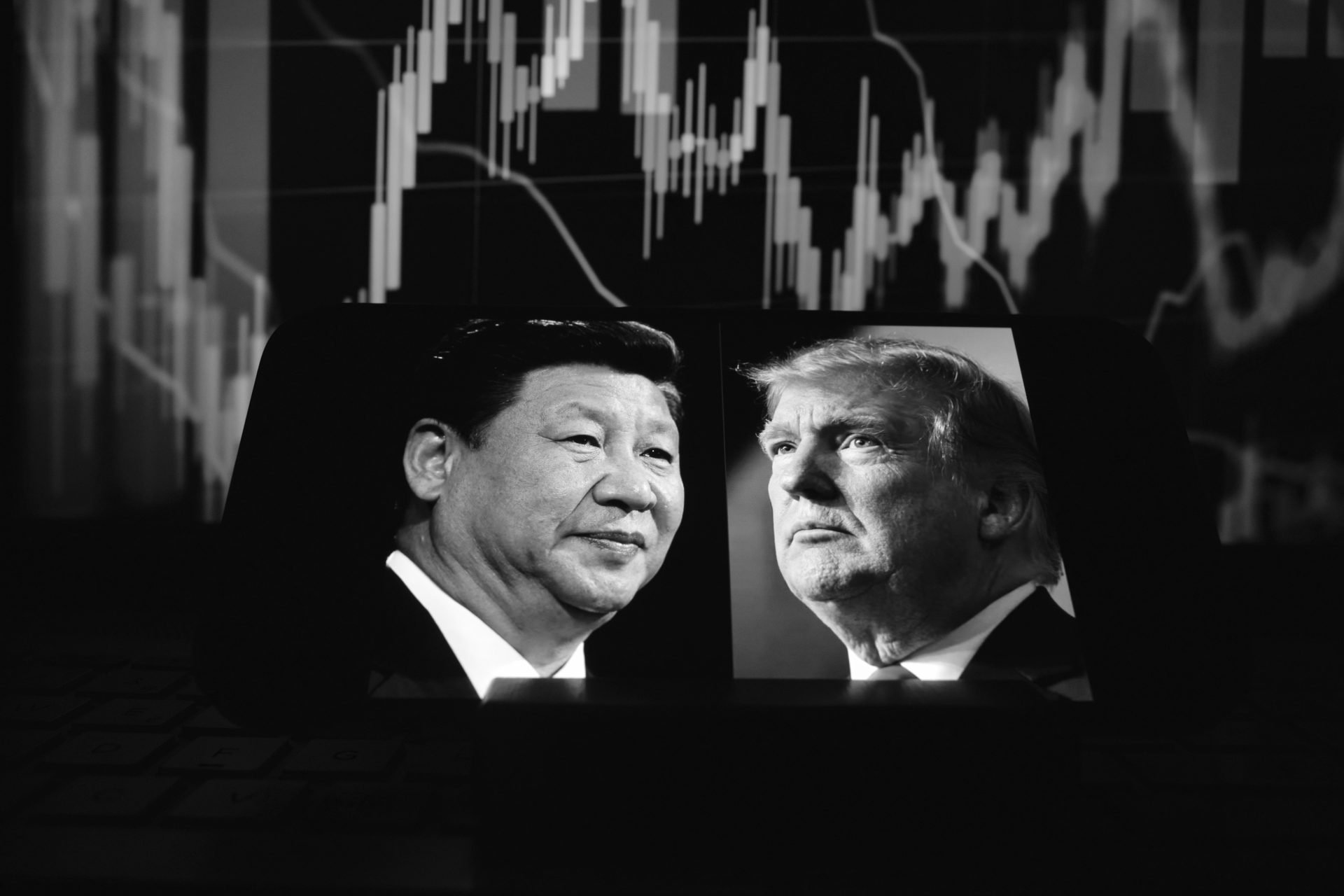
Last month’s meeting between Xi and Trump should be understood in the context of this hidden transfer of power. Contrary to the view of most legacy media worldwide, that the trade deal announced by the two leaders was a ‘nothingburger’, it was in fact a significant victory for the US.
Reformists in the Chinese government are likely to have been engaged in backdoor discussions with the Trump administration for some months. The fact that Trump’s meeting with Xi lasted just two hours, half of the allocated time, suggests that the announced deal was pre-packaged. Xi’s role at the meeting was merely ceremonial.
De-escalation of the increasingly tense relations between China and the US during the Xi period will have been a priority of the reformers. The Trump trade deal suggest that this has been achieved. The pull back on Chinese rare earth magnets exports ban is a key US gain. It gives times for rare earths to be procured by America from other sources. As well as increasing Australian supply, the Department of Defense has bought a 15 per cent stake in MP Materials Corp to finance an increase in production of their Mountain Pass Mine in the Clark Mountains in eastern California. In addition, China has promised to buy US$50billion of American agricultural products, has agreed to clamp down on fentanyl exports to the US and will enforce US intellectual property and patents. China has won little in return apart from a reduction in US tariffs from 57 per cent to 47 per cent, still much higher than China’s 32 per cent tariffs. China’s gains amount to little more than face-saving.
Stock markets immediately reacted positively. Trump, in typically ebullient mood, described the Xi meet as a 12 out of 10. But even influential hedge fund manager Bill Ackman concluded that the Trump deal was ‘an important win for democracy, capitalism, and sanity’. Optimistically, last month’s trade deal may be the first step taken by the restored reformist powers to the liberal path outlined by Deng Xiaoping in 1978. Eventually the neo-Maoist rule of Xi Jinping may come to be seen as short-lived aberration.