GENIUSES make the vital breakthroughs that are the engines of the growth of civilisation. Without them, there would have been no Industrial Revolution, no computers, and you simply wouldn’t be reading this.
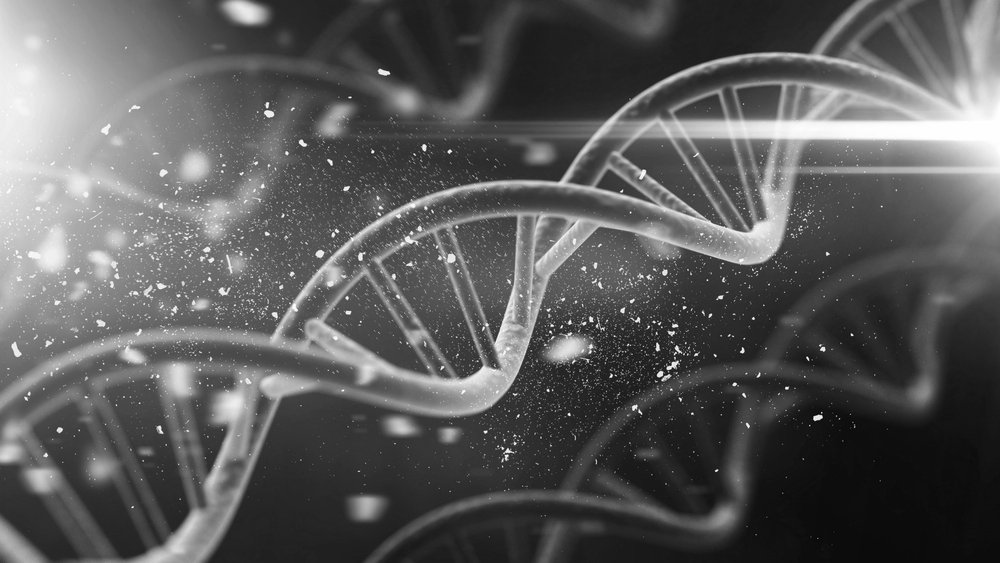
Most would admit that James Watson, who died on November 6 at the age of 97, was a genius. He discovered the structure of DNA, for which he was awarded a Nobel Prize, and the consequences of this have been enormous in terms of everything from targeted cancer therapy to the solving of crime. But few would admit that he may be one of Western civilisation’s last geniuses.
In 2007, Watson made some controversial remarks about the relationship between race and intelligence. As I discuss in my recent book, which happens to be the final biography of Watson, Genius Under House Arrest: The Cancellation of James Watson, Watson was notorious for making such remarks and as recently as the year 2000 they had provoked only an impotent outcry from the shrill guardians of orthodoxy. But by 2007, they resulted in his worldwide character assassination and exclusion from public life. This was because, by 2007, the ruling ideology of Woke had achieved mastery over the older scientific criteria of truth and accomplishment.
Watson served as a very public victim; as a warning to others who might be tempted to dissent. If it could happen to Watson, it could happen to you. With the Watson Affair, Western society had changed to the point of inversion: from being broadly supportive of genius, and providing protected niches for those of great accomplishment, to exactly the opposite.
In a society obsessed with ‘feelings,’ and in which the dogma of ‘equality’ is more important than objective truth, those who had the genius psychological type were now targeted. This is seriously dangerous for civilisation because, as I explore in the book, geniuses – with Watson as an archetypal example – are a package deal. They have extreme creative ability as a direct consequence of a difficult personality.
There is abundant research into the psychological nature of accepted geniuses and, in general, of creative scientists who produce original research, in contrast to careerist incrementalists. Scientists, in general, are high in altruism and empathy (Agreeableness), which gives them the humility to learn; they are high in conscientiousness (rule-following and impulse control) and they are mentally stable, which helps them to think straight. They are also highly intelligent within the normal range. This is associated with social conformity, because intelligence allows you notice the dominant set of norms and then force yourself, via effortful control, to conform to them and then to competitively signal them, all the better to obtain social status.
The genius is completely different. He has extremely high intelligence but it is also highly skewed. For example, Watson had superb mathematical and linguistic intelligence but his spatial intelligence was so poor that he couldn’t peel an orange. Likewise, the philosopher A J Ayer never learnt to drive and Einstein frequently used to get lost.
Such people are relatively low in Conscientiousness. This means they can ‘think outside the box’, that they can conceive of what to conformist types is unthinkable. This also means that, academically, they won’t doggedly focus on their area of research. High in a trait known as Openness, they go off on tangents that fascinate them, resulting in very high levels of knowledge and so a greater likelihood that they will find connections between domains and generate original ideas. Studies have found that most geniuses do not make their breakthrough in the subject in which they were formally trained. Watson had a degree in zoology but his breakthrough was in chemistry, in which his training was informal. Darwin had a degree in theology. This low impulse control also means, in some cases, that they can’t stop themselves from saying true but offensive things: they just come out. A friend of Watson’s commented that he had ‘truth Tourette’s’.
Breakthroughs always offend against vested interests, but these people are low in Agreeableness which, as we saw earlier, has two components. If they have autistic traits then they will be low in empathy but very high in systematising and in a desire to make sense of the world. In other words they will be obsessed with truth and this obsessiveness (Watson had various obsessions, including birdwatching) means they can’t give up and they must make sense of things. They will notice small details because they cannot filter out information, and it is with small details that original connections will be observed. Such people will not anticipate the offence they will cause. Watson could not believe the offence his remarks in 2007 precipitated. He was genuinely mortified, concerned what his Democrat parents would have thought of him were they alive.
Of course, low in altruism, geniuses may also be high in psychopathic traits meaning that they don’t care if they cause offence. In fact, they might quite enjoy upsetting the conformists who pretend to be genuinely interested in the truth. In this regard, many friends of Watson were convinced that he took a certain delight in his ‘offensive’ remarks, holding the science guildsmen, who’d achieved very little, in contempt.
Finally, original thinkers are mentally unstable. For them, the world is dangerous chaos, meaning they have to make sense of it or it will send them mad. Optimally high in anxiety, they are, in effect, always thinking, which means that they are more likely to generate connections. In one of his memoirs, Watson wrote openly about anxiety and even depression, and he seemed to have an obsession with unobtainable ‘true love’. Such thinkers rely on intuition, as though the machinery is working in the background until there is moment of breakthrough which reaches consciousness. Watson wrote of his breakthrough as though it were a religious revelation, a literal vision.
Geniuses are very rare. Usually, intelligence is associated with being pro-social. Like Watson, they tend to be born, via unusual genetic combinations, to parents who are highly intelligent within the normal range. In evolutionary terms, they can be regarded as group-selected. In essence, they keep manifesting because it is a good for the group to have an optimum low level of extremely intelligent, moderately anti-social people and it is good because these people come up with inventions that permit the society to flourish, expand and defeat its rivals.
In a society that must fight for survival, the genius’s anti-social traits are a price worth paying for his brilliance. Moreover, he has a kind of a religious commitment to the truth in a context in which Truth is sanctified, in which the aim of science was to make sense of God’s creation.
But what happens if we are so rich, so sure of our survival, that the genius’s offensiveness doesn’t seem worth it? What happens if death is so rare that our evolved cognitive biases aren’t induced, so we stop believing in God and stop believing life has eternal significance? What happens if a time of war and national trauma retreats too far into the past? What happens if, for various reasons – possibly including the increasing influence of women, who Simon Baron-Cohen has noted are far more inclined to put ‘feelings’ over ‘systematising’ – there is a shift towards an obsession with ‘equality’ and ‘feelings’ above all else?
We then have the suppression of the genius type. He is driven out of the universities for offending against Woke dogmas. This impractical man must do practical things, such as search for private funding, so he is less likely to make his breakthroughs or even inspire others to do so. This is why I referred to ‘house arrest’ in the title of my book. Almost to his dying day, Watson had so much to say, so many insights, but he dared not say anything in public. In 2019, when he repeated his 2007 remarks, he was stripped of his titles, totally disowned. So, this genius died under a kind of house arrest.
If we don’t completely overturn and reverse Woke and everything it stands for, geniuses will be suppressed, innovation will be stifled, problems will not be solved and we will, eventually, regress back to a time where computers and reliable electricity are but a memory. In this sense, Watson’s life was of a significance well beyond his discovery of the structure of DNA.