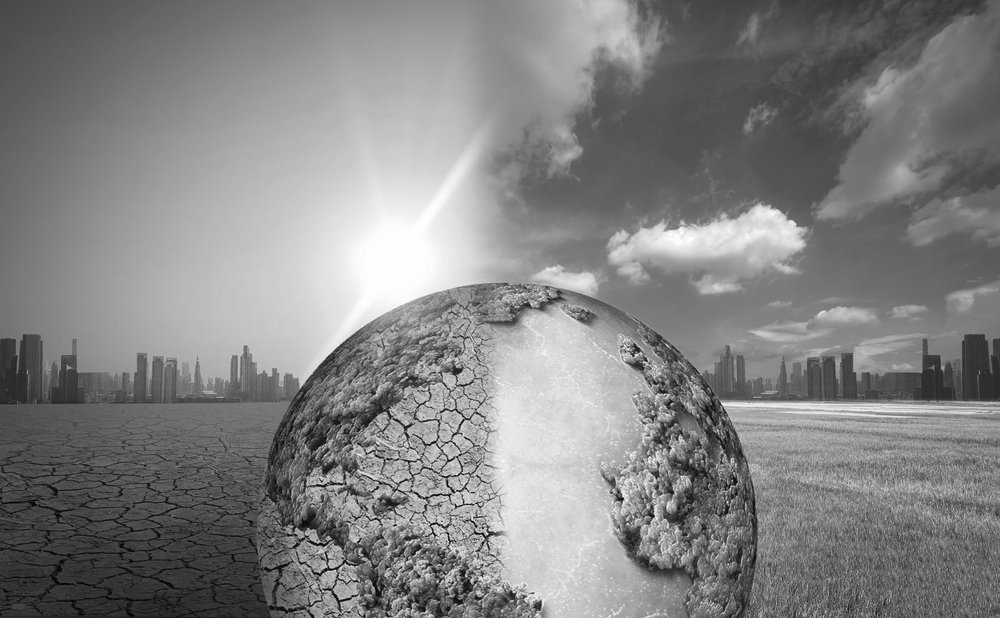
ARE you ready for today? Don’t you know what’s happening? Today is UNESCO’s World Futures Day. ‘Anticipation in an area of volatility’, they say on their website. (Translation not provided.)
Anticipation is rife. World temperatures, one report warned, would rise 2.3-3.4C by the end of the century. Another claimed that level was ‘incompatible with an organised, equitable, and civilised global community’.
From a meteorological point of view, our future is not looking bright. Inherent feedbacks can apparently flip the climate into runaway cooling and even trigger ice ages. Another opinion is that the world is ‘on course for catastrophic warming despite climate-fighting plans.’ If you think it’s cruel to pile these worries on top of the recent budget, then fear not. The remedy will be provided.
Meanwhile the gloom continues. If you’re partial to wine, coffee and chocolate, according to one report the fate of these crops remains uncertain. Concern about them is wasted because we are being told by researchers that ‘the collapse of Antarctica may already be unstoppable . . . which threatens sea levels, ecosystems and climate stability’.
For a real worry you can do no better than to consider the plans of some scientists to dim the sun. Their logic goes this way: (1) The world is warming up because of our greenhouse gas emissions. (2) Emissions have to be reduced to stop a global climate catastrophe. (3) It’s no good waiting for every nation to give up coal, gas and oil. Thirty annual climate conferences (the COPs) with agreements to reduce emissions have had no effect. (4) Therefore (this is the important bit) we must dim the sun.
In the geoengineering world this is called ‘Solar Radiation Management’ (SRM) to make it sound as if they know what they’re doing. If you want to concentrate your climate worrying, focus on SRM. It means dumping aerosols in the high atmosphere to initiate an uncontrollable experiment on the air you breathe.
These techniques, says the Royal Society, ‘would cost several billion dollars per year to implement [and] would have to be maintained over decades’. Decades of summers like that of 1816? Known as the year without a summer because the world shivered and starved after the Tambora volcano erupted so violently it did a natural SRM by dimming the sun.
A recent report said we were in for an ‘extremely dangerous future with warming expected to blow past key limits’.
Many views about our climate future could be summed up as ‘cataclysmic climate change will decimate civilisation’. Bill Gates has another view. ‘Fortunately for all of us,’ he said, ‘this view is wrong . . . It’s time to put human welfare at the centre of our climate strategies.’
Away from climate there’s little consolation. A recent summary of our geopolitical future reckoned that there is a high risk of a Middle East war and a major cyber or terror attack. Conflicts between Russia and Nato and in North Korea were only medium risk. There was one remark that is very apt for the state of the UK: ‘Subdued economic growth and persistent inflationary pressures amid fragile energy security lead to a populist resurgence.’ Yes indeed. Maybe that’s the message Badenoch, Farage, Davey, Polanski et al should be yelling at Sir Keir. Every day.
Now for the reassurance. In 1963 Unilever produced a forecast for 1984, perhaps to remind us that Orwell was writing fiction. Petrol engines, they said, would be replaced by fuel cells. Any remaining railways would have motorways above them on stilts. Aeroplanes would have vertical take-off-and-land, crossing the Atlantic in one and a half hours. They were hugely optimistic and got everything wrong.
By 1984 Clive Sinclair was also looking ahead. ‘By the end of the decade,’ he forecast, ‘manufacturing decline will be nearly complete . . . technical change will virtually remove all employment.’ But he was right in one area: ‘Electronics is replacing man’s mind, just as steam replaced man’s muscle.’
Arthur C Clarke, the science fiction author, is known for his forecast in 1945 of communication satellites. However, he was reported in 1966 as forecasting that by the year 2000 the British motorway system may be completed just in time for it to be obsolete. Cars would run on the hovercraft principle so could cope with rough and uneven surfaces. However, he also forecast that somewhere beyond 2000 cars will be driven by automatic systems far more efficient than any human.
In 1930 the Earl of Birkenhead very bravely wrote a book about the world one hundred years later in 2030. Aeroplanes, he forecast, would rush along at 300mph for up to 500 miles, but they could cross the Atlantic only by way of mid-ocean landing stations. He could therefore see an important future for airships.
Really clever people can produce really bad forecasts, so be reassured that maybe climate doom is not imminent and we may yet survive to a time when we have a government that knows what to do, and does it.
When will that be, I wonder?