WITH Trump, just about everything he does confronts you with a million people getting him wrong and then attacking him for their own lack of understanding.
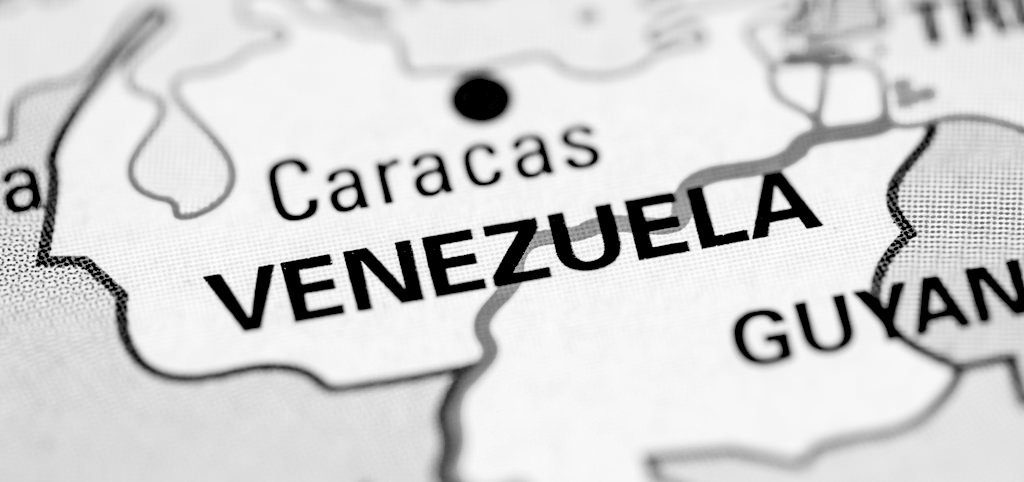
And this is already how the Venezuelan situation is playing out.
On the surface the crisis began with the decision by the Trump administration to target the high-speed boats bringing fentanyl and other drugs from Venezuela into the US. By last week, the US had conducted at least 21 military strikes on vessels in the Caribbean and eastern Pacific. In 2022 73,838 US citizens died from fentanyl overdoses. In 2025 the number has significantly declined, with a saving of around 30,000 lives.
Maybe blowing up drug boats works. Who could have guessed?
Certainly not the usual Trump critics and mainstream voices who have criticised the aggressive intervention strategy as a misuse of military force, a breach of human rights, and of course an illegal action under the rule of international law.
US Defence Secretary Hegseth and President Trump have both been refreshingly blunt in response to such criticisms, arguing that the US is perfectly entitled to engage drug traffickers whose products kill thousands of US citizens each year, even more bluntly asserting that they will kill these traffickers, and citing various legal realities that allow the use of the military and naval forces of the US for the rather obvious military and naval purpose of preventing narco-terrorists backed by enemy nations killing innocent US citizens.
In response, Democrats have been running around saying that a future Democrat-led government will pursue charges against Hegseth as a war criminal and ‘murderer’. On Monday Time reporter Rebecca Schneid wrote: ‘Defense Secretary Pete Hegseth could face criminal liability for a strike on a boat in the Caribbean in September, legal experts have told Time, as lawmakers announced a rare bipartisan investigation of the incident in which 11 people were allegedly killed in two separate strikes.’
The objectivity of Schneid’s assessment can be judged from its slyly hysterical title (‘This is Murder’: Could Hegseth Face Prosecution for Alleged Order to ‘Kill Everyone’ on Boat in Caribbean?) Schneid was following a Washington Post article that alleged a ‘kill everyone’ verbal instruction (which Hegseth and the mission commander have both described as a complete fabrication).
The first thing to clear up is probably this: The Trump administration were absolutely right to take these actions. The cartel intrusion into the US was not ‘just’ a matter of scumbags selling drugs that are dangerous, which of course is bad enough. The organised crime syndicate Tren de Aragua moved its troops on to US soil. Their gang members crossed into the US over Joe Biden’s open borders and did things like going door to door, armed, in US housing blocks terrorising the inhabitants. Since the Trump administration declared Tren de Aragua a proscribed narco-terrorist organisation, federal authorities have detected and arrested 2,711 gang members.
That’s nearly three thousand people who are selling drugs, killing people with guns or knives, beating and raping, and generally posing a threat to innocent citizens. These are violent and dangerous individuals who will fight both the authorities’ attempts to stop them and rival drug gangs.
And every drug delivery from those boats kills US citizens. When the cartel is backed by a foreign power, that’s an undeclared act of war that the US is perfectly entitled to respond to militarily.
All this was directly linked to the regime of President Nicolás Maduro. In April the investigative journalist Emerald Robinson published an expose of ties between the cartel and the Maduro government. Robinson provided evidence for her claims and stated that the Maduro government supplied 300 military intelligence officers who trained the Tren de Aragua cartel gang members in sabotage, espionage and urban disruption. The cartel, whose original headquarters was a Venezuelan prison stormed by government troops in 2024, in effect reached an accord after that where it agreed to serve as a paramilitary wing of the Venezuelan government used to destabilize foreign nations critical of the regime (US Republicans have been highly critical of the Maduro government and its prior leader Hugo Chavez and frequently cite Venezuela as a textbook case of the crippling disasters of a socialist/Marxist dictatorship).
Whether or not one agrees with Robinson’s assessment it’s obvious that the US relationship with Venezuela under Trump is an extremely adversarial one, akin to the Kennedy-era relationship with Cuba. For both governments, the other serves as a monstrous example of everything they despise. For Trumpists, Maduro’s regime is what inevitably follows socialist policy – a descent into economic chaos, extreme poverty, and State tyranny. All these criticisms are accurate. For Maduro, the Trump administration is what every fanatical leftist thinks it is, a ‘Far Right’, ‘fascist’ and ‘imperialist’ boogeyman.
In the recent escalation of these tensions, Maduro posed with the sword of South American revolutionary hero Simon Bolivar, waving it above his head at a military rally while ranting about US imperialism. The gesture, no doubt a heartwarming one so far as many leftists in the US are concerned, clearly did little to abate Trump’s hardening attitude. The Trump administration seem to consider Robinson’s reporting to be much more accurate than that of the likes of Politico, theWashington Post, and other legacy media outfits. And that’s important because Robinson hasn’t just helped the administration determine that the Maduro government used the supply of drugs as a paramilitary strategy against the US nation.
The other big thread of both the reporting and events leading up to recent escalation of tension between the Trump administration and Venezuela goes back to the 2020 election steal. Attention at the time focused not just on ballot box manipulation, missing ballots, ballot harvesting and adjustment of ballots without due observation (all the things witnesses reported happening) but also on Dominion voting machines, used in a huge number of counties. Live testing proved that the machines could be hacked in just two to three minutes (this was demonstrated in a hearing and in one of the electoral fraud court cases). Sidney Powell and others, despite being widely mocked (including by Tucker Carlson at Fox) pointed to passages in Dominion operators’ manuals describing how to adjust the machines to alter results. All this was the kind of stuff MSM ignored and the courts either ignored or dismissed, but large parts of the accusations were completely factual, demonstrated openly, and indeed were warned about by Democrats prior to their sudden adoption of a belief that Dominion machines are somewhere above the Word of God in terms of honesty and incorruptibility.
This reading was of course enforced by Fox settling the case brought against it by Dominion with a massive payout (allegedly on the advice of Mike Pompeo).
Robinson has spent years investigating those events, and the current Trump second term team have been looking into it all too, together with whether similar distortions were attempted in 2024. So what Robinson describes about Dominion’s links to the Venezuelan government, like Tren de Aragua links to the same regime, aren’t old news or already debunked conspiracy theories. They are a part of a pattern of anti-Trump activities which involved both Democrats and Republicans at the very highest levels and which have denied US citizens full democratic choice, secure elections, and even more importantly protection from drug cartels and foreign criminal enterprises. Any legal actions taken against Obama or Biden era senior officials from now on may very likely include the confirmation that 2020 was stolen and that US opponents of Trump entered into arrangements with both a malignly opposed anti-American foreign regime and a criminal and narco-terrorist cartel that regime was using to kill Americans.
The Substack Amuse on X provides a fascinating and helpful summary of Robinson’s investigations that is worth quoting at length here:
‘Much of her thread focuses on Smartmatic and Dominion and their long and complicated history. Robinson points back to 2005 and 2006, when Smartmatic, a company founded by Venezuelan entrepreneurs that had grown rich off contracts under Hugo Chavez, acquired the US firm Sequoia Voting Systems. That deal immediately drew scrutiny from federal regulators because of Smartmatic’s opaque ownership and perceived ties to the Chavez government. Under pressure from a CFIUS [Committee on Foreign Investment in the United States] review, Smartmatic sold Sequoia, and a few years later Sequoia’s assets were purchased by Dominion. The paper trail is clear enough, Smartmatic’s Venezuelan roots, the sale under national security pressure, and the later connection to Dominion. Robinson uses this history to argue that the DNA of the Chavez era election system, including software and design philosophy, migrated into US infrastructure.
‘She also points to more recent evidence of corruption. In the last few years US prosecutors have indicted Smartmatic executives in connection with bribery and money laundering schemes tied to election contracts abroad, including in the Philippines. Independent reporting has documented slush funds, sham consulting arrangements, and unexplained wealth among local officials who championed Smartmatic’s technology. Again, this does not, by itself, prove a particular plot in the United States, but it does show that the firm at the center of Robinson’s story has been credibly accused of corrupt practices in other democracies . . .
‘Robinson’s contention is that the same regime that nurtured Tren de Aragua also nurtured Smartmatic and related election vendors, and that it is a mistake to treat those as separate stories. She points to the indictments of Smartmatic executives for bribery, the long record of opaque ownership structures, and the willingness of intelligence agencies to treat Venezuela’s gang and electoral projects as unified threats when they are investigating narco trafficking, but to treat them as nonsense when they intersect with 2020. Independent reporting does show that federal investigators have taken Berntsen and Rodil’s material seriously in the criminal context, interviewing witnesses and studying documents that tie the Maduro regime, Tren de Aragua, and election technology together. That convergence does not prove any particular scheme in the United States, but it does show that the line between narco state and election tech export is blurrier than many would like to admit.
‘Robinson finishes her thread by connecting these strands to the present. She argues that in his second term Trump has finally absorbed the full picture of how vulnerable US elections became and who benefited. She notes that he ordered a major Republican donor, Harry Sargeant III, a Florida businessman whose firm held lucrative fuel deals in Venezuela, to exit that market. She highlights his decision to designate Tren de Aragua as a foreign terrorist organization and to use extraordinary powers, including the Alien Enemies Act, to treat Venezuelan gang members as hostile foreign operatives rather than ordinary criminal suspects. She mentions reports that US forces helped extract political prisoners from an embassy in Caracas. Whether every tactical detail of those stories is correct, there is no doubt that the Trump administration has adopted a much more aggressive posture toward Venezuela’s hybrid criminal regime than its predecessor.’
(All from From Smartmatic to Tren de Aragua: Emerald Robinson’s Election Fraud Theory.)
So there are multiple explanations of the current rise in tension. A few days ago Trump warned US airlines not to use Venezuelan airspace. Fifteen thousand US troops have been deployed in the Caribbean and near to Venezuela. The troop movements, codenamed Operation Southern Spear, represent the largest US military presence in the region since the 1989 invasion of Panama. Russia’s tourist organisation has advised its citizens to leave Venezuela in a potential signal that the country could not call on Russian support in the event of a conflict.
This is all much bigger than Trump alone. It concerns whether US citizens have a functioning political system that serves them and allows them to vote for who they want as President, or whether the nation is controlled by lawless gangsterism in which the Uniparty and Deep State are allowed to align with enemy nations and foreign drug cartels for their own benefit. Fentanyl deaths alone give adequate cause to target the Maduro regime. The electoral interference via Dominion or via tech-based assaults originating in Venezuela combine with these drug death tallies to provide a powerful and rational explanation of a need to forgo Trump’s general aversion to military action.
But it would represent a massive gamble. If bombing targets in Venezuela fails, or if boots on the ground intervention comes to topple the Maduro regime, then the second term gets potentially mired in the same kind of consequences that its neocon, globalist and Uniparty haters have so often mired their nations in over the last 30 years of failed foreign wars. And there’s the domestic cost – any military action will provoke the same isolationist responses that were used to attack Trump for the assistance his administration has provided to Israel. Both the Establishment drones will attack on the basis of ‘see, he is a madman’ and the genuinely mad and bad paid shills of the ‘MAGA is Dead’ variety will do too, claiming that Trump isn’t the anti-war, domestic focused leader they were promised.
I think Trump retains the best record in the world of opposing unnecessary wars and pointless conflict. If he thinks an engagement or intervention is necessary, it almost certainly is. The neocon constant intervention and regime change playbook was of course mad and deeply corrupt and damaging. But so is the idea that the US can defend itself effectively from foreign enemies by never taking action and never using military force. The bombing run against Iran’s nuclear weapons programme was eminently sensible: a focused, intelligent move against a very large threat. A similar targeted response to the deliberate use of narco-terrorism by an enemy regime in South America could potentially be a very strong and necessary move too.
Either way, I’d bet my life that Trump doesn’t want or intend an extended conflict or anything like the quagmires that the ‘respectable experts’ gave us time and again in the Middle East while taking money from the military industrial complex. The ideal scenario would be to force by threat some kind of Maduro regime public backdown which both ends the flow of drugs and potentially provides evidence of the kind of dirty deals Robinson has laid out in her analysis. If that could be obtained without further loss of life it would be a triumph, but it would need to get past an awful lot of bullshit condemnations from legacy and alternative media first.
In the meantime, anyone who isn’t an abject fool should know that drug trafficking terrorists deserve to be killed, however much Trump opponents seek to portray tattooed murderous gangbangers linked to a foreign dictatorship as sweet innocent babes on fishing or snorkelling holidays.
This article appeared in Jupplandiaon December 2, 2025, and is republished by kind permission.