IT WOULD seem reasonable to consider a country’s fertility rate (FR) as a proxy for optimism about the citizens’ future. If so, the Sudanese, with an FR of 4.1, are optimists compared with the British, FR 1.4. And yet many Sudanese want to exchange warm sunny Sudan for cold wet Britain. How odd.
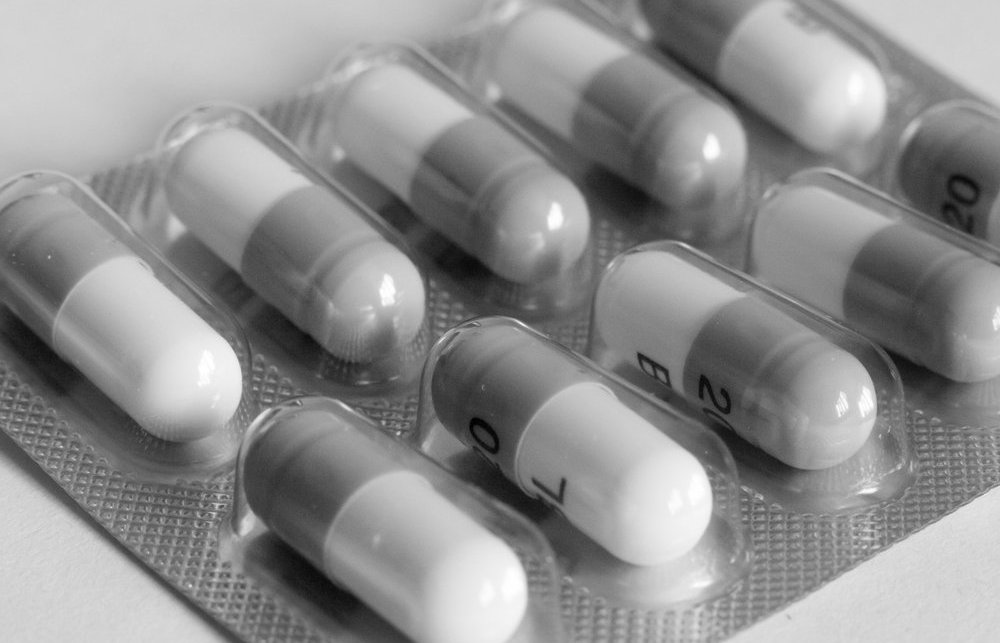
Statistics can be misleading. But it does seem that the British are a pretty miserable bunch. Last year 89million prescriptions were written for anti-depressants; 8.7million patients are on long-term psychiatric drug regimes (often multi-drug). Women are more than twice as likely to be clinically depressed as men.
Perhaps that last statistic reveals something the medical industry doesn’t want to acknowledge. Women are more likely to share their troubles; men bottle it up. Does that mean more men ‘should’ be on the happy pills, and that actually the number on long-term drugs should be around 13million? That would be more than 30 per cent of the working-age population.
An alternative explanation suggests itself: that the rate of diagnosis and prescription is grotesquely inflated. The very term ‘clinical depression’ suggests that a clinician can make you happy. Anyone not under the influence of drugs would scoff at the idea.
In fact, even the experts know very little about what goes on inside people’s heads. The most devoted husband usually gets it wrong when assessing his wife’s mood. And once he is on the pills he doesn’t care any more.
Drugs have side effects, and they can be severe. Reactions vary and in some cases turn out be entirely contrary to the effect desired. Mania, psychosis, aggression, hallucination and mass murder have been recorded. The perpetrators of school shootings at Columbine, Virginia Tech, Jokela in Finland, Springfield, the list goes on, were all on prescribed psychotropics. Reliable figures are hard to come by, as many of the murderers also kill themselves, and their medical history is considered private. (As if a dead murderer had a reputation to protect!)
The drug companies and doctors (who do have reputations to protect) furiously deny any linkage between drugs and violence, asserting that the association is purely coincidental and that it was the gun wot dunnit. This is idiotic. US civilians own some 393million firearms and more than 392million of them are not used to shoot schoolchildren. The equivalent in the UK would be knife murders: better look in your kitchen drawer to check if any of them have been involved in a crime.
Thousands of studies have shown that the placebo effect is real, and can sometimes be powerful. It often persists, though to a lesser degree, after the patient is told that there is actually nothing in the pill. (I suppose that is how naturopaths and homeopaths get rich.) This is a bit of a nightmare for drug testing, as many of the control group (placebo) also get better. Human bodies have minds of their own. Multiple studies have shown that for many cases of depression, anxiety, OCD etc, chalk works just as well as the pharmaceutical. Yet somehow placebos are considered unethical once the drug trials are over.
The picture gets murkier once we begin to consider the unethical drugs. (Let’s ignore whether dosing millions of quite unhappy people with ethical drugs of unknown efficacy is, er, ethical.) A third of diagnosed schizophrenics turn out to have a history of heavy cannabis use, and cannabis today is 40 times stronger than it was in the hippie Sixties. No one can measure the effect of cocktails of prescription and illegal drugs, but it can’t be good. When a suicidal patient presents to a GP or psychiatrist there is no time to take a blood sample and send it to a lab: better prescribe and whitewash your conscience.
Here we reach the peculiar contradiction of the drugs industry, or industries. Once testing is complete and a medical drug is approved, manufacturers and suppliers get a free pass. If anything goes wrong it’s the consumer to blame. (OK, Big Pharma shells out over a billion dollars a year in fines, but that is mostly for misleading marketing, not actual harm. Doctors insure themselves against lawsuits, and in the end it’s the patients who pay.) Contrast the policy with the non-medical (recreational?) drugs industry. Possession of illegal drugs is illegal but rarely prosecuted, while the manufacturers and suppliers are pursued with zeal. (The Trump administration is bombing speedboats in the Caribbean without checking first if they are transporting anything unethical.) Warp speed for one industry, shoot first for the other.
As a society we are overdosed. There are three ways we can cure our addiction. First, diet. Cook food from scratch, fewer carbohydrates. Eat with the family. Second, sociability. Less screen time, especially late at night, more conversation even if it’s with someone on the bus. Third, meaning. Have purpose, whether it’s work, a hobby, children, caring for an elderly relative or neighbour, religion or politics doesn’t make much difference.
We live in an age of extraordinary abundance and life choices that were unimaginable to even our recent ancestors. We should be happy. Or at least content. It’s a tragedy that so many of us are not.