Over the next few months we are featuring some of our unsung writer heroes and their best articles. Men and women with their hinterlands of knowledge, expertise, sound judgement and ability to write cogently and grammatically. A rare set of skills, often absent elsewhere!
Ivor Williams has been a fellow of the Royal Meteorological Society since 1984 and has been writing for us since December 2020 about the government’s climate nonsense and many other topics. Today’s, the last in this series, was first published on October 14, 2025, under the headline ‘Our country’s gravest problem is debt, but no party will tackle it‘.
YOU’VE finished with politics, I realise, after six weeks of party conferences, six weeks of accusations, predictions and promises, lots of promises. Nothing changes, you might have thought.
Allow me firstly to (very briefly) remind you of what happened. Then ask for your patience while I tell you what I think is odd about the whole affair, and finally I’ll admit defeat and confess I’m baffled.
Reform began on September 5, followed by the Lib Dems, Labour, Greens, and Conservatives a month later on October 5. I have focused on these five because they’re the only parties whose ultimate aim is a majority of seats in the House of Commons, and thereby be able to pursue their policies to put the UK back on its feet.
The most interesting aspect of four if them was not what they claimed their party could do if only we voted for them next time. That was expected, and happens every time. The difference this year was in the fear, the repeated references to the F word. The result was, of course, that Farage and the Reform Party benefited throughout, rather than having to rely on their two-day affair. Only one leader ignored Nigel.
The Reform Party led this year’s round of bold claims and optimistic predictions. Nigel Farage hammered the need to cut the welfare budget, stop the boats, banish net zero policies, and make Britain safer with zero tolerance policing. Britain, he said, was in a very bad place. Reform were the country’s last chance.
The Liberal Democratic Party’s leader, Sir Ed Davey, said they would fire up the economy, guide us back into the Single European Market, cut energy bills in half with more wind and sun and promised high-quality health care. People should have real power to make decisions about their own lives. He was another one to talk about dark forces and attack Farage.
Labour laboured under the burden of a 6,300-word speech from Sir Keir Starmer which included 30-odd references to Reform and Nigel. He commented on the mindless bureaucracy that chokes enterprise, promised new homes, new towns, new trainlines (why borrow from the US? why not ‘railways’?) all spreading prosperity right across Britain, a determination never to risk economic stability, and we were to look back on this moment when they renewed the NHS for a new world. ‘A Labour Party that cannot control spending,’ he said (and I honestly quote his very words), ‘is a Labour Party that cannot govern in our times.’
The Green Party leader, Zac Polanski, wanted bold government action, a tax on the wealthiest few, proper funding for public services, a defence of the rights and contributions of migrants and refugees, more action on the climate crisis, and he attacked both Farage and Trump.
The Conservative Party leader, Kemi Badenoch, summed up their policies somewhere in the middle of her 5,500 words: ‘A tax cut for our high streets . . . reforms to welfare . . . 10,000 new police officers, tripling stop and search . . . a new removals force . . . support for our veterans, £165 off your electricity bills, drilling in the North Sea . . . scrapping the Family Farm Tax . . . scrapping VAT on school fees, out of the ECHR, a plan for our borders, a plan for a stronger economy . . . and the next Conservative government will abolish stamp duty on your home . . .’
‘None of it is possible without the money to pay for it,’ she admitted, ‘and we are the only party with a plan to get our economy back on track.’
There you have it, a taste, a sample of what they are offering us. This country is in a dreadful state so why isn’t anybody telling us the truth? Surely the time has long since gone for action only on the headline grabbers: stop the boats, cut energy bills, tax the wealthy and drill in the North Sea. This is like treating sepsis with an aspirin.
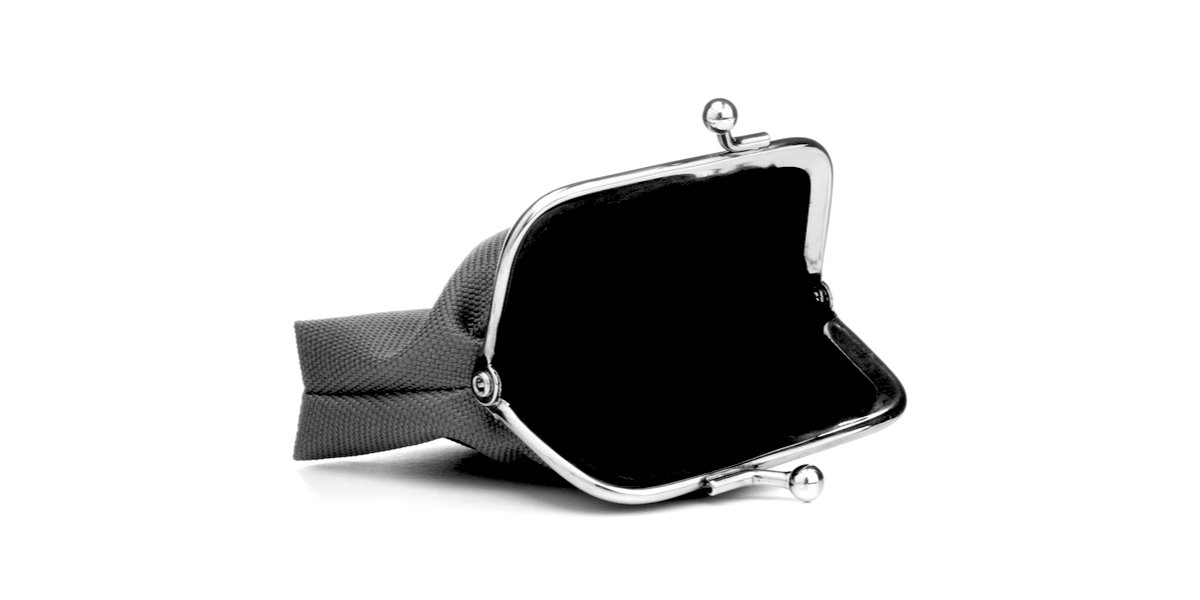
We had to pay £105billion (£105,000,000,000) in the year 2024-25 just as interest on the enormous debt of £2.8trillion (£2,800,000,000,000) run up gradually by every government in the last 50 years. That interest payment alone is £15billion more than we’re paying for education and nearly three times that for defence.
This country is costing too much to run. If it were a business there would be savage cutbacks to avoid collapse, not increased borrowing to pay for more runways and railways. We need the kind of bravery that will cancel every rule, law, agreement and convention that binds us to our confusion and despair.
The medicine must not taste of honey. There has to be a time of hardship. What will it take to break us away from the deadly grip of borrow-and-spend and a distressed economy that seems to get less attention than the pensioners’ heating allowance? Yet another political party? Yet another inconclusive election? Three million on the London streets? A mob invading parliament?
Who is ready to make the necessary decisions and take the decisive actions that would begin the resuscitation, which inevitably would come with widespread unpopularity and a savage loss of votes?
Who indeed.
Suddenly climbing down from my high horse, it seems that we are up against the basic problem of running a democracy, which has not yet been solved. You need votes in order to have the power. Not enough votes and you’re out. Voters don’t want to struggle, to be just managing, to suffer a loss of job, benefit, pension.
The Democratic Difficulty has, of course, been spotted long ago by Aneurin Bevan*, for instance, in November 1959. ‘There is,’ he said, ‘one important problem facing representative parliamentary government . . . how to reconcile parliamentary popularity with sound economic planning.’
Answers, anyone?
*Aneurin Bevan was Minister for Health in the Attlee Labour government 1945-1950, and was the architect of the National Health Service.