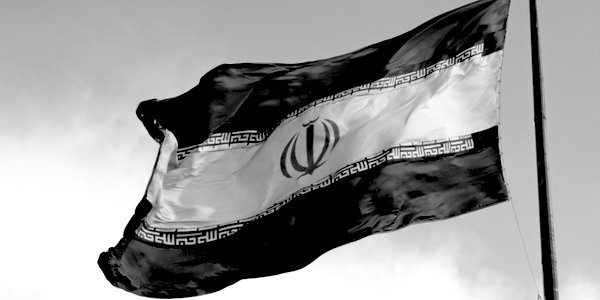
IF THE Iranian protesters had sought to maximise media coverage and thereby mobilise international support, they have been extremely unfortunate in their timing.
With the legacy media – in the UK, at least – almost entirely bound by the iron rule of ‘one war (or foreign adventure) at a time’, churning out endless copy on events in Venezuela, even Gaza is not getting a look in, and Ukraine is distant history.
Iran’s turmoil has barely registered, aside from a couple of items in the Times. News of the protests has almost vanished from the airwaves, much to the apparent relief of the BBC.
This silence is echoed by government ministers, prompting the Jerusalem Post to ask why there has been no statement about supporting regime change in Iran and why there have been no comments about the international law violations by the Iranian regime as it cracks down on protesters.
The JP has a particular ‘thing’ for the BBC, remarking that since the protests started the state broadcaster has published only four articles. If one were relying on the BBC for coverage, one could be forgiven for not knowing anything was happening in Iran at all, it says.
A large group of Iranian and Jewish protesters gathered outside Broadcasting House on Sunday, chanting, ‘Ayatollah BBC, shame on you’. Yet when there is any development in Israel or Palestine, Cooper, David Lammy, and Starmer – with the BBC in full attendance – scramble to chime in.
The lack of media coverage is not necessarily a bad thing, if the Wall Street Journal is to be believed. It reckons that Trump’s intervention in Venezuela has sent its own message to Tehran, reminding them that the US president is unpredictable and everything is on the table. Jitters in the regime may well be responsible for the firing of anti-aircraft artillery into the night sky in an undisclosed area, captured by one of the many videos coming out of the region.
There may well be good reason for the Ayatollahs to be worried. Multiple military analysts on X report unusual US military air movements, with at least 10 USAF C-17A Globemaster IIIs arriving at the RAF Fairford in Gloucestershire or in transit across the Atlantic from the United States.
These have been transporting MH-47 Chinooks from the 160th Special Operations Aviation Regiment, which is linked to the 75th Ranger Regiment and the 101st Airborne Division. Reports also note CV-22 Ospreys and MH-60M Black Hawks from US Special Operations Command. AC-130 gunships have also been seen.
The significance of these movements is that the 75th Ranger Regiment’s primary mission is airfield seizures. The 101st is an air assault unit. We are told by one observer that ‘the USA has just moved a huge strategic asset designed to open the gates of hell into whatever country we choose’.
As other reports tell of cyber-attacks hitting Iran, Israeli sources have named the planned operation on Iran as the ‘Iron Strike’, while Prime Minister Netanyahu has chaired five hours of security consultations and security officials are said to be discussing the appropriate day and time for an attack.
In Kuwait, about 13,500 troops are maintained at any given time, serving as a Middle East response force, and these are said to be at readiness. Not a few are predicting a joint US-Israeli response to the unrest in Iran, which will not necessarily be confined to air attacks.
If intervention is planned, it cannot come a moment too soon. On day eight of the protests, local reports distributed over an unreliable and oft-interrupted internet tell of orders from Ayatollah Ali Khamenei to deploy an estimated 50,000-70,000 security forces, special police units and regime militias nationwide to intimidate and suppress ongoing anti-regime protests.
Multiple video clips show the distinctive security forces – many of them mounted on motorcycles – flooding city streets in a show of force aimed at silencing the population. One video filmed at Shahnaz Intersection in Tabriz showed a large deployment of the regime’s special police units on the ground.
We are also told of mass shooting of protesters as the regime hunkers down in ‘survival mode’, fully prepared to do whatever it takes to put down the protests.
Despite that, some pundits are actively predicting that the fall of the regime is within reach, a supposition somewhat supported by an article in the Times under the headline: ‘Ayatollah Khamenei plans to flee to Moscow if Iran unrest intensifies’. The sub-deck tells us that an intelligence report has revealed that the republic’s supreme leader has plotted an exit route out of Tehran should his forces fail to quell the unrest.
The supreme leader, it seems, is not only concerned with securing his own physical extraction. The escape plan includes ‘gathering assets, properties abroad and cash to facilitate their safe passage’, says one source.
This, in itself, may be a considerable task as Khamenei is known to hold a major network of assets, some under one of the most powerful organisations in Iran, Setad – part of a system of semi-state charitable foundations known for their financial obfuscation.
According to a Reuters investigation carried out in 2013, estimates put the total holdings at $95billion (£70million), including properties and companies, all held and controlled by Khamenei. It is no wonder that so many people want him gone.
In its second piece of the day, the Times has done its best to draw together some semblance of a narrative from patchy and disjointed sources. It cites civil rights groups and local media, as well as ‘official sources’ which admit that at least 12 people, including members of the security forces, have been killed since the protests kicked off on December 28.
The charity Iran International has verified the identities of 16 protesters who have been killed during the protests, so the overall total is going to be very much higher than is officially acknowledged, especially as some security forces are said to be secretly burying their murdered victims.
On Saturday, protests featuring slogans criticising the Islamic republic’s clerical authorities were reported in Tehran, Shiraz, in the south of the country, and in areas of western Iran where the movement has been concentrated. The paper thus concedes that the demonstrations are the most significant in Iran since the backlash against the death in custody of Mahsa Amini in 2022.
Elsewhere, on social media, we see reports of security forces raiding hospitals to arrest people wounded during protests, turning A&E departments into traps for the injured.
The city of Ilam, in western Iran, where wounded are said to have been abducted from the central hospital, is described as a ‘war zone’, with claims that protesters have armed themselves and are forming into an organised militia.
There are also reports of large crowds attending the funerals of those killed, with the regime trying to limit the number of these gatherings by not returning all bodies to families, breaking Iranian custom, where burials usually take place the same day or by the next day after death.
However, with internet access reduced or effectively cut off in several parts of the country on Sunday, especially in areas where protests have been more intense, there is no coherent overview to be had, and the picture remains incomplete.
For the latest, we are seeing reports of 22 dead, with the protests having spread to 222 locations across 78 cities in 26 provinces, substantially up from the 81 protests reported in 23 provinces by mid-Saturday.
Significantly, the protests have not been confined to major urban centres. Smaller towns are also affected, an indication of the horizontal spread of unrest across different social and geographic layers.
If the legacy media had put a fraction of the resources devoted to Gaza into reporting this conflict, we might be much better informed but, for the moment, we have no means of telling the true state of affairs, much less venturing any predictions. We can only watch and wait.
This article appeared in Turbulent Times on January 5, 2026, and is republished by kind permission.