Republican leader Sexton wants to double the program; rural lawmakers push back.
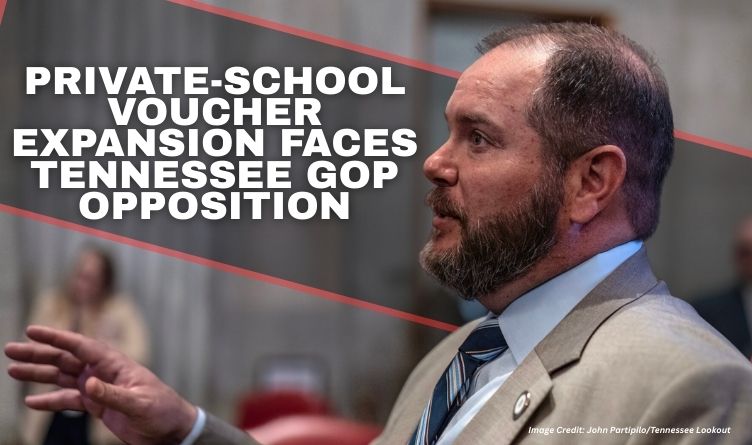
Image: Dickson Republican Rep. Jody Barrett says he will oppose a plan backed by Gov. Bill Lee to expand the number of private school vouchers handed out. Image Credit: John Partipilo/Tennessee Lookout
***Note from The Tennessee Conservative – this article posted here for informational purposes only.
By: Sam Stockard [Tennessee Lookout -CC BY-NC-ND 4.0] –
Plans to substantially expand the size of Tennessee’s private-school voucher program in 2026 will meet resistance from rural lawmakers, mainly because of the high cost.
Republican Reps. Jody Barrett of Dickson and Todd Warner of Chapel Hill told the Lookout Wednesday they plan to oppose proposals to increase the number of vouchers awarded through the “Education Freedom Scholarship” program, which could push the expense to nearly $300 million.
Republican Rep. Monty Fritts, a Kingston lawmaker running for governor, also opposes private-school vouchers.
“One of the main pillars to my objection against the program last year was the financial and fiscal conservative concerns about funding the program,” Barrett said Wednesday. “So unless there’s some pot of money out there that they haven’t disclosed to us yet that will fund this program and cover its costs, I just don’t see how we’re going to avoid stepping off into a black hole if we keep doing this.”
Barrett is sponsoring House Bill 1544, which would require the state to provide lawmakers with a full report on the private-school voucher program, including the number of students already enrolled in private schools.

Some 20,000 students received $7,300 to enroll in private schools this year.
Lawmakers such as House Speaker Cameron Sexton want to double the program’s size after the Department of Education turned down 22,000 other applicants because the program reached its cap.
Gov. Bill Lee wants to increase the number of vouchers, as well, but lawmakers won’t know the details until he makes his State of the State address Feb. 2.
The law allows 5,000 more students to be added in the second year. But Barrett said even that is subject to the legislature approving the funding for more students, a move that could put a damper on the $144 million program. Passage during a 2025 special session came with a $430 million total cost, including money for one-time teacher raises, funds to offset losses to public school districts and expenses for administration.
Warner, an outspoken critic of the plan in 2025, called it a “scam from day one.”
He said figures would show an estimated 70% of the vouchers dished out this year went to students already enrolled in private schools, if the state would reveal those numbers. The Department of Education has declined to release the number of “scholarships” given to private-school students, saying it wasn’t required in the legislation.
“I think our leadership makes a bad mistake running this type of bill in election year because they’re gonna get these rural Republicans, these rural conservatives where there’s no private schools, they’re gonna get ’em primaried, and it’s already happening,” Warner said.
In contrast, Republican Rep. Dennis Powers of Jacksboro said he will support a major expansion if the state has the money to back it.
“Simply because we want to give everybody the opportunity to do it because we have 22,000 people that didn’t get to do it that applied for it,” said Powers, who has a primary challenger even though he backs the program.
Powers added that any exodus of students from public schools could give districts a break from overcrowded classrooms.
A recent report by Comptroller Jason Mumpower didn’t do much to improve the outlook for voucher expansion, Barrett said.
The audit of Tennessee’s Education Savings Account program, which is limited to low-income students in Memphis, Metro Nashville and Chattanooga showed participation at only 3,693 students this year, well below the 5,000 maximum, and that most of them left high-performing schools to get the $9,400 in state funds.
The report also showed that students in the program aren’t performing as well as their peers in public schools in both academic achievement and growth in test scores.

Only students in Memphis performed better than their peers in public schools and only slightly.
If lawmakers do anything, Barrett said, they should merge the two programs and put income limits on all vouchers to make sure they go to lower income students. The “scholarship” program is split between all students and those at 300% of the federal poverty level.
Sexton wants to drop income limits on the programs to offer the funds to all students. He also said the application deadline should line up with private school schedules and that fraud controls suggested by the comptroller should be enacted.