I MANAGED to listen to the BBC Reith Lectures while trundling about the country in the run-up to Christmas.
The lecturer was Rutger Bregman, a Dutch historian and author. The series of four lectures called for small groups of individuals to bring about a moral revolution to solve the multiple crises facing Western liberal democracy.
He didn’t hold back on describing the problems. Comparing today’s world with the decline of the Roman Empire, as described by Gibbon, Bregman said: ‘Gibbon wrote about politicians who lacked seriousness, elites who lacked virtue and societies that mistook decadence for progress.
‘Two thousand years later we live in an age where billionaires dodge their taxes, politicians perform instead of govern and media barons profit from lies and hatred.
‘The Roman elite fiddled while Rome burned. Our elites live-streamed the fire and monetised the smoke. Immorality and unseriousness: those are the two defining traits of our leaders today. And they’re not accidental flaws, but the logical outcome of what I call the survival of the shameless. Today, it’s not the most capable who rise, but the least scrupulous. Not the most virtuous, but the most brazen.’
Who am I to disagree?
Where Bregman and I part company is that his solution is a better elite, with the best minds working for the good of humanity rather than developing ever more manipulative social media algorithms. I think the problems we have are caused by the elite, who have self-selected and abrogated responsibility and accountability while retaining power and rewards. More of that is the last thing we need.
Bregman rightly calls for government to have ‘more skin in the game’, but that is only possible if they are accountable for their failures. As the Ajax fiasco demonstrates, they’re not.
It’s not just MoD procurement. Following the emergence of the Post Office’s Horizon scandal, Paula Vennells, the chief executive at the time, was deprived of her CBE. She hasn’t been charged, and there is no ongoing litigation. More than 983 sub-postmasters were convicted, some were imprisoned, many ruined and some killed themselves. A thousand lives wrecked and the culpable CEO merely lost a trinket. That’s not justice – that is a system that is utterly broken, completely incompetent and deeply unfair.
It needs rebuilding from the ground up. The elites have no skin in that, so they won’t do it; they’ll do their darnedest to prevent it. Bregman is concerned that in the power vacuum that is formed by the collapse of the elite, populism takes over. To avert this, he believes that small elite groups acting with a righteous purpose can change the world.
He cites the abolition of slavery and the emancipation of women. What he declines to consider is that at least some of the populist groups he dislikes and probably fears (he is a product of the liberal intelligentsia after all) might be the very groups of people with a noble purpose. Bregman was looking for them in Silicon Valley but maybe he should have gone to Merthyr Tydfil, or walked any of the streets of the UK talking to the residents.
The reality is stark. The reason why Reform has done so well is because people see a possibility of changing the people in power; an opportunity to change the system that let the failing, self-appointing elites last so long and do so much damage. That the elites have failed the UK is unarguable. We face economic challenges, power shortages and recession. If you believe Nato’s Secretary General Mark Rutte – another Dutchman – we might also face a major war with Russia.
Much as I abhor this government, which has done so much, so quickly, to make things worse, it’s taken decades to reach this nadir of hope. Governments of all flavours have contributed to inexorable decline regardless of which party is in power.
That, of course, was one of the most compelling arguments for Brexit. By subordinating Parliament to Brussels, the doyens of Whitehall and Westminster could avoid responsibility for much policy. The 2016 vote blew that fig leaf away, although the half-baked turkey of an exit agreement delivered by Boris Johnson failed to capitalise on the opportunities, not least because few in the government machine wanted to leave.
Ten years on, with things much worse, some people point to leaving the EU as the trigger – neglecting to note that the EU is hardly a bed of roses. Europe is collapsing too.
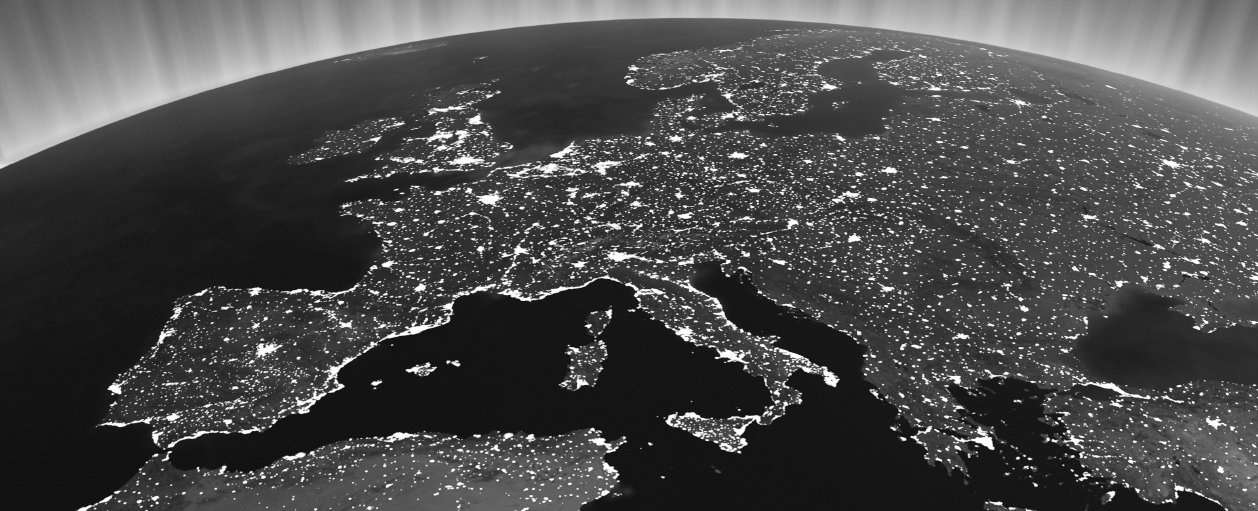
In Bregman’s words: ‘If America resembles the fall of Rome, spectacular and vulgar, then Europe is reliving the slow death of Venice. One empire collapses in flames, the other sinks in silence. One is consumed by fire, the other lost in fog. Perhaps you’re familiar with the story. At its peak, Venice was a marvel of commerce and innovation. A small city built on a lagoon had become a maritime empire, dominating Mediterranean trade for centuries. Its success was rooted in a relatively open system. Merchants could rise through merit, trade was well regulated, and institutions like the Great Council struck a balance between aristocracy and accountability.
‘But by the 14th century, that openness began to vanish. The seeds of decline were sown in 1297 with the Serata, or closing, of the great council. Membership became hereditary, creating a class of entrenched nobles who guarded their privileges fiercely. This selfish elite monopolised government positions, blocked newcomers, and rewrote the rules to protect their wealth and power. Over the centuries, Venetian politics devolved into rent seeking. The ruling families extracted profits from trade monopolies without reinvesting in innovation. They poured their wealth into palaces and casinos and ignored the growing threats from emerging powers like the Ottoman Empire. Young elites didn’t want to become merchants and admirals any more. Instead, they preferred a life of leisure and luxury. And over time, Venice became a shadow of its former self, beautiful on the outside, hollow on the inside. Does that remind you of anything?
‘Today, the whole of Europe risks turning into one big Venice, a beautiful open-air museum, a great destination for Chinese and American tourists, a place to admire what was once the centre of the world. Just look at our most valuable companies. In the US and China, the commanding heights of the economy are in technology and industry, AI, electric cars, solar panels, batteries, whatever you think of big tech . . . these are power industries, shaping the future. In fact, all the American giants – Microsoft, Apple, Amazon, NVIDIA, Alphabet – are individually worth more than the entire German or French stock market. By contrast, Europe’s top companies are dominated by big fashion. Dior, Louis Vuitton, L’Oreal, we’ve become the continent of handbags instead of hardware.’
The exam question for Reform (and anyone else who wants to solve the UK’s problems rather than merely secure power for its own sake) is how do you change a failing system from within?
How do you ensure that the system, which almost by definition doesn’t want to change, does not obstruct you? While manifesto commitments would probably get through a hostile Lords due to the Salisbury Convention, and one could pack the Lords anyway, the real challenges lie with some of the public servants within government, the civil service, local government and the quangocracy. That will require primary legislation, and passing such legislation will take time.
The bond markets and the IMF will be watching very closely. Given the likely state of the British economy after another three years of Labour, they’re unlikely to be forgiving or tolerant. Avoiding a Truss-Kwarteng will be crucial. That can be delivered only by cutting government expenditure and borrowing. In a state machine as monumentally incompetent as the British one, cutting expenditure need not have an adverse effect on service delivery; throwing money at government machinery hasn’t improved services, merely increased the payroll.
Rebuilding the government machine from the ground up would be disheartening, were it not for the historic precedents cited by Bregman. Just a dozen men established the Society for the Abolition of Slavery in 1787 and 20 years later the Slave Trade Act of 1807 received Royal Assent. The Royal Navy was set loose on the slave trade, which it ended (though not slavery) by 1860. Britain’s National Society for Women’s Suffrage was founded in 1872. Some women were able to vote in 1918 before universal suffrage in 1928.
The next general election is three years away. Ukip, the forerunner of Reform UK, was set up over 30 years ago and in the Labour landslide of 1997 polled 0.3 per cent. In 2024’s Labour landslide, Reform polled over 14 per cent with the third largest popular vote. Now it’s polling over 30 per cent and is routinely ahead of the once mainstream parties by more than 10 percentage points.
One of the great legacies of the Brexit vote is that the British people saw that it was possible to overturn the Establishment’s wish. Building on that success and the entirely justified frustration of the electorate, Reform today is surely the legacy of a few people with a clear purpose. Their wish remains to restore the accountability of the legislature and government machine to the public who pay for it and whom it is supposed to serve. Brexit was only the first step.
Bregman dismisses this as ‘populism’ – a word of great disdain among those of the Western liberal democratic orthodoxy. Has he forgotten the idea of ‘Government of the people, for the people, by the people’, as Abraham Lincoln framed democracy in 1863 after Gettysburg, the defining battle of the American Civil War, which was largely about ending slavery? Bregman is a historian who can’t see history being made under his nose.
Some 160 years after Gettysburg, our leaders believe in supranational government – organisations of supposed experts appointed to manage the world.
We live in the era of Davos Man, the devotees of the World Economic Forum. The WEF’s vainglorious mission is ‘to improve the state of the world through public-private co-operation’. It’s hard to measure that improvement globally. It’s hard for most to feel it locally too; from the slums of Swansea to the sweatshops of Bangladesh, there are an awful lot of people for whom things are decidedly not getting better. Yet the acolytes of the WEF agenda will be trotting off to Davos in a couple of weeks, fenced off from the people they claim to represent.
Davos is losing its allure; last year only one of the G7 leaders (Germany’s Olaf Scholz) attended in person (although many of their minions and advisers did). Not even our jet-set Prime Minister went. Macroeconomics may be global but ‘all politics is local’. The Prime Minister knows this all too well as he faces local and regional elections on May 7.
Like the good Marxists they are, the Labour Party is seeking to cancel (they call it ‘delay due to reorganisation’) as many council elections as they can. Shamefully some Tories and Lib Dems are supporting that. In Wales and Scotland the Socialists, Marxists and ‘progressives’ can’t hide from the ballot box. Instead they’re seeking to stitch up the electorate with pacts like the ones so common between Labour and Plaid Cymru over the years.
They have good reason to. Few young Britons are likely to be able to purchase their own home, yet the Home Office houses migrants. Many won’t even pay off the usurious student debt they accrued pursuing a degree that probably hasn’t much increased their income, if they can find a job. Meanwhile pensioners have their triple-locked pensions, and public sector pensions are massively generous (and unfunded). In Scotland and Wales the devolved parliaments have given 16-year-olds the vote in the hope of boosting the ‘progressive’ vote but instead they’re facing an electoral kicking. This isn’t the populism that intellectuals so despise. It’s reality colliding with abstract economic and political theories.
That’s happened before and it’s messy. People forget that Gorbachev was a Communist and that glasnost (openness) and perestroika (reconstruction) projects were intended to improve the Communist system. Unfortunately for the Communists, the programmes revealed that Communism was not working and never could, not least because there was no money for reconstruction. The USSR collapsed under the weight of its own contradictions.
The UK, having had only 30 or so years of lightweight Marxism, isn’t yet in as dire a state as the USSR. We’re on a similar track though. The government machine grows; more is centralised. Less is delivered. Too few in the political establishment or media believe in anything beyond more centralisation, and the Treasury clings to the delusion that it can tax its way to growth.
It’s not working. In Reform the electorate have an opportunity to express their dissatisfaction and an opportunity to vote for change. Across the country, unnoticed by Bergman, small(ish) groups of people are working on how to adjust the country’s trajectory from its disastrous course. They’re called ‘the people’ and they’re on the rise.
This article appeared in Views From My Cab on January 4, 2026, and is republished by kind permission.