A BIRD flu outbreak in a Wisconsin dairy cattle herd has fuelled speculation that gain-of-function research at a nearby university lab, where scientists are working to develop a bird flu vaccine for cattle, may have played a role in the outbreak.
Last month, the US Department of Agriculture (USDA) identified what it said was the first known case of highly pathogenic bird flu in the Dodge County herd.
The USDA’s Animal and Plant Inspection Service (APHIS) characterised the outbreak as a new ‘spillover’ event, from wildlife to cattle.
The two virologists who conducted the genome sequencing for APHIS and identified the virus responsible for the outbreak work at the University of Wisconsin-Madison School of Veterinary Medicine, the university confirmed.
Keith Poulsen and Yoshihiro Kawaoka have also co-authored studies on gain-of-function research, including studies related to the H5N1 bird flu virus.
Kawaoka directs the university’s Influenza Research Institute, known to conduct gain-of-function research on H5N1. Kawaoka was director of the high-security lab in 2019 when it came under scrutiny for a safety breach. The institute’s lab is about 40 miles from the bird flu outbreak in Dodge County.
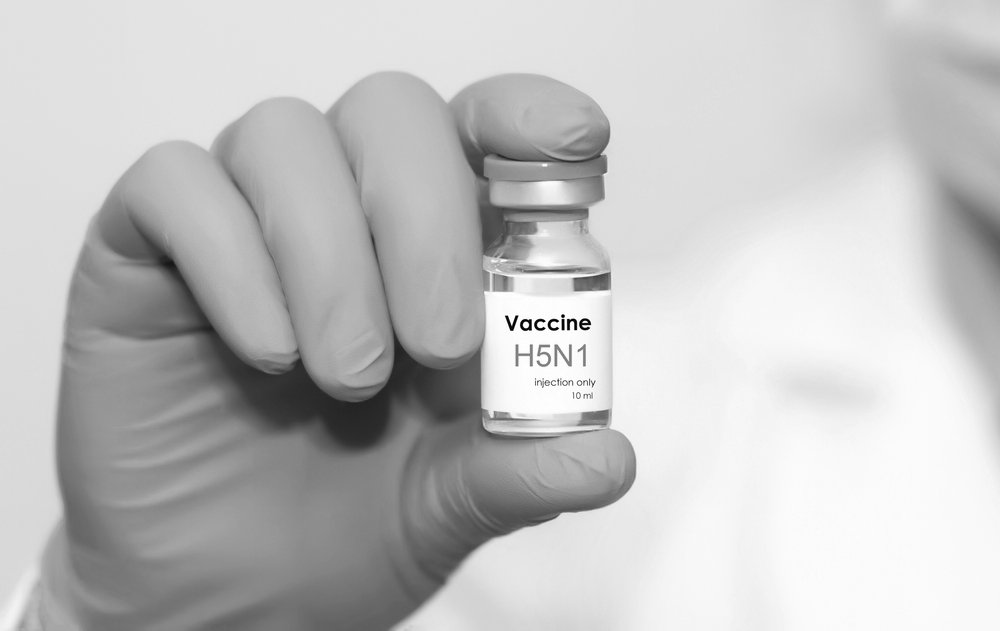
Kawaoka is also the co-founder of flu vaccine manufacturer FluGen, and he is among a group of scientists working on the development of a bird flu vaccine for livestock.
Will Cushman of the University of Wisconsin-Madison’s Office of Strategic Communication confirmed that the virologists are performing H5N1 research. However, he denied that it is gain-of-function research.
The research, partially funded by the federal government, is aimed at better understanding the H5N1 strains spreading from wild animals and circulating on farms in the US, Cushman told the Defender.
Poulsen and Kawaoka identified the H5N1 clade 2.3.4.4b genotype D1.1 as responsible for the Dodge County outbreak. The D1.1 genotype contains characteristics that may increase the transmissibility of the virus, including to humans.
Karl Jablonowski, senior research scientist for Children’s Health Defense, said the outbreak ‘is notable’ because national databases do not show ‘a mammalian host of D1.1 anywhere near Wisconsin’ in the past year.
Two ‘isolated’ spillover events involving the D1.1 strain were identified earlier in 2025, in Arizona and Nevada, Reuters reported. APHIS said the Wisconsin spillover event is considered unrelated to those two previous spillovers.
According to APHIS, bird flu viruses circulating among birds and cattle in the US ‘pose a low risk to the general public’. However, the World Health Organization reported that the death of a three-year-old girl in Mexico in April 2025 was caused by respiratory complications that developed after the child contracted the D1.1 strain of bird flu.
Several recent journal articles have suggested that D1.1 may have characteristics that make it more virulent, potentially to humans, than previous bird flu strains. A July 2025 article in Nature characterised new bird flu genotypes, including the D1.1 variant, as having ‘wide distribution and transmissibility . . . to cattle.’
A November 2025 article in the Journal of Infectious Diseases showed that the D1.1 variant may be ‘better adapted to human nasal and airway organoids’ than genotype B3.13, the previously dominant bird flu genotype in North America.
Immunologist and biochemist Jessica Rosesaid: ‘D1.1 does show better adaptation to human respiratory tissues than say, B3.13 in lab models due to its higher replication capacity in human nasal/airway organoids.’
In a December 2024 op-ed for Medscape, Italian physician and freelance health journalist Dr Roberta Villa suggested there may be a connection between the outbreak of D1.1 and gain-of-function research.
Villa wrote that the publication of the complete viral sequence of D1.1 ‘highlighted mutations that could enhance the virus’s ability to infect human cells’.
‘How do we know this?’ Villa asked. ‘From the highly contested “gain-of-function” studies, which artificially modify viruses to understand which genomic points require the most surveillance — those mutations that can make the infectious agent more virulent or more transmissible between people.’
Villa did not elaborate on the possible link between D1.1 and gain-of-function research.
In 2024, Kawaoka and a team of researchers published research in Nature on how the bovine H5N1 virus can spread systemically in mice and ferrets, and bind to human-type receptors. Since 1990, Kawaoka has been involved in bird flu gain-of-function research. Dr Anthony Fauci and the Bill and Melinda Gates Foundation (now the Gates Foundation) funded some of that research.
In 2012, Kawaoka and Dutch researcher Ron Fouchier published a paper in Science revealing how they had modified H5N1 to enable it to spread between ferrets. The paper sparked an outcry within the global scientific community. A New York Times editorial called the research ‘An Engineered Doomsday’.
In 2014, Kawaoka again drew attention after the Independent alleged that his lab had created a new strain of the 2009 H1N1 virus with pandemic potential.
In December 2019, a researcher engaged in an experiment involving the transfer of H5N1 between ferrets was potentially exposed to the virus when her air hose broke, according to USA Today. The lab didn’t notify the university’s biosafety committee or the National Institutes of Health (NIH) until February 2020.
In 2013, a researcher at Kawaoka’s lab accidentally pricked a finger with a needle contaminated with a lab-engineered H5N1 virus.
A week later, another lab worker at the same lab spilled a lab-engineered bird flu virus on a gloved hand. Details about the post-spill protocol that followed are unknown.
In 2015, the University of Wisconsin reported ‘nine other incidents’ at the lab to the NIH between 2012 and 2014.
In 2023, the US House of Representatives Committee on Oversight and Government Reform investigated ‘dangerous gain-of-function research’ conducted at the University of Wisconsin.
That same year, Wisconsin lawmakers proposed Assembly Bill 413, which would have shut down gain-of-function research at universities in the state. The University of Wisconsin lobbied against the Bill, which was defeated in April 2024.
As bird flu outbreaks have continued, a bipartisan group of 23 senators last month co-authored a letter urging the Trump administration to develop a ‘science-based plan’ for developing a bird flu vaccine for livestock. ‘Any finalised vaccine strategy must take into account feedback from animal health stakeholders, industry experts, and be grounded in sound science,’ the letter stated.
Reuters, quoting a USDA spokesperson, reported that the agency considers farmer biosecurity efforts — and not the development of a vaccine — as the most effective means of fighting the spread of bird flu.
In May 2025, the Trump administration cancelled a $700million (£520million) contract with Moderna to develop a human bird flu vaccine.
In a 2024 interview with CHD.TV during a bird flu outbreak in Texas that year, Dr Richard Bartlett suggested that bird flu vaccines were ‘ready for mass production’.
This article appeared in the Defender on January 15, 2026, and is republished by kind permission.