THE CEO of BlackRock, Larry Fink, pointed out at Davos last week that there was an erosion of trust in global elites and in ‘disconnected’ institutions such as the World Economic Forum.
Is it any wonder? As we disappear ever further into the ‘great reset’ engineered by Fink and his billionaire chums, there is now a greater awareness of the ways in which our world is run mostly through in-house dialogue between unelected and unaccountable individuals, groups and organisations. It is not just the World Economic Forum; the phrase ‘top-down’ is characteristic of the modus operandi of all the institutions which comprise the insular global governance architecture.
Discussions around legitimacy, accountability, transparency and citizen engagement go back of course to the very beginnings of organised politics. However, real discussions on the so-called ‘democratic deficit’ were at the centre of political discussion during the 1990s and 2000s. Described by Nye as ‘the fundamental issue of our time’, governments began tripping over themselves to demonstrate their democratic credentials to the public and to their peers. Citizenship, democracy, and the role of civil society all came under the microscope, where ‘governance’ – political rule which engages a broad range of stakeholders in the policy process – was now proposed as a model to aspire to in contemporary politics.
In a pre-9/11 political environment, Western economies enjoyed relative economic stability. In the UK, for example, the first years of the New Labour government promised renewal and revitalisation across the political, economic and cultural spectrum. Blair promised to end class-based barriers to opportunity and social mobility through ‘education, education, education’, proposed greater transparency and accountability in government, and spoke enthusiastically about the UK’s advantageous position in the new global economy. In the aftermath of 18 years of Conservative rule (and criticisms that had been aimed at that regime), Blair emphasised the importance of engaging the public more as part of what he called ‘political modernisation’. Blair argued that UK devolution, increased decision-making powers to local government, and a bigger role for Regional Development Agencies, all supported his claim of more bottom-up driven decision-making. Blair claimed that ‘active citizenship’ would help to restore trust in institutions which had been struggling to justify their ongoing legitimacy in an era marked by a toxic mix of political insularity, public apathy and suspicion, and declining voter turnouts. While these had yet to fall to current figures – over 30 per cent down from the early 1950s in 2024 – there was a realisation that many people had become disinterested, disenfranchised and disconnected from mainstream politics.
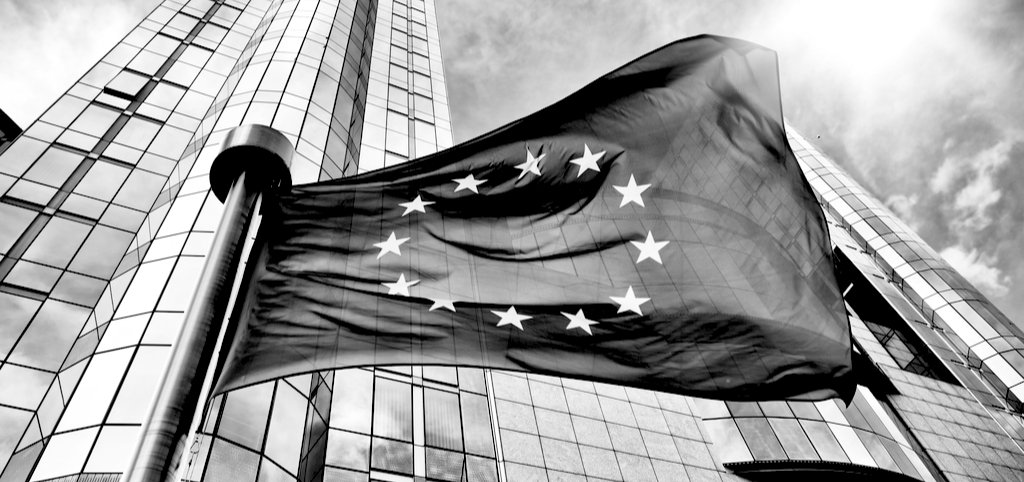
At EU level, this democratic deficit was an even bigger concern. Research of the time suggested that the majority of people had no idea what the EU did, how much influence it had on member state policies, and held limited knowledge of the wider issues around European integration. As the EU prepared for 2004’s expansion, the institution expressed concern that such a project would not work without the active support and participation of its citizens – an interesting supposition bearing in mind the top-down nature of the whole European endeavour since 1957. The EU had lacked any real credibility outside its internal ambitions, and some 15 years of accusations of zero transparency, questions around its own legitimacy, lack of accountability, and the direction in which it was taking member states, would return with a vengeance. While the official Brexit narrative was passed off by remainers as ‘far right extremism’, many saw this as a euphemism for push-back against unaccountable elites, high levels of corruption, and a growing awareness of emerging authoritarian and globalist motivations.
In 2001, the EU released its own statement on how to encourage more political engagement and how it might catalyse dialogue between citizens and its own institutions. The White Paper on Governance proposed four principles to reduce the democratic deficit:
- More involvement of citizens
- More effective definition of policies and legislation
- Engagement in the debate on global governance
- The refocusing of policies and institutions on clear objectives
Clearly this was all rhetorical. Events since 2016 have clarified exactly what the EU has always been about and why the public were right to vote with their feet. Not that this has made any difference. In a TCW article, Ewen Stewart argued that we never really left the EU and that both the establishment in the UK and in Brussels have ‘managed’ this dissent in a way that suits them and not the public i.e. to remain as part of the EU. One of the reasons cited in a Forbes Report of the time suggested that the perceived erosion of sovereignty – labelled as right-wing nationalism – was a major factor.
Could it be that people were simply becoming more aware of the growing EU influence and yet more hot air around increased immigration, negative economic policies, and a growing mistrust of supranational institutions and their real intentions? Perhaps there was now greater recognition that people were no longer being represented by anyone who had their best interests at heart. After all, those who voted ‘leave’ ignored both Conservative and Labour appeals to vote the other way. Perhaps those who voted to leave had more knowledge than ‘EU research’ was prepared to acknowledge, particularly on the growing EU influence on domestic policies on immigration, climate change and globalisation – controversial policy agendas which they may have felt were being foisted on them by politically ambitious and unaccountable Brussels bureaucrats, aided by their national counterparts.
The political landscape since 2020 is even more concerning. Now there is not even any rhetoric about citizen involvement. Labour’s ‘super councils’ and delayed elections move real devolution further away. Meanwhile back at Davos, the EU openly backed the World Economic Forum’s goals around clean energy and industry, emerging technology, financial markets, and international partnerships with no attempt at or interest in popular opinion or accoutability. This clear alignment of an ever more arrogant EU elite with a UN agenda that is even more draconian and authoritarian than their own is deeply worrying, to say the very least.