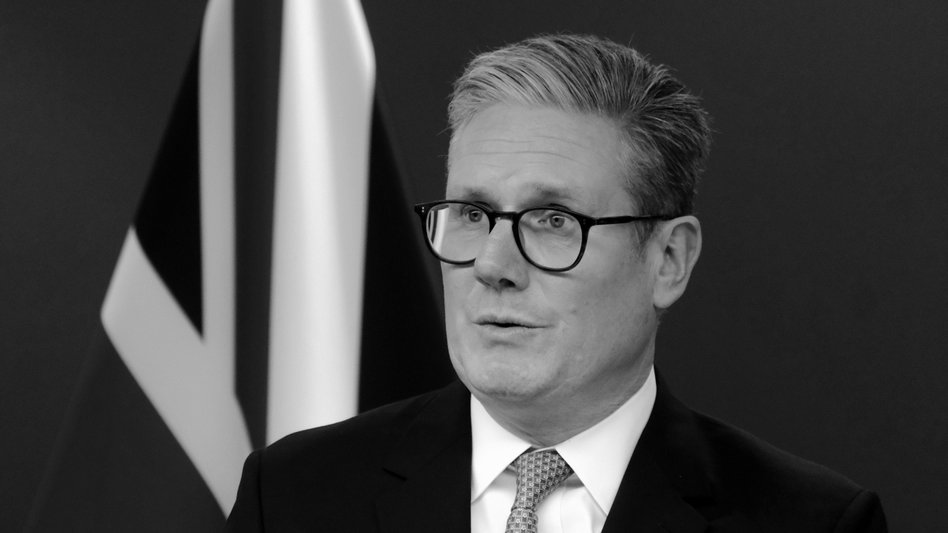
SIR Keir Starmer started the third and final day of his visit to China by telling the UK-China Business Forum that he and President Xi had (the day before) ‘warmly engaged and made some real progress because the UK has got a huge amount to offer’.
Progress?
A deal to halve China’s tariffs on Scotch whisky, to permit British tourists for up to 30 days without an advance visa (in line with most countries, including France and even Japan), and to overturn China’s sanctions on five (critical) British politicians.
For these trivial gains, Starmer’s government had already transferred to Mauritius (an ally of China) the Chagos Islands (hosting the greatest UK and US base in the Indian Ocean, at Diego Garcia), authorised China’s plan to build a super-embassy atop the City of London’s telecommunications (after previous administrations had twice rejected China’s proposal), scuppered the prosecution of two Britons who allegedly spied on British Parliamentarians, and chosen not to expel any diplomats for China’s hacking of Parliament’s and Downing Street’s networks. (On the trip itself, the Britons reportedly travelled with disposable phones and laptops.)
That third day (Friday) was spent in Shanghai, after two days in Beijing, where the optics were even more embarrassing than the flaccid ‘deals’.
Starmer was received in the Chinese capital not by China’s President, but by its premier (third-ranking politician). Li Qiang escorted Starmer up a short red carpet to review a military guard, to whom Qiang bowed from the waist, after which Starmer, awkwardly, uncertainly, bowed his head just as he would honour the King.
He did not need to bow. He just needed to ‘inspect’ the guard and move on.
Could he mess it up even more? Why, yes he could! Having bowed his head like a vassal kowtowing to the Chinese emperor centuries ago, he still did not know what to do. He should have stepped forward, turned right, and walked down the line. Qiang even pointed forward. Instead, Starmer swayed, turned right, and started walking smilingly towards the photojournalists, as if he were on a catwalk. Qiang rushed from Starmer’s rear and pushed him Starmer towards the guards.
Starmer again looked like either a moron or a vassal – or both.
President Xi Jinping allocated little time for talks (Starmer claims nearly three hours, but Chinese officials suggest Xi was present for less than an hour), and eschewed any joint press conference.
From there, Starmer was sent to Tiananmen Square to be photographed alone with a translator. By contrast, in 2017 US President Donald Trump was photographed on the same spot with President Xi and their wives.
Here’s another optical contrast: in 2026, Starmer was just one of many tourists viewing the Square, but in 2017 the area was cleared for Trump.
How could Starmer look so unprepared and so unrewarded?
As soon as he was elected, he declared his intent to achieve the first official visit to China by a British premier since Theresa May in 2018. He promised that he would come back with Chinese investment to restart Britain’s economic growth and to substitute for supposedly lost investment from the EU since Brexit.
The only investment deal this month is from Britain to China! AstraZeneca agreed to invest $15billion there.
The visit’s only step towards Chinese ‘investment’ is a feasibility study for enhanced financial services co-operation, for which no official visit was necessary, and from which no ‘investment’ deal is likely to follow.
Starmer’s failure in 2026 contrasts to May’s declared wins in 2018, adding up to £9billion in Chinese investment.
He cannot claim any diplomatic deals either.
The government has long criticised China’s illicit support for Russia’s war in Ukraine, illicit import of Iranian oil, abuse of Uyghurs, repression in Hong Kong, and detention of pro-democracy newspaper owner Jimmy Lai. Human Rights Watch urged Starmer to prioritise these issues in talks with Xi. Starmer says he raised these issues. Yet the joint UK-China statement does not confirm whether any was raised.
He has gained practically nothing from China, while he has alienated both the EU (which is belatedly punishing China for price dumping and espionage) and the US.
Months ago, the US government warned the British government that intelligence-sharing might be curbed, given the British government’s intent to approve China’s mega-embassy and to tolerate China’s espionage in Parliament. Weeks before Starmer’s trip, Trump threatened 100 per cent tariffs on Canada after Prime Minister Mark Carney struck deals with Beijing, and warned the UK against similar moves.
Days before his trip, Starmer tried to assuage American concerns via an interview with Bloomberg News. He said he does not need to ‘choose’ between the United States or China. He promised to keep ‘close ties’ with the US, but that ‘sticking your head in the sand and ignoring China . . . wouldn’t be sensible’, and that his visit could bring ‘significant opportunities’ for British firms.
On the first day of Starmer’s visit, Trump characterised it as ‘very dangerous,’ and a betrayal amid trade wars.
Even in domestic party politics, Starmer failed. Just before the trip, he and his cronies on the Labour Party’s National Executive Committee had blocked Andy Burnham’s bid to give up the mayoralty of Greater Manchester to run in a by-election, averting his potential challenge to Starmer’s leadership of the Parliamentary party.
Never-here-Keir surely hoped that a foreign triumph would enhance its ethos, as during his first trips to the US and the EU. Instead, his visit to China highlighted his pattern of avoiding domestic issues and fluffing the international stage.
Tory hawks in Parliament accuse Starmer of prioritising short-term gains over national security. Writers in the Spectator characterised the trip as ‘underwhelming’, ‘important but not significant’ and ‘small beer’.
The front page of the Daily Mail on Friday asked: ‘Is that it?’
The Times observed that both countries ‘believe in the virtue of speaking softly and carrying a big stick . . . but does [Starmer] have any idea what his stick is?’ (I doubt if the Times thinks that both countries believe the same; I suspect it couldn’t resist a lewd metaphor for Starmer’s impotence.)
The Independent characterised Starmer’s visit as a ‘legacy trip’ at the fag-end of a flawed premiership, much like May’s in 2018. Even the Guardian mocked the pomp amid minimal gains.
Public approval ratings dipped further.
Revealingly, the Labour Party is not rallying around Starmer’s trip. Emily Thornberry, no ally of Starmer, but who is dependent on the Labour majority by which she gained the Chair of the Foreign Affairs Committee, says that the ‘sneery attitude of the British press is a bit over the top’ and that the UK gets ‘a damn sight more’ by talking to Beijing than not.
Hardly a ringing endorsement!
The visit underscored Starmer’s failings. He promised big and received little. Politically, he returns a smaller man.
Therein lies hope.
Let’s hope that his party both forces him out of the premiership this year and precipitates an early election. I doubt that we can be so lucky. But I hope.