WHAT the Lynx UK Trust couldn’t achieve by straightforward means it is now trying to get by lawfare. It is applying for judicial review of Natural England’s refusal to grant any licence, now or in the future, for the release of lynx into the wild in Britain.
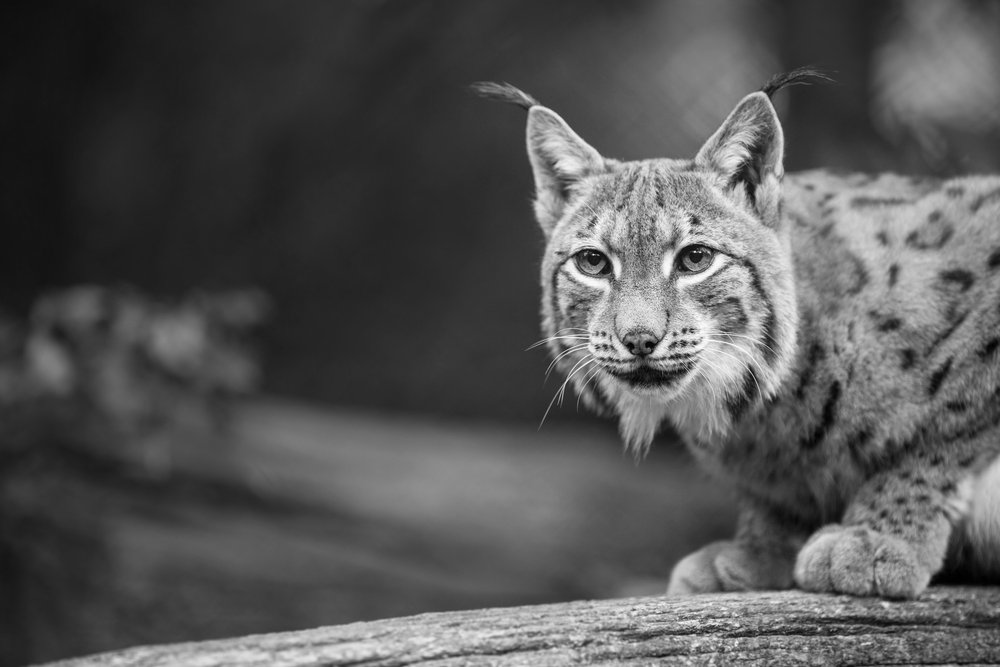
I’ve written about this organisation and its aims before under the heading ‘This insane move to let lynx roam free on our farms’. To summarise, Eurasian lynx, widely distributed across Europe and Asia and under no threat, are strong stealthy predators that, including the stubby tail, grow to about 4ft long (for comparison a domestic cat is about 18in without the tail). They prefer to eat deer and hares, but they will eat anything that will provide them with the 2½ to 4½ lb of meat they need every day. They are known to have taken beavers, foxes, pet dogs, poultry, wild birds, sheep and goats. They often cover 12 miles a night patrolling up to 150 square miles of their hunting territory. There are few predators of lynx, but none in Britain where Lynx UK Trust intends them to be ‘apex predators’. In other words they will be uncontrolled, except by mortality from disease or running out of prey.
Most other European countries with settled agricultural populations have either exterminated their lynx or strictly control them. They weren’t hunted to extinction in Britain in the 17th century for their fur – as the Trust tries to suggest – but because their presence is incompatible with pastoral farming in a peopled landscape. Yet under this plan the cats would be allowed to roam free in Northumberland, North Cumberland and the Scottish Borders, strictly protected by law. No farmer would be allowed to shoot lynx to protect his livestock – particularly sheep and poultry, which are especially vulnerable to predation.
I hinted in that article that one motive behind the campaign might be to allow the lynx to thin out the deer population which eat saplings, thus allowing more trees to grow – and increase income for the landowner on the ‘carbon market’, as rewilding projects often seem to do.
To give him credit, when Michael Gove was Secretary of State for the Environment, in 2018 he accepted the advice of Natural England and refused to license the release of lynx into Kielder Forest in Northumberland.
The outfit behind this campaign, the Lynx UK Trust, is a Community Interest Company (CIC) and not a charity as it is often wrongly described. A CIC enjoys similar privileges to a charity, but without having to satisfy the strict need to show charitable purposes. It is the pet project of Dr Paul O’Donoghue, who boasts that he will never give up until he has succeeded in his lifetime aim of releasing Eurasian lynx in Britain.
O’Donoghue is a cat fanatic who began an earlier CIC, Wildcat Haven Enterprises (WHE), which aimed to protect the Scottish wildcat by providing refuge sites and by neutering feral cats to prevent hybridisation with their wild cousins. WHE’s ancillary aim was to release lynx into Britain – and it is to this that so much energy is now being directed.
To provide some of the funds to finance its cat work, according to the Bailiwick Express, WHE linked itself to Highland Titles which sells ‘souvenir’ plots of land in Scotland to the gullible, saying that buyers will ‘help restore a Scottish nature reserve’.The plots range from one sq ft (£35) to a ‘luxury’ ten sq ft gift pack for £90 (two for a bargain £120). Each plot purports to give the purchaser the right to be referred to as ‘Laird, Lord or Lady of the Glen’. Highland Titles is based in Alderney and owned by a charitable trust (Highland Titles Charitable Trust for Scotland) registered in Guernsey. The money paid to Highland Titles goes to a company called Glenacres Ltd which is owned by another company, Scottish Highlands Ltd, registered in Guernsey. So the money paid for a plot of land in Scotland goes via Glenacres Ltd to a company registered in Guernsey for which it is impossible to obtain any details. The enterprise was investigated in 2022 by Euronews, which estimated it had made at least £9million by then.
When WHE’s activities were criticised by then Scottish MSP Andy Wightman in a 2015 blog titled ‘Wildcat Haven, Bumblebee Haven or Tax Haven?’ WHE sued him for defamation, claiming an extraordinary £750,000 in damages, and lost.
In 2020 WHE was ordered to pay £170,000 toward Wightman’s legal costs. It went into voluntary liquidation in August 2023 still owing Wightman £60,000, together with other debts to a total of £89,272. Its only asset was four hectares of land given to it in about 2015 by Highland Titles.
Back to Lynx UK Trust. According to the last accounts filed in 2025 in the Companies Register it is insolvent – i.e. it has a negative value in its accounts.
As of yesterday, its crowdfunding campaign has raised £12,368, which won’t go far. How on earth is it going to fund serious litigation against the government with what appears to be no assets and minimal income? It has apparently had permission from the court to proceed with the application – which is the first step – but there is no information as to who is funding it.
The basis of the case for judicial review seems to be an apparent conflict between Defra’s refusal to countenance a licence (as recommended by Natural England) and an ill-advised comment by Natural England’s chairman Tony Juniper (who took the post in 2019, a year after the body recommended refusal of the licence) that he would be ‘absolutely delighted’ if a trialled lynx release could take place during his tenure.
Originally the Lynx UK Trust proposed a ‘pilot scheme’ for five years, after which they intended a wider release across Britain. I suspect they think (probably rightly) that once the cat is out of the bag, so to speak, nobody will be able to put it back. Natural England refuses to recommend a licence because there were serious deficiencies in the application, particularly insufficient consultation and consideration of the effect of these big carnivores on the country people who will have to put up with them.
I’m not too hopeful from its current behaviour towards farmers that this government will prioritise the crucial importance of British livestock farming to the welfare of the nation. At the very least, a proper ‘consultation’ must allow the people affected a say on this pointless whim of a few sentimental fantasists, eco-freaks and ‘rewilders’ who seem to get a kind of malicious glee from causing trouble without any consequences for them.