TWENTY-ONE years ago, Steve Jobs, the chief executive of Apple, unveiled the iPhone to the world, announcing that ‘every once in a while, a revolutionary product comes along that changes everything’.
He wasn’t wrong. One of the consequences was the creation of what Dr Jean Twenge, Professor of Psychology at San Diego University, called the ‘iGen’, or the first generation to spend their entire adolescence in the grip of smartphones and accompanying apps and social media platforms designed to be addictive.
This generation was born between 1995 and 2012 and have become known to the rest of us as Generation Z.
They are the first to experience the paradox of being better connected than any previous generation yet more afflicted by loneliness, isolation, anxiety and pathological neuroses tending toward self-harming and suicide.
Like it or not, they grew up in a culture in which they interact online rather than in what Dr Twenge in her book Generations calls the ‘meatworld of person interaction’. It has formed them into people with very different habits from their forebears. They don’t get drunk in pubs, for instance, and, as Mary Wakefield wrote in the Spectator last month, they are increasingly turning away from sex.
Unlike the bed-hopping Generation Y, or ‘millennials’, they are the generation of gender fluidity, of ‘asexuals’ and ‘incels’, of online pornography consumed alone, and of sexual narcissism expressed perhaps most egregiously on OnlyFans, the social media platform through which, according to Louise Perry, the author of The Case Against the Sexual Revolution, some 4 per cent of Gen Z women sell their ‘wares’. Theirs is a generation giving up on marriage and parenthood more readily than any since the Second World War, with a Gen Z unwanted pregnancy more likely to end in an abortion than in all previous generations.
A people so dysfunctional, low on confidence or ill-prepared for adult life that they will not marry and produce future generations is a people doomed. It is tempting to despair at the emergence of what looks to the rest of us like a dystopia created by an imposed and uncontrollable technology, a terrifying juggernaut careering to the even greater disaster of Artificial Intelligence. Is there any hope?
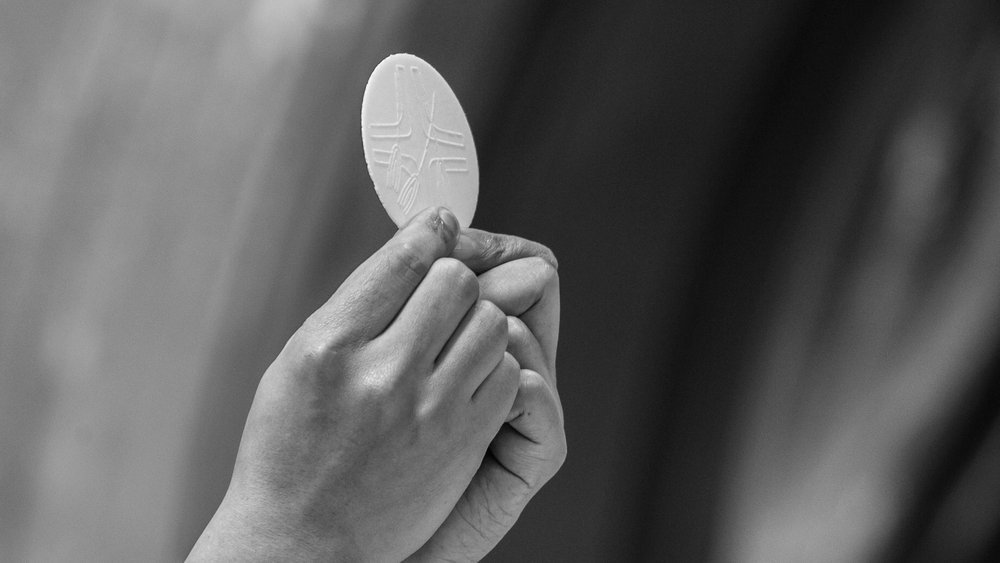
There is. This because Generation Z, now that they are reaching adulthood, are using the very devices which have defined them and their era to discover religion.
This Easter, record numbers of people will enter the Catholic Church in Britain, and most of them are under the age of 30. Although the numbers are relatively small, the direction of travel is clear to see.
In London, for instance, where the Catholic Church is organised into the Archdiocese of Westminster on the north bank of the Thames, and the Archdiocese of Southwark on the south, in the region of 1,400 converts will be received, compared with 1,000 last year. It is the largest influx since the visit of Pope Benedict XVI. This pattern is replicated in dioceses throughout the country.
There are two groups of converts: catechumens, who are entering the Church from no religion or a non-Christian background, and candidates, who are being received from another Christian confession.
The young white English men and women lining up to enter the Catholic fold are typically not ex-Anglican candidates disgruntled by woke appointments in Canterbury, York and Wales, but people raised in households which had long lost their religious identity. They are the post-Richard Dawkins generation who have bypassed the ciphers of hostility to discover for themselves online what the Church truly believes. They watch and learn from people like US Bishop Robert Barron and his Word on Fire platforms (1.7million YouTube subscribers, 3.1million Facebook fans, 302,000 followers on X and 480,000 on Instagram) and come away convinced. Typically, they are more orthodox in their beliefs than cradle Catholics, more willing to dine strictly from the set menu that proscribes fornication and contraception instead of pleading to eat à la carte. They are exercising a radically counter-cultural choice.
Without such interest from Generation Z, the decline of the Catholic Church across the Western world might not be much different from that of the Protestant denominations. Indeed, decline is still a problem in many parishes in spite of the influx – only not so sharp. I have heard a local priest complain how there have been just five weddings in his parish in the last ten years when in the 1980s there were 60 a year, sometimes two a day.
Such decline was indicated in the last national census of 2021 which revealed that Christians had become in a minority in England and Wales for the first time since records began some 200 years ago. It found that a total of 46.2 per cent (27.5million) of adult Britons described themselves as Christians compared with 59.3 per cent (33.3million) in the previous census of 2011. The description of ‘no religion’, the second most common response, was offered by 37.2 per cent of the population (22.2million). Christians had plummeted by 13.1 percentage points in a decade while people of ‘no religion’ soared by 14.1million.
The regeneration of the Catholic Church came later, noticed first in a study called The Quiet Revival conducted in November 2024 jointly by the Bible Society and YouGov.
Its conclusion that Anglicans were being overtaken and outnumbered by Catholics by two to one among Generation Z and younger millennial churchgoers made headlines when the study was published last year.
It revealed that the Catholic faith is now more popular than Anglicanism in the 18-34 age group of those who attend church. Of this churchgoing population, some 41 per cent are Catholic while just 20 per cent are Anglicans. Yet in 2018, about 22 per cent identified as Catholics and 30 per cent said they were Anglicans. There had been a dramatic reversal in the space of just seven years, and it was driven by the young.
The study’s survey of 13,146 people found that Christians who go to church at least once a month made up 12 per cent of the total population, a rise from 8 per cent in 2018. But for people in the 18-24 age group, churchgoing had soared to 16 per cent from just 4 per cent in 2018.
Their determination to attend church makes this cohort the second most likely group to go to church regularly after people aged over 65.
The study discovered a new generation of Catholics who contained a disproportionate number of men, with 21 per cent saying they regularly go to church against 12 per cent of women of the same age.
The Most Rev Mark O’Toole, the Archbishop of Cardiff-Menevia, told the Daily Telegraph that Generation Z are attracted to the Catholic Church’s strong sense of identity and clarity around the teaching of Jesus.
‘We notice that large numbers who join us are young men,’ he said. ‘They come after they have surfed the net. They are not extremist or fundamentalist, but they have been looking for something and the words they use a lot about the Catholic Church is coherence and consistency.’
Dr Gavin Ashenden, a former Anglican chaplain to Queen Elizabeth II, converted to the Catholic faith in 2019. He believes the new wave of conversions stemmed from a reaction against the ‘empty promises of secularism’. He said: ‘For the last 70 years successive generations of young people have been offered promises by secular society which have not been delivered – promises of quality of life and happiness.
‘Like a generation waking up, some of these young people are looking back to the sources of wisdom and existential experience which they intuited belonged to Christianity and the Catholic Church. Their intuitions have proved to be correct and what has begun as a trickle might eventually turn into a flood.’
This same picture of young people searching the internet to learn about the Catholic faith and then deciding to convert is being replicated elsewhere, perhaps most clearly in France where last year a record 17,800 adults and adolescents were baptised at Easter, a 30 per cent increase on the previous year. Significantly, 42 per cent of the adult baptisms were of people aged between 18 and 25, while the adolescents comprised 7,400 youngsters aged from 11 to 17.
Adult confirmations doubled to 9,000 as many lapsed Catholics returned to the practice of the religion of their childhood.
Conversions shot up in many of the dioceses of the United States while they doubled in the Canadian Archdiocese of Vancouver and soared by 70 per cent in the Archdiocese of Sydney, Australia.
It isn’t all good news. Last year was the fourth consecutive year in which the Catholic Church in Germany shrank – and by a huge 580,000 members. Consequently, there are now more people who consider themselves ‘non-religious’ (47 per cent) in Germany than those who identify as Catholic or Protestant (45 per cent). The German bishops are the most liberal in the world, tired throwbacks to the sexual revolution, whose flirtation with the secular consensus is bearing no positive fruit. There is still time for Generation Z to put things right.