‘IN local politics we will work in partnership with local political parties, such as Great Yarmouth First, that have the best interests of their residents at heart,’ says Rupert Lowe in the launch video for the Restore Britain party, which by last Thursday had received 2.4million views on Facebook, with reports noting up to 30million views on X.
When Great Yarmouth First was launched at the beginning of December last year, I was envious. Encounters with my own council, North Tyneside, over the past 50 years had convinced me that this unresponsive combo, with its multi-million-pound headquarters in the middle of a trading estate miles from the beating heart of any community it claimed to represent, could not by the most generous stretch of the imagination be called local.
Oh, lucky Great Yarmouth, to have a local party dedicated to putting local people first! Lucky all the other places where some semblance of the traditional structures of local government are still in place! Sadly, here in the North East of England the destruction Rupert Lowe speaks of has been under way for so long that the damage may be past repair.
When we moved to Whitley Bay in 1975 the process had already begun. A political ignoramus, I had looked forward to writing ‘Northumberland’ at the top of letters to friends in the south (yes, we still wrote letters in those days), only to find that our seaside town, which had more in common with the neighbouring Northumbrian coastal settlements than with inland townships, had just the previous year been rudely separated from its native county and bundled into the new district council of North Tyneside, between the mouth of the Tyne and the eastern approaches of Newcastle.
This entity, comprising the municipal boroughs of Whitley Bay and Wallsend and the county borough of Tynemouth, including North Shields, was to be the closest we had to ‘local’ representation. We were also lumped together with four other ‘metropolitan districts’ – Newcastle, Gateshead, South Tyneside and Sunderland – to create the ‘metropolitan county’ of Tyne and Wear, an unlovely substitute for the ancient county I had hoped to inhabit.
Tyne and Wear was abolished to the sound of loud hurrahs in 1985 and North Tyneside elevated to the status of deeply unloved unitary authority, but since then ceaseless efforts have been made to embed us in some similar regional structure capable of directly implementing the policies of supranational authorities: at that time the EU, today global organisations such as ICLEI (Local Governments for Sustainability).
The initial attempt was an up-front power grab which would have created a single north-eastern ‘region’ from Northumberland all the way down through County Durham to Hartlepool, Redcar and Cleveland, a project which, if successful, would have triggered further referenda in other projected ‘regions’. It was with great joy that, after fierce campaigning in which the Newcastle Journal was flooded with letters of protest, we north-easterners gave the over-confident promoters of this unsolicited extra tier of government a bloody nose. Faced with an overwhelming majority of 77.9 per cent against them in the referendum of 2004, to which every single council area responded with a resounding ‘No!’, they retreated to plot anew.
Ten years later the ‘devolutionists’ came up with their next wheeze: the North East Combined Authority, comprising Durham, Gateshead, Newcastle, North Tyneside, Northumberland, South Tyneside and Sunderland: almost the same scheme, in fact, as the one which had been so brutally rejected when put to the vote. Twice shy, this time they avoided the possibility of another galling defeat by dispensing with any request for public approval; instead, the project was sold as ‘local government reorganisation’. By 2016, however, this underhand move had come to grief, with several councils withdrawing their support; between 2018 and 2024 separate combined authorities operated to the north (Geordies) and south (Mackems) of the Tyne.
Finally, in 2024, the longed-for goal was achieved. The seven councils overcame their differences and, without public debate, the pseudo-region of the North East Mayoral Combined Authority was sprung upon an unsuspecting electorate. We were instructed to vote for a mayor we had never asked for and did not want, and so indifferent were we to this gift from the blue that a mere 31 per cent of us turned out to cast our ballots.
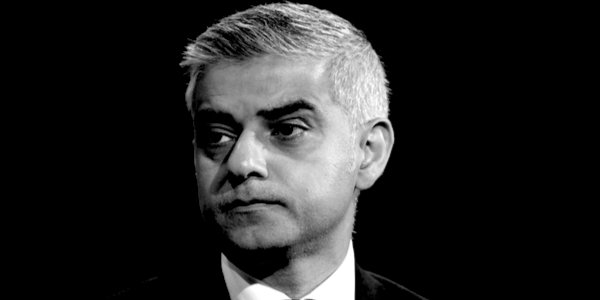
The aim of the indefatigable drive for regionalisation is in effect to abolish England: to divide it up into bite-sized pieces roughly equal to the other three nations which make up the United Kingdom, each headed by a mayor who, bloated with self-importance, will implement policies decided by global and home-grown NGOs beyond the control not only of local electorates, but of our self-emasculated national government. London Mayor Sir Sadiq Khan – co-chair of the C40 Cities Climate Leadership Group; ex-officio patron of the World Cities Culture Forum; Special Envoy, Fossil Free Cities; member of the World Conference of Mayors – shows the way.
A more benign interpretation of the regional imperative is equally depressing, being based on the repeatedly disproved belief that top-down planning can inject new life into parts of the country suffering from ‘a pattern of economic underperformance relative to England’s more affluent South East’.
It is not more levels of government which are needed, but less interference from government at all levels: less regulation; less taxation; an end to counterproductive DEI. Equally, if not more, important would be the creation of truly local banks (not mere branches of the supranational titans). Such banks would lend money to local entrepreneurs and businesses, adding value to the local economy and increasing local purchasing power, instead of allowing it to be hoovered away to London and beyond by the centrifugal power of the Big Five. They would finance the creation of new wealth in the places where it is most needed, rather than enabling the purchase, and inflating the prices, of existing assets.
When people are allowed greater freedom of action and greater prospect of gain, and when entrepreneurs can rely on adequate financial backing by banks committed to the local, not global, economy, individual genius can flourish, seeding the whole community with hope and activity.
As it is, local elections are approaching, and there will, sadly, be no party on my polling slip called Whitley Bay First.
Lines written after my first encounter with North Tyneside Council
(Wallsend, 1980)
Earth has not anything to show less fair;
Dull would he be of soul who could deny
That what takes place here is a travesty
The ruling group doth meet once more, to swear
Its duty, none suborning; over there
Whips glower doom, threaten with beady eye,
Making their count as arms are lifted high,
And mindless twittering fills the smoke-hung air.*
Never did men more dutifully creep
In line to render tally: good or ill,
They vote it through, a flock of silly sheep,
So many simple minds with but one will.
Dear God! Why, that one even seems to sleep,
Yet lifts his helpless arm, compliant still.
*In those days councillors, though not the public, were still allowed to puff away.