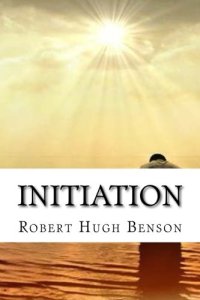
Robert Hugh Benson’s “Initiation” is a novel which delves and dives deep into the mystery of suffering. Its theme, and the reader’s following of the purgatorial steps of the “initiation,” is perfect for those seeking to take the purgatorial steps on the Lenten pilgrimage to Golgotha.
The literary reputation of Robert Hugh Benson, one of the most popular and prominent Catholic novelists of the early twentieth century, appears to be in the ascendant. This is especially the case with respect to his groundbreaking dystopian novel, Lord of the World, which has been praised independently by the three most recent popes.
Pope Francis told journalists in 2015: “There is a book … called Lord of the World. The author is Benson.… I suggest you read it. Reading it, you’ll understand well what I mean by ideological colonization.” The pope described the novel as prophetic in its depiction of radical secularism in politics and radical relativism in philosophy and in its warnings about the danger and destructiveness of “progressive” ideas divorced from religion and traditional morality.
Eight years later, in a talk given in Budapest in 2023, Pope Francis reiterated the recommendation that Lord of the World should be heeded for its cautionary vision of a future in which all that is truly human and humane is sacrificed to technologically-driven totalitarianism.
Many years earlier, in February 1992, Cardinal Joseph Ratzinger, the future Pope Benedict XVI, had cited Lord of the World in a lecture in Milan, calling it a work that “gives much food for thought”. Most recently, the present pope, Leo XIV, speaking in September 2023 as Cardinal Robert Prevost, also recommended Benson’s novel, saying it warns of what could happen to a world without faith.
Aside from Lord of the World and its vision of a dark tyrannical future, many of Benson’s historical novels depicting an equally dark and equally tyrannical past are also finding a new generation of readers. The King’s Achievement, Come Rack! Come Rope! and By What Authority?, each of which is set during the Tudor Terror of the sixteenth century in which Catholics were executed and persecuted for the practice of their faith, have all been published in new editions.
It is, however, a lesser known work by Benson that I would like to recommend as good spiritually meditative reading for the Lenten season.
Initiation was written in 1913 and not published until the following year, a few months before Benson’s untimely death from pneumonia at the tragically young age of forty-two in October 1914. The novel’s theme is suffering, which makes it a good companion on the Lenten journey to Calvary.
The novel’s protagonist is Sir Nevill Fanning, a young Catholic nobleman, presumably from an old recusant family, who is indifferent to his faith, taking it for granted. He despises pain, considering it a sin, and finds artistic depictions of suffering to be insufferable. He is especially repelled by an image of the Pietà, considering its graphic expression of the suffering of the Mother of Christ as she cradles her crucified Son to be in poor taste.
Sir Nevill finds a welcome distraction from what he considers the morbidity of his Catholic faith in his attraction to Enid Bessington, a beautiful young woman whom he meets in Rome. Her agnostic indifference to religion is part of the attraction and her own disdain for suffering exemplifies what he perceives to be a kinship of spirit. They are soon engaged to be married, their relationship forming the romantic backdrop to, and the creative catalyst for, the twists and turns of the plot. The engagement causes tension, impacting Sir Nevill’s relationship with Anna Fanning, his widowed aunt, who is pious in her faith and protective of her nephew’s wellbeing.
Other characters add to the interpersonal dynamic: Anna Fanning’s young son and Sir Nevill’s nephew, Jim, introduces a childlike innocence and naiveté, both charming and disarming; the local priest infuses an abrasive element in the candid awkwardness of his manner; Sir Nevill’s loyal friend, Algy Lennox, is simple and unassuming, and, according to Benson’s biographer, the Jesuit C.C. Martindale, was the “very honest, ordinary young Catholic… a type Benson always liked – the perfectly groomed, fairly innocent, very fresh and unquestioning young man”. Against the levity of Algy’s presence is the dauntless and indomitable presence of the elderly widower, Mr. Morpeth, whose daughter is killed tragically in a riding accident; his deep Catholic faith and serene wisdom provides the spiritual gravitas amidst the gravity of the sins surrounding him.
As for the “initiation” that gives the novel its title, it will be sufficient merely to quote the reference to it by Anna Fanning near the novel’s end: “She saw these now to be but steps of an initiation of which she had never dreamed – an initiation into a secret of which she had thought that she already held the key. She had been told long ago of how serene she seemed – Nevill himself had spoken of it to her when her husband had died: she knew now, in the possession of real serenity, how false the other had been. It had been a trick of temperament – no more than that.”
As for what the steps of the “initiation” entailed, it is not for those who have read the novel, those who have been initiated into its secret, to reveal it to the uninitiated who have yet to read it. All that this reader will reveal is that Initiation is a novel which delves and dives deep into the mystery of suffering. Its theme, and the reader’s following of the purgatorial steps of the “initiation”, is perfect for those seeking to take the purgatorial steps on the Lenten pilgrimage to Golgotha. To be initiated into the novel’s secret is to be initiated into the secret of Christ’s suffering and our participation in it. It is a secret worth knowing which is why Initiation is a novel worth reading.
__________
The Imaginative Conservative applies the principle of appreciation to the discussion of culture and politics—we approach dialogue with magnanimity rather than with mere civility. Will you help us remain a refreshing oasis in the increasingly contentious arena of modern discourse? Please consider donating now.
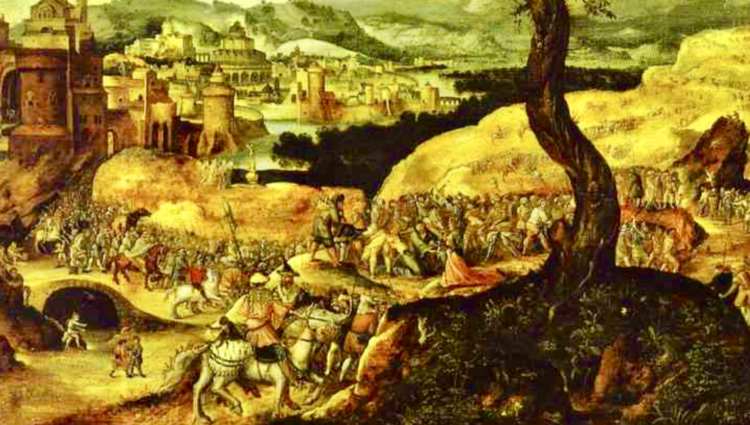
The featured image is “Procession to Golgotha” (16th century) by Joachim Patinir, and is in the public domain, courtesy of Wikimedia Commons.