Not surprisingly, J.R.R. Tolkien never finished “The Notion Club Papers,” but they present a critical insight into his own view of the Inklings—not only mythologizing, but celebrating, them.
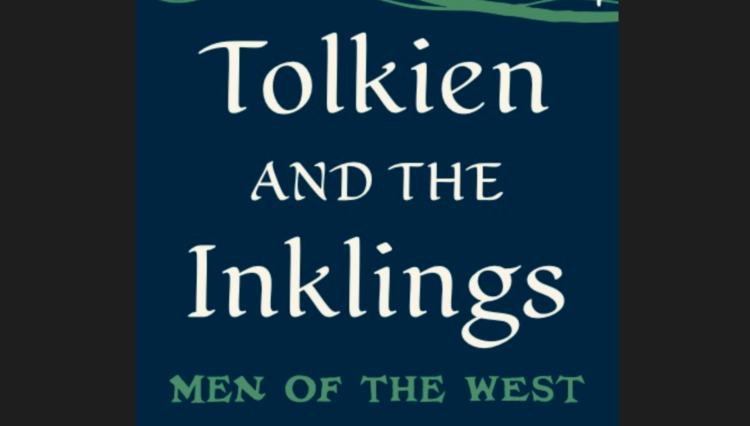
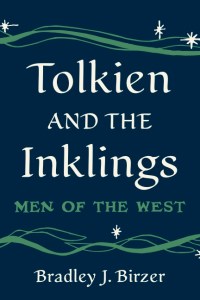
Dear Reader, the following—a discussion of Tolkien’s unfinished novel, The Notion Club Papers, comes from chapter six of my forthcoming book, Tolkien and the Inklings: Men of the West (Encounter Books). Here’s hoping you enjoy this little slice of the book.
 Could one mythologize the mythmakers? Between 1944 and 1946, Tolkien did exactly that with his never completed “The Notion Club Papers,” turning his Inklings into heroes and dreamers. Taking his stories, incomplete but fascinating, from his incomplete The Lost Road and from his tales of Numenor, Tolkien posited a future Oxford society several decades from the time of his writing. Perhaps taking something from Lewis’s That Hideous Strength, Tolkien considered the notion of “true dreams,” that is a dream of reality itself. Indeed, Tolkien makes several references to Lewis and the Space Trilogy throughout the Notion Club Papers.
In one of the extent manuscripts, Tolkien makes his references to the real-world Inklings clear. In his foreword, he writes “Beyond Lewis or Out of the Talkative Planet,” a not-so-subtle reference to the first of Lewis’s space trilogy, Out of the Silent Planet. Further, Tolkien explained, this was a “a fragment of an apocryphal Inklings Saga.” In a note to the Inklings themselves, he wrote “While listening to this fantasia (if you do), I beg of the present company not to look for their own faces in this mirror. For the mirror is cracked, and at the best you will only see your countenances distorted, and adorned maybe with noses (and other features) that are not your own, but belong to other members of the company—if to anybody.”
From here, Tolkien describes his characters, and they are, though somewhat clouded in mystery, parallels to the members of the actual Inklings. He is Michael George Ramer, a Hungarian philologist. Lewis seems to be Philip Frankley, an extensively published poet who (!) dislikes things Northern. Rupert Dolbeard, a research chemist, seems to be Humphrey Havard, and Warnie Lewis is Nicholas Guildford, “the Club reporter.” Wilfrid Jeremy, a science fiction author, is probably Lord David Cecil. Also appearing is Owen Barfield as the very obviously named Ranuph Stainer (Rudolph Steiner) and Gervase Mathew as Dom Jonathan Markison. Additionally, Christopher Tolkien seems to be John Jethro Rashbold, an undergraduate and scholar of classics, a favorite of Frankley. (It’s also worth noting that though Tolkien mentions Williams in his discussions by the group, there is no Charles Williams figure among the various Inklings.)
The Notion Club Papers begins with an intense discussion of scientifiction (science fiction) literature, its strengths and weaknesses, and in a very meta fashion, C.S. Lewis is described, not inaccurately, as a hinge between old science fiction and new. In a footnote, Tolkien explains that the members are all science fiction fans, especially with regard to space and travel, echoing Tolkien and Lewis’s 1939 toss-up! In their discussion, they discuss the possibility of high and low art with science fiction and its relationship to fairy stories, which seem to hold a privileged place among the group.
From here, the conversation turns to “true dreams” that can see across both time and space. Are these memories of things that never were or which might yet come? “All houses are haunted,” one member suggests, implying that space and time are as well with the mind and dreams fixating on such things.
This leads to a discussion of Free Will and sentience, a remembrance of the explosion of a Black Hole in the United States (maybe a reference to the Manhattan Project), speculations on the death of King Arthur, notions of blessedness and holiness, the realities of Atlantis, the meaning of elvishness, and even the fiction of Charles Williams. Interestingly, Tolkien also includes a discussion of a “Great Wave,” a dream he had had as a child that had led to his creation of Numenor.
In his continuation of the story, the members of the Notion Club beautifully discuss the intersection of myth and history.
Sometimes I have a queer feeling that, if one could go back, one would find not myth dissolving into history, but rather the reverse: real history becoming more mythical—more shapely, simple, discernably significant, even seen at close quarters. More poetical, and less prosaic, if you like. In any case, these ancient accounts, legends, myths, about the far Past, about the origins of kings, laws, and the fundamental crafts, are not all made of the same ingredients. They’re not wholly inventions. And even what is invented is different from mere fiction; it has more roots…. Of course, the pictures presented by the legends may be partly symbolical, they may be arranged in designs that compress, expand, foreshorten, combine, and are not at all realistic or photographic, yet they may tell you something true about the Past.
Such an example, would be, not surprisingly, King Arthur and the Arthurian legends.
Ramer (Tolkien) exclaims:
I don’t think you realize, I don’t think any of us realize, the force, the daimonic force that the great myths and legends have. From the profundity of the emotions and perceptions that begot them, and from the multiplication of them in many minds—and each mind, mark you, an engine of obscured but unmeasured energy. They are like an explosive: it may slowly yield a steady warmth to living minds, but if suddenly detonated, it might go off with a crash: yes: might produce a disturbance in the real primary world.
From here, Tolkien begins the real adventure, as Lowdham begins to have memories of Numenor. Though this had happened to Tolkien in real life, he places these words in Lowdham’s mouth: “Hail Earendel, brightest of the angels, above the middle-earth sent until men,” a line from the medieval Crist that inspired Tolkien’s mythology. Following this, the men began to discuss language as well as continue to discuss the intersection of myth and history.
Not surprisingly, Tolkien never finished The Notion Club Papers, but they present a critical insight into his own view of the Inklings. In 1946, he resumed writing, instead, The Lord of the Rings. Still, from The Notion Club Papers we find not only a mythologizing of the Inklings, but a celebration of them. Their conversation is rich and deep, and in some mysterious way, their imagination is real and concrete.
__________
The Imaginative Conservative applies the principle of appreciation to the discussion of culture and politics—we approach dialogue with magnanimity rather than with mere civility. Will you help us remain a refreshing oasis in the increasingly contentious arena of modern discourse? Please consider donating now.