The writer is in the United States
MY SELF-effacing English mother taught me never to claim expertise in something I knew nothing about. She added that while it was okay for other people to say good things about me, it was definitely not okay to say good things about myself. A daughter of the Edwardian era, she considered it vulgar to boast, and rightly so.
One of the first lessons I learned as a rookie teacher was to have the courage to admit my ignorance when asked a question I could not answer. Insecure new teachers often feel the need to fake it by simply making stuff up, not a good career move in this age of the internet when information, accurate or otherwise, is just a click away. I’d be lying if I told you that I never fell into this trap. Students will spot a fake on the first day of class. Besides, they respect you more for not claiming teacherly omniscience.
So please believe me when I say I’m way out of my depth when it comes to writing about tariffs, which have been much in the news since the Supreme Court of United States (Scotus) ruled last Friday that President Trump does not have the authority unilaterally to impose sweeping, open-ended tariffs under the International Emergency Economic Powers Act. The implications of the ruling have dominated headlines in this country ever since, and no doubt throughout the world as well.
While being close to economic illiteracy, I do, of course, know what tariffs are and have even included references to them in the history classes I have taught over the years, as in the Smoot-Hawley tariffs of 1930, viewed by many historians to have precipitated the Great Depression, or the tariffs proposed by the British statesman Joseph Chamberlain at the beginning of the 20th century that would have abandoned free trade and afforded preferential status for nations within the British Empire. And let’s not forget Sir Robert Peel’s repeal of the Corn Laws in 1846, and the opening up of Britain to the importation of cheap foreign grains such as barley and wheat, almost destroying the Conservative Party, as Joseph Chamberlain would also come close to doing more than 50 years later.
As a lifelong fan of the great Adam Smith, I have a tendency to distrust tariffs and champion free trade – providing, of course, that the trade involved is free on all sides of the equation. In short, if trade is to be free, it must also be fair.
Before Trump won re-election in November 2024, it is estimated that 190 nations had imposed tariffs, some of them very high, on American imports. America’s trading partners, including the EU, were taking advantage of American largesse. Would those members of the North Atlantic Treaty Organization (Nato) have been able to create the most generous systems of social welfare in human history had it not been for the military might of the United States keeping the Soviets at bay? Dare I say it, but America is not the world’s ATM, although many seem to see it as such, including many Americans.
Thus far, I continue to support Trump’s attempts to encourage member states of Nato to pay their fair share for their own defence and compel EU nations to remove tariff barriers that treat the US unfairly. When I hear EU diplomats extolling the virtues of free trade, I suspect they are referring to trade that benefits the countries they represent and to the detriment of the United States. In the words of Stephen Miller, White House deputy chief of staff for policy and homeland security adviser: ‘Why should America protect the world, send foreign aid to the world, defend the world, provide for the world, and in exchange, get ripped off by every other country in the world?’ Yes indeed, Mr Miller, why should hardworking American taxpayers continue bankrolling the rest of the world, a world in which hating America and burning its flag are national pastimes?
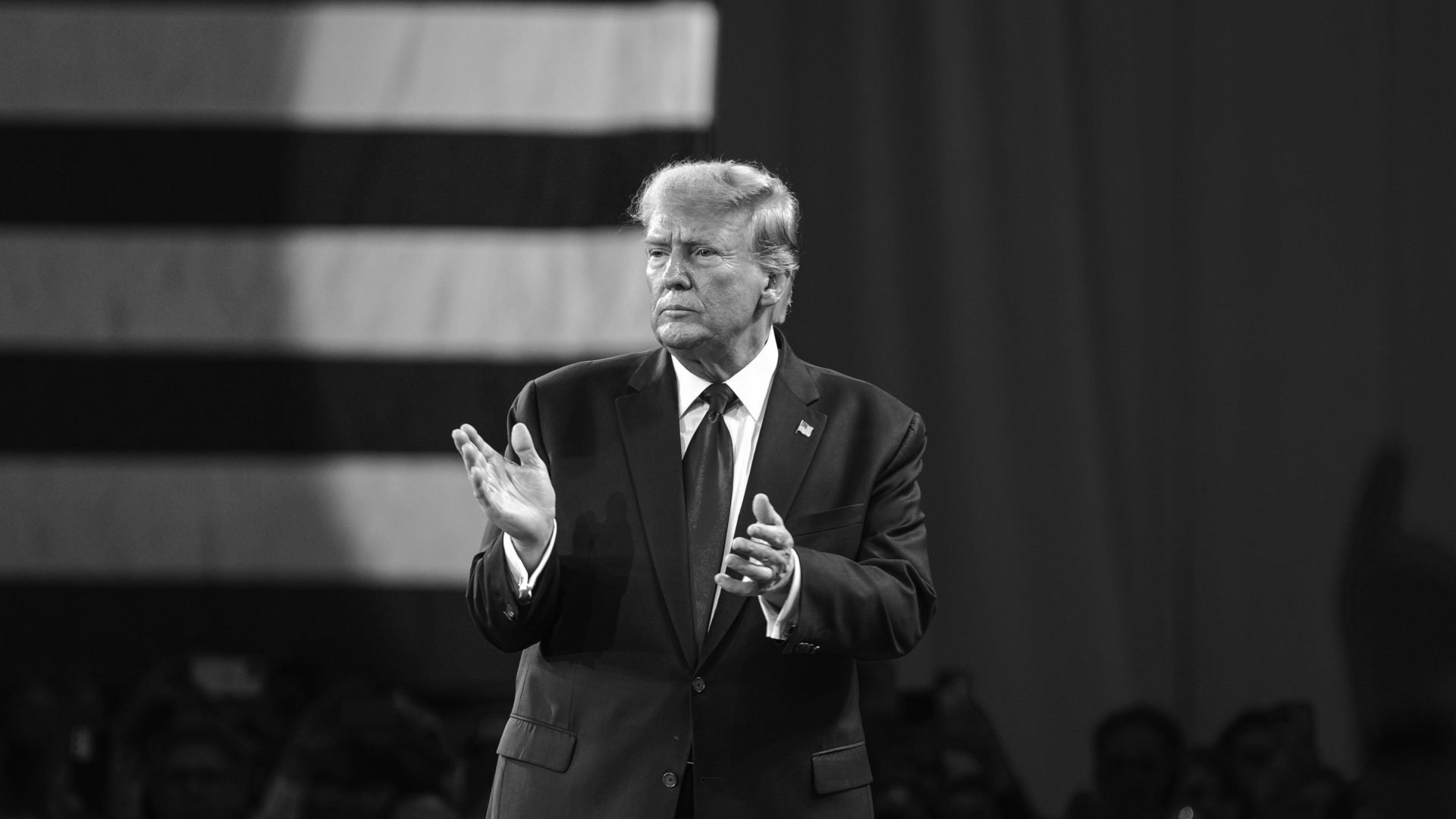
Being the man he is, Trump has already vowed to push tariffs regardless of the ruling from Scotus. I wish him luck as I believe his economic policies are designed to favour and help working-class Americans, a novel concept in contemporary America.
But in the days since the ruling, and after listening to and reading the legacy media, the thing that stands out most to me has been the undiluted elation felt by the left-leaning establishment over this apparent defeat for Trump, with some commentators on National Public Radio sounding almost giddy with joy.
Not that these people give tuppence for tariffs or the working-class Americans who might benefit from them, but because they hate Trump with a pathological intensity that is hard to quantify. This blinds them to any other considerations like patriotism or concern for the health and prosperity of the nation that has made them rich and over which they continue to hold sway – Trump’s valiant ongoing efforts to break their power notwithstanding. Their self-indulgent, and, I think, self-interested, detestation of Trump and dismissive contempt for his supporters, a good number of whom are working-class people living from pay cheque to pay cheque, is tearing their country apart; their unflagging attempts to divide the nation along racial and ethnic lines are causing ordinary Americans to mistrust and even fear one another. Never has a great nation been so ill-served by its political and cultural elites as the nation I now call home.
Their delirious joy regarding this ruling banning Trump’s tariffs is just another manifestation of Trump Derangement Syndrome, an apparently inoperable malady that is poisoning the minds of tens of millions of otherwise normal men and women, both here and abroad. Very little of this has anything to do with differing opinions about economic policies. Like virtually every other issue in the cultural and political arena these days, it is about Trump and only Trump.
Indeed, had Trump gone full Milton Friedman or Friedrich Hayek, his many detractors would now be singing the praises of protectionism.