THE national debate on ritual slaughter has collapsed into a lazy binary: ban both halal and kosher or protect both. That framing is politically convenient and intellectually dishonest.
There may be a serious public case for restricting or even banning halal slaughter in Britain. There is no comparable case for banning kosher. Treating them as equivalent is a category mistake.
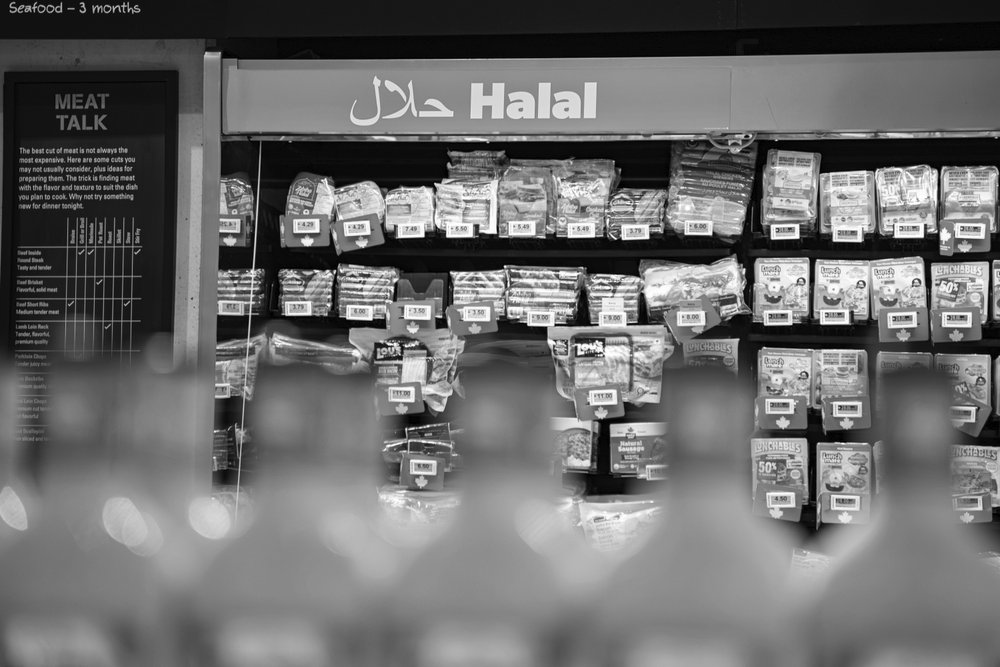
Start with scale and public impact. Britain has a large and rapidly increasing number of Muslims – more than 5million. Halal meat is now deeply embedded in the mainstream food chain. In many schools, hospitals and prisons, halal meat is served as the default, often without clear labelling or meaningful choice. Non-Muslims frequently consume it unknowingly. This is no longer a purely private religious matter. It is about public institutions reorganising themselves around the requirements of one community.
By contrast, Britain’s Jewish population is roughly 250,000 and has been steadily decreasing. Only a minority keep kosher. Kosher meat production is small, tightly contained, and overwhelmingly consumed within the Jewish community. Nobody is compelled to eat kosher. It is not quietly becoming the standard in state-funded catering. It does not reshape public procurement policy.
That difference alone should end the simplistic ‘treat them the same’ argument.
There are operational differences too, and they matter. Both traditions, in their strictest forms, require slaughter without pre-stunning. But they are not identical in practice. Kosher production operates under continuous rabbinical supervision with uniform, tightly enforced rules governing the knife, the method, and post-slaughter inspection. The UK kosher sector is small and internally consistent.
Halal production is overseen by multiple certifying bodies with varying standards and enforcement. Investigations have exposed inconsistencies and welfare concerns in some operations. Given the far greater scale of halal production – much of it entering the general food chain – those risks are magnified.
If the political concern is animal welfare, scale and consistency matter. If the concern is social cohesion, scale matters even more.
Halal has become controversial not simply because of slaughter technique but because of its growing institutional footprint. It is tied to wider questions about integration, accommodation and the steady extension of Islamic norms into public life. Kosher is not. British Jews are a long-settled, deeply integrated minority. They are not pressing for kosher-only public menus. They are not seeking to reshape state institutions around their dietary code.
Yet politicians such as Rupert Lowe propose banning both practices on day one, describing non-stunned slaughter as ‘barbaric’ and ‘un-British’. That may sound decisive. It is also crude.
If the concern is animal suffering, consistency would require a broader reckoning with industrial slaughter methods across the board. Stunning is not a magic wand that eliminates distress. Anyone who eats meat accepts that animals are killed. Targeting a tiny, tightly controlled Jewish practice while tolerating mass commercial slaughter looks less like principle and more like opportunism.
There is also an uncomfortable truth. Jewish representative bodies, in the name of progressive solidarity, have publicly tied kosher to halal under the banner of ‘religious slaughter exemptions’. In doing so, they have helped create this moment. By refusing to emphasise the obvious differences – in operation, scale, impact and public consequence – they have allowed the debate to become all-or-nothing.
That is a strategic error.
A serious government could say: halal should not be the default in public institutions; labelling must be mandatory; no one should be served religiously prescribed meat without consent. That would be defensible. It could also say that a small, self-contained kosher sector poses no threat to national cohesion and does not warrant prohibition.
Britain does not need to ban kosher to address concerns about halal. One is a large-scale, politically charged question about integration and public policy. The other is a private religious practice of a small, settled community.
They are not the same, and pretending they are serves neither animal welfare nor social stability.