A COMMENT under my recent TCW piece about Mecca suggested that it was ‘petty’ to object to the traditional English name for that city being superseded by ‘Makkah’, the name which appears below Arabic characters on Saudi Arabian road signs.
I am happy to admit that the fashion for replacing well-known place names with more ‘authentic’ versions is as nothing compared with the overall relegation of our native culture and traditions to the same or even a lower level than those of recent imports, but though it is a minor irritation, it is not a ‘petty’ one: rather, it is a perfect example of the glee with which our entrenched political and intellectual establishment rush to jettison all things harmlessly British – and, most particularly, all things English – while bowing and scraping to all that is not.
The first time I noticed the name-juggling was when the political bone of contention that was Formosa disappeared from news reports shortly before a mysterious place called Taiwan put in an appearance. Since that island had never featured prominently in English history or literature, this did not disturb me. It was only when somewhere called ‘Beijing’ began to grab the headlines that I felt the first stirrings of protest.
Why, I wondered, was this sudden innovation being forced upon us? After all, ‘Peking’ represents a fair stab at that city’s name in Cantonese, as picked up by early traders in Canton and Hong Kong. Besides, what about Peking Duck (‘a dish from Beijing’, Wikipedia now says, confusingly)? And what about future generations, forced to resort to footnotes when they find themselves confronted by ‘Peking’ in books pre-dating the latter years of the 20th century? (Or will all the old editions be removed from circulation, and new versions with the correct names – and, perhaps, carefully corrected opinions – substituted?)
‘Mumbai’ followed shortly afterwards (there goes another duck). It is interesting that, although this is now the name approved by national and global officialdom, many ordinary Indians on the subcontinent itself are perfectly happy to keep using the wicked colonial ‘Bombay’ in their everyday conversations. That is what the place is properly called in English, and they have, after all, inherited English as their ‘subsidiary official language’.
Change continued apace. Ceylon became Sri Lanka; Siam, Thailand; Burma, Myanmar . . .
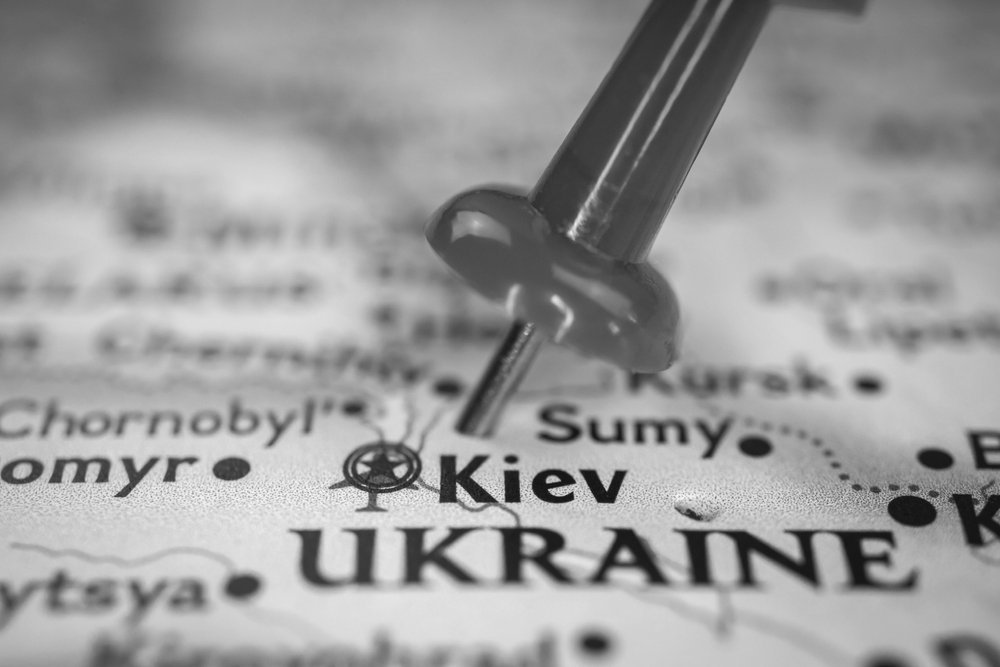
And then there was ‘Kyiv’. In a futile gesture of political solidarity, Mussorgsky’s Great Gate and the chicken speciality were quickly relabelled. Why? How did it help the Ukrainians, however intense the desire to support them, to scrap the perfectly serviceable English ‘Kiev’ for something which trips less easily off the Anglo-Saxon tongue?
As for ‘Türkiye’, Mr Erdogan: at the United Nations, yes; within our borders, no thank you.
It is not as if other countries defer to our sensibilities. Nor do we expect them to. We never take umbrage when the French refer to England as Angleterre, or the Italians opt for Inghilterra. The Chinese for the United Kingdom is Ying guo; for England Ying ge lan; for Scotland Sugelan; and (alas for Chinese gastronomes!) for MacDonald’s, until a few years ago, Mai dang lao. What is there to complain about? It is natural for people with differently exercised vocal organs to adapt to them to uncouth foreign sounds as best they may.
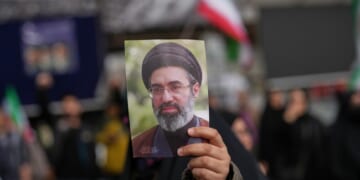
The change in proper names relating to Islam is particularly annoying. When I was at school, the prophet’s name was Mohammed. It had been his name in English for centuries. Now Muhammad is favoured, though you can also take your pick of Mohammad, Mohamed, Muhamed, etc: Muhammad being preferred by scholars as the closest approximation to the Arabic sounds. The question is whether most ordinary English speakers are more bothered about reproducing authentic Arabic sounds than sticking with what is good enough and familiar; but when are ordinary English speakers asked what they would prefer? The changes flow unsolicited ex cathedra: ‘Moslem’ has become ‘Muslim’; the Koran the Quran (or, worse, for those increasingly unable to cope with the use of the apostrophe even in English, Q’uran); and anyone unfortunate enough, like myself, to have been reared on the old names, who struggles to keep up-to-date and maintain uniformity even in writing a short article.
Of course, all these changes are political, a gesture of repentance for Western imperialism. Within Europe (with the exception of the hot potato that is Ukraine) names remain unchanged. There has been no move to substitute España for Spain, or Deutschland for Germany; Firenze has not displaced Florence, or München, Munich; and Moscow and Vienna remain unchallenged by Moskva and Wien. What is more, it is clear that not every nation experiences post-colonial guilt with the exquisite anguish of our own abject elite: the French, for instance, with greater respect for their cultural heritage than our own shamefaced intelligentsia, continue to refer to the capital of China as Pékin (and, I understand, are even showing a staunch reluctance to let go of the time-honoured Kiev).
I can see the case for observing the niceties of diplomacy or scholarship where diplomats or scholars are concerned: but most of us are neither diplomats, dealing with touchy international egos, nor scholars, deeply engaged in linguistic technicalities. For us, plain English and traditional names are surely good enough for everyday use, even in the media.
Maybe the real point, though, is that English isn’t plain, is it? It comes adorned with all the resonances of centuries past, with people and places who have figured for generations in our history and literature. To change the names of those people and places is, in some small way, to uproot us and cut us off from the sustenance of what has gone before.
But then that seems so often to be the intention, doesn’t it?