IT WAS most inconsiderate of President Donald Trump and his partner in crime Benjamin Netanyahu to start a new war over the weekend, driving the Gorton and Denton by-election off the front pages and largely taking it off the news agenda altogether.
There was, in fact, much more to say on the Labour defeat and related matters and, if we were totally reliant on the legacy media some important points would be lost, leaving important developments unexplored.
Fortunately, for those who wish to keep themselves fully informed (a dwindling band, I fear), there is still social media, acting both as a source of comment and a noticeboard pointing to Substack blogposts and other sources.
In both respects, I was drawn to a post on X by Donna Rachel Edmunds, with a link to her Substack in which she asserted that the most likely outcome at the next election is a red-green alliance coalition government. [This article was republished by TCW.]
She tells us she has spent the last month surveying the left and right of British politics, her research pinning down the degree of control the left has over key elements which have a strong influence on voting outcomes.
She includes tactical voting campaigns, activist organisations, think-tanks with strong ties to all parties, the trades unions, much of the civil service, quangos, local government, professional bodies and the charity sector.
With that comes access to huge levels of funding, the scale of which dwarfs anything the right can muster. On top of that, it has access to and the sympathy of the state media, in particular the BBC, which is still far more influential than it should be.
Edmunds looks at the polls which have been placing Reform consistently in lead position, noting that a recent MRP prediction gave the Gorton and Denton seat to Reform by a healthy margin. Obviously that didn’t happen, which she attributes to three phenomena which eroded Reform’s apparent lead.
The three encompass Reform’s ground game, which Edmunds says was lacking, the Muslim vote, which was tactical and organised, and the right wing split, including the schism generated by Advance and Restore.
The most basic flaw with polling predictions, she says, is so fundamental that it’s shocking that no one is making any attempt to factor it in.
The error is in assuming that polling translates into seats at a roughly uniform rate, but it doesn’t and never has. Local campaigning has always had the potential to buck a national trend and, as the party-political landscape has grown more crowded and chaotic, there is vastly more scope for anomalous results to arise – which we saw in Gorton and Denton.
Obvious and powerful evidence of the influence of the ground game is there to be seen in the 2024 general election results: Reform with 4,117,610 votes (14.3 per cent of those cast) won five seats. The Lib-Dems, with 3,519,143 votes (12.2 per cent) have 72 sitting MPs. That, Edmunds says, is the difference a good ground game makes.
In that context, she draws attention to an interesting finding. A third of Reformers did no campaigning in the election, but even among those who did, efforts were overwhelmingly concentrated online. The party lagged behind all the others when it came to getting activists out on the streets to leaflet and canvass.
Edmunds says the party faithful can’t be entirely blamed. She had emailed her local branch offering to leaflet her area for them and had been turned down. The party, she was told, was paying for the Post Office to deliver leaflets, leaving activists happy to sit at home, relying on social media. She never did see a Reform leaflet in that campaign, she says. Nor did I.
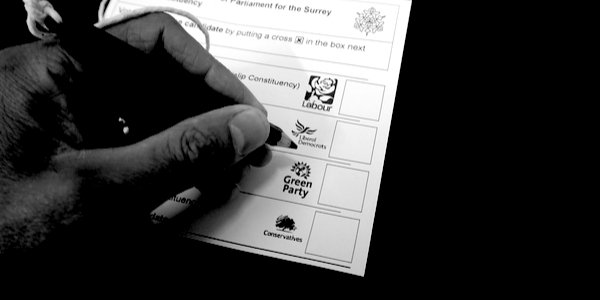
As to the Muslim vote, self-evidently the Muslims endorsed the Green candidate in Gorton and Denton, and the result wasn’t even close. At the next general election, there will be roughly 20 seats where Muslims are more than 30 per cent of the population. In these constituencies, the combined progressive-Muslim vote will be so large that Reform cannot win, regardless of its national lead.
In the approximately 70 further constituencies where Muslims constitute between 10-30 per cent of the population, the crucial question will be whether the progressive vote consolidates or splits. Gorton says it consolidates, and if this is the rule rather than the exception – and every structural incentive points that way – a significant number of these seats are simply off-limits to Reform.
And that is without the propensity of the Muslims to cheat, with the Electoral Commission, as the regulator, telling election officials to turn a blind eye to voter fraud for fear of ‘offending cultural sensibilities’.
No one who has any direct experience of counts in Muslim areas will be unaware of the significant levels of fraud, both the so-called ‘family voting’ and the abuse of postal votes – matched only by the determination of returning officers and police to ignore the problem in an example of institutional myopia which parallels the grooming gang scandal.
Raja Miah does a reasonable tour de table on X, telling us how Pakistanis rig elections – which indeed they do, just as they do in their home countries. He refers to a 2008 report commissioned by the Joseph Rowntree Reform Trust which documented the biraderi system and its connection to postal vote fraud. It described ballot papers being completed within the family home or, in their own words, ‘taken to a central facility (so called “voting factories”) for completion by party representatives’.
That phrase has been in the public record for 17 years. It was cited in official parliamentary research briefings. It was submitted to government. It is the findings of an organisation that no one would describe as politically of the right.
Yet, with complaints rarely followed up – although made with monotonous frequency – and systematic investigations as rare as hens’ teeth, it is easy to pretend that this is just a minor perturbation.
But the problem goes way back and the recent scale of family voting reported at Gorton and Denton says otherwise. And, in a fundamentally corrupt voting system, Reform cannot hope to compete.
As to the right-wing split, this cannot have had much effect at Gorton and Denton. Advance won just 154 votes in Gorton, a fraction behind the Monster Raving Loony Party on 159, but the party is less than a year old and has not yet got a proper branch structure up and running.
With three years yet to go until the next general election must be called, either Advance or Rupert Lowe’s Restore Britain has time to build enough infrastructure to stand candidates in key seats, with the potential to milk enough votes to rob Reform of some victories – assuming that they don’t self-destruct.
Detail on the effect of the left’s infrastructure comes in another piece which tells us how non-governmental organisations (billionaires) engineered the Gorton and Denton by-election victory (and will do so again in the general, across a wide range of seats).
Sinister organisations, some masquerading as charities, co-ordinate activities on a ‘stop Reform’ ticket, flying under the radar, unencumbered by spending limits applied to registered political parties, tapping into lavish funds from overseas foundations.
Non-party actors, the article says, can deploy professional data tools, branded narratives, demographic GOTV, and transnational subsidies without the disclosure requirements imposed on political parties. Low-turnout contests under first-past-the-post become particularly susceptible to such parallel economies.
Without reform of non-party spending loopholes, foreign-influenced civic technology, charitable-political separations and polling-station integrity, localised democracy risks becoming a theatre in which the most sophisticated NGO coalition prevails, not necessarily the candidate with the broadest community mandate.
In other words, the essence of what remains of our democracy is at risk, with structural barriers in place which will ensure that the ‘will of the people’ will never prevail. With the focus currently on Iran and the overthrow of a tyrannical dictatorship, it is ironic that we seem to be in the process of building one here.