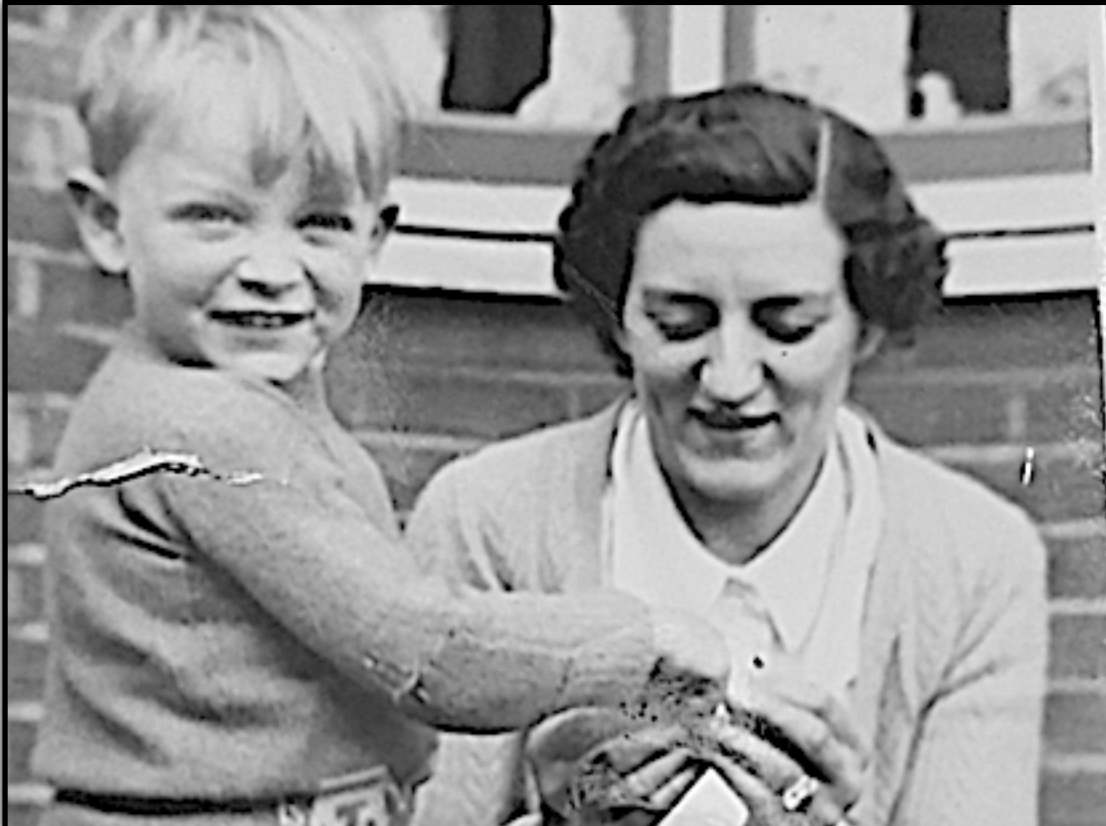
I CAME into the world, partly wanted and partly out of necessity, in 1951. My dad was a farmworker, and my mum a housewife. I remained an only child.
Our tied cottage was of nine inch, solid brick construction, with no insulation and single-glazed windows. We were not on mains gas. Only one room was regularly heated; that was the kitchen, which had a coke-fuelled Rayburn. Owing to an anomaly in the nutation of the earth, from November until February our farm came within half a mile of the Arctic Circle. At bedtime my sheets were so icy that Emperor penguins would try to establish their colonies there. In the morning, glittering fern-like frost patterns covered the inside of the windows. We all had chilblains. Every January a pipe would burst, sending water pouring through the ceiling. None of the floors were wall to wall carpeted. The brown lino was as comforting to walk on as granite.
The bathroom was tiled to shoulder height in black tiles, and was as welcoming as a mortuary. It was not heated. There was a blanked-off electric power point high up on one wall, but dad was too frightened of the cost of electricity to have anything like a Dimplex fitted. We had a Leo paraffin stove instead. It emitted a wringing tepidity and went ‘gloink-gloink-gloink’ every 20 minutes as the reservoir replenished. It made the house smell like a Salvation Army hostel. We had a hot water tank in the airing cupboard holding enough for one bath; when emptied it took about five hours to reheat via the back boiler in the Rayburn. The plumbing in the house had been installed upside down, so that if you opened a tap in the kitchen while the hot tap in the bathroom was running, the system sucked air into the pipes, reducing the flow to a dribble. The airlock would sometimes get bored, and wander off around the house, clonking away at two o’clock in the morning like some vexatious poltergeist. We had mice in the loft, in the pantry and in the cupboard under the stairs.
In the summer the living room was full of flies, which darted back and forth beneath the single 40-watt ceiling light, depositing brown faecal blobs on all our picture frames. At night the roof timbers would contract, sounding as if an intruder was creeping around upstairs.
We all got stinking colds every September and March: September when I went back to school after the six weeks’ holiday and March when they turned the heating off in the classrooms. Our maths teacher was an ex-Army sergeant who terrified the life out of me; our games master a wiry and sadistic fiend who lived with a sailor; and our history teacher exhaled halitosis so powerful that it could wilt the petals on a potted geranium at 200 yards.
The cold, wet floors of the gymnasium changing room and showers were alive with verrucas. The classroom desks were inscribed with every secret you wished could be buried. There was nowhere to relax or have a laugh with your mates. One half of the school faced due north across open playing fields, so that history, English and art for me resembled an endurance course.
Nothing was open on a Sunday. If we ran out of bread or milk at home, we had to lump it – and lump it even when we did have bread, because the slices of Sunblest loaf my mother used to buy looked, felt and tasted like a kaolin poultice.
We knew not of yogurt, nor broccoli, nor seedless grapes, nor oregano, nor filter coffee. Our tea was PG Tips which tasted like Fynnon Salts and floor sweepings, although C F Tunnicliffe’s picture cards were attractive and fun to collect.
The situation improved marginally when mum learned to drive and could get to the eight-mile distant Sainsburys, but it was very much against the wishes of my father, who was the scariest driver in all of Hertfordshire and West Essex. He had not taken any driving test, having picked up how to drive a lorry when he was a sapper in the Royal Engineers.
Being a passenger with him was like being a psychiatrist dealing with a patient suffering from Tourette’s. We were inexplicably unlucky with our journeys, because on every trip we were trailed, or hindered, or overtaken by the stupidest bl**dy idiot who ever got behind a wheel; who never knew where he was going, nor what he was doing, and who should have been banned from the road.
Even more nerve-racking was that my father was such a skinflint that he never filled the petrol tank more than a quarter full, so the fuel line and carburettor were always getting clogged with sediment. Surprising as it may seem, we weren’t with the AA or the RAC, so if we broke down, we had to depend on the kindness of strangers. Journeys of more than ten miles were fraught with anxiety that we wouldn’t get home safely.
The car’s top speed (a Standard 8) was 35 miles an hour. It would not start if the weather was too wet, or too cold, or too hot; or if the car had been parked on a hill facing up, or on a hill facing down. The interior reeked of shorted electrical circuitry, faux leather and Redex. I could travel no more than three miles in it before getting car-sick, requiring dad to pull over, so that mum could walk me up and down a lay-by and feed me Marzines or barley sugars, which scientists had demonstrated prevented travel sickness for the length of any journey. Once she tried a remedy that she had read about in the News Chronicle: I was required to sit on a thick square of folded brown paper, and hold a penny in my hand. It was something to do with insulating me from the build-up of static electricity, and I was confident it would work, because I had seen the degaussing straps with the little lightning design on them hanging from the back bumper of one or two cars.
Being too young to drive to visit friends or the pictures, and too sensible to ask my father, independent travel on my part was delimited by the availability of public transport. The nearest bus stop was one mile away, along a lonely lane with a dense spinney at one end, bristling with wolves and axe murderers. The buses were double-decker Regent types with open platforms. They ran once every hour. They were freezing cold in the winter, and stopped running after eight o’clock at night, so you had to be sure to be home by then, or you would be sleeping in the bus shelter.
Home entertainment consisted of the Light Programme and Sing Something So**ing Simple; or Sunday Night at the London Palindrome with Bruce Forsyth and Alma Cogan; or Topo Gigio and Pinky and perishing Perky if you were lucky. Our house was behind a Dutch barn, so the TV signal would come to us in instalments. Our television was a 14in 405-line black-and-white model, which must have been originally owned by Logie Baird. The valves took two days to warm up and smelled of burned dust. The set broke down so many times that dad eventually took the tube and chassis out and converted it into a record cabinet, where mum could store her prized collection of classical music: jarring, repetitive ballets by Delibes; and strident operas squealed out by screechy sopranos like Erna Sack. Every record had a pre-supplied click track, because our dog, or dad or I had bumped against mum’s battered old Bush SRP31 at precisely the moment that the auto-change was operating.
If something broke in our house, unless dad could fix it we just had to live with it. Every appliance was held together with string and bitumen insulating tape. We had nothing that worked properly. Everything was bodged. Mum’s ironing board would have made Heath Robinson laugh.
We had no telephone. The nearest phone box was one and a half miles away outside a newsagent. It had a Button A and a Button B, and to make a call you had to lift the receiver and speak to the lady operator, who was polite but firm, and addressed you as ‘Caller’. She took no nonsense and always knew if you had not put enough pennies in the slot.
Socialising consisted of being descended upon unbidden by relatives – the dullest, dreariest, least witty people you could imagine: uncles who would drone on about how busy the A12 had been, and should they take the A11 and come off at Woodford, because then they could avoid that dodgy corner and maybe shave eight seconds off their journey back to Romford; and aunts who would tell you how you were shooting up (if only!), pinching your cheek with their sharp fingernails, and for the ten millionth time ask if you were courting yet.
I was not allowed, nor could mum and dad afford, stylish clothing. I was dressed in home-made clothes that made me look like an extra from Sparrows Can’t Sing. My two best shirts were Bri-Nylon, and once I hit puberty and learned to sweat, people could detect my approach from a distance of two and a quarter miles.
Yes, I miss those days, all right. I will say one thing, though. Along with the rain, there was always a little bit of sunshine sometime; and mum would give me the world on a silver platter whenever she could.