IN ONE of his most remarkable short stories, Story of the Warrior and the Captive, Jorge Luis Borges recounts two seemingly unrelated historical episodes. One concerns Droctulft, a Lombard warrior who, according to Paul the Deacon, at some time in the mid-6th century abandons his people to defend Rome. The other tells of an Englishwoman captured by indigenous tribes on the Argentine frontier who, after years among them, refuses to return to European society.
The symmetry is striking. Droctulft, a barbarian, chooses civilisation; the civilised woman chooses barbarism. The implication is unmistakable: civilisation is not merely inherited. It cannot be taken for granted; it must be chosen, defended – or abandoned altogether.
The paradox often comes to mind when observing the rather dismaying political alignments in which countries of the Western world have been involved lately. In recent decades, it has become increasingly common for governments in former liberal democracies to support, tolerate, or excuse regimes whose political structures rest on ideological absolutism and outright totalitarianism. These alliances appear under different guises: strategic partnerships, diplomatic accommodations, quiet financial and logistical co-operation – or a thunderous silence.
Whatever their form, they raise a troubling question. Why do societies with a long tradition of upholding freedom of expression and pluralism find themselves aligned – openly or tacitly – with autocracies that reject those very principles?
The answer, of course, lies partly in the cold arithmetic of geopolitics. States’ bureaucracies pursue interests – their interests – not moral consistency, nor even the common good. Strategic resources, regional balances of power, intelligence co-operation, and economic ties often outweigh philosophical discomfort.
Realpolitik is hardly a modern invention. Empires and republics alike have long forged alliances with unsavoury partners when circumstances demanded it. Yet the frequency and scale of such alignments today suggest something deeper than mere pragmatism. They suggest a gradual blurring of moral boundaries that reveals, in plain daylight, the fabric of which presumably democratic nations are made.
Civilisation is not simply a matter of technological development or economic wealth. At its core, it is a fragile architecture of shared norms and traditions: the rule of law, freedom of conscience, acceptance of dissent, and the conviction that political authority is limited by constitutional standards rather than sanctified by divine decree or ideological purity. Western regimes show an eerie pattern of comfortable alignment with cadres of despots who bluntly deny these principles. By doing so, they erode the very distinction that once upon a time defined them.
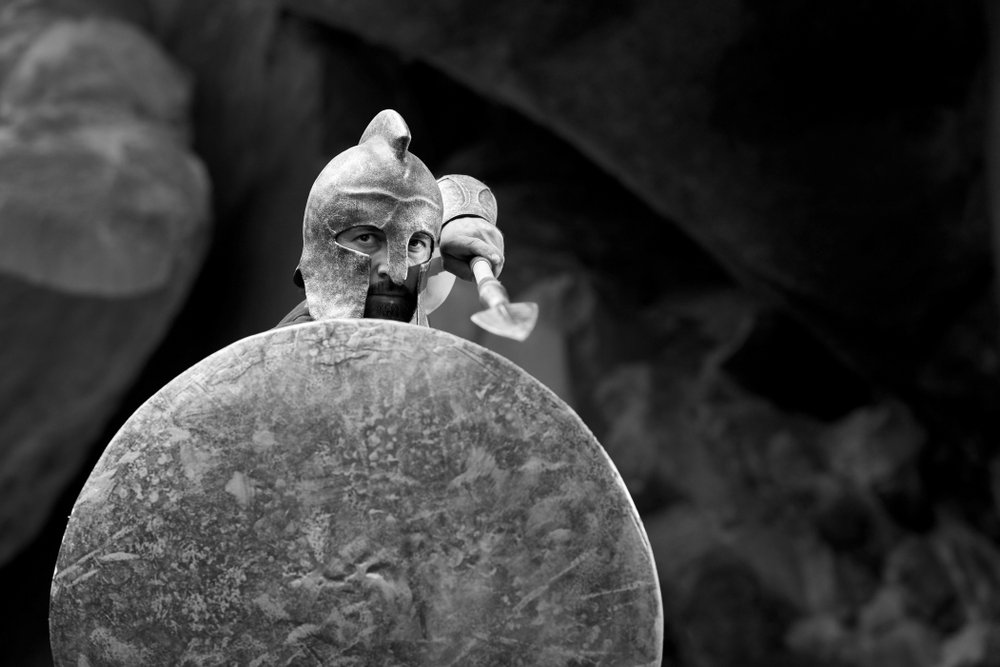
Droctulft appreciated something that modern bureaucrats – elected and unelected – disdain with alarming regularity these days. In 568, the Lombards swept across the Po Valley, taking city after city in large parts of northern Italy. Some strongholds – especially Ravenna, which remained the centre of Byzantine (Roman) authority in Italy – resisted them. The barbarian was so moved by the beauty and order of the city before him that he defected to the Byzantine side and died defending it against his own people. What impressed him was not simply its walls or wealth but the civilisation it represented: a structure of meaning and order stronger than tribal allegiance.
He came from the inextricable forests of the boar and the aurochs; he was fair, brave, innocent, cruel, loyal to his captain and to his tribe, not to the universe. War brings him to Ravenna, and there he sees something he has never seen before, or has never seen fully. He sees the day and cypresses and marble. He sees a whole that is manifold and yet without disorder; he sees a city, an organism composed of statues, temples, gardens, dwellings, stairways, vases, capitals, of regular and open spaces. None of those structures (I know) impresses him as beautiful; they move him as we might be moved today by a complex machine of whose purpose we are ignorant but in whose design an immortal intelligence could be inferred. Perhaps it is enough for him to see a single arch, with an incomprehensible inscription in eternal Roman letters. Suddenly, that revelation, the City, blinds and renews him. He knows that within it he will be a dog, or a child, and that he will not even begin to understand it, but he also knows that it is worth more than his gods and than the faith he has sworn and than all the German marshes. Droctulft deserts and goes to fight for Ravenna. He dies, and words he would not have understood are carved on his tomb:
Contempsit caros, dum nos amat ille, parentes,
Hanc patriam reputans esse, Ravenna, suam.
Yet the reverse movement, the civilised choosing barbarism, is equally possible. Borges illustrates this through the Englishwoman who, towards the end of the 19th century – according to what he heard from his grandmother – after years among indigenous peoples, adopted their customs so completely that she refused to return to her former life. Her choice is not explained. It is simply presented as a fact: she had crossed a threshold that could not – or would not – be crossed back again. Whole societies can undergo similar transformations.
She said she was from Yorkshire, that her parents had emigrated to Buenos Aires, that she had lost them in an Indian raid, that the Indians had carried her off and that she was now the wife of a chieftain, to whom she had already borne two children, and who was very brave. She said all this in a rough English, interlaced with Araucanian or Pampas words. A savage life could be glimpsed behind her tale: horsehide tents, fires made of manure, feasts of charred meat or raw entrails, stealthy marches at dawn; the assault on the cattle-pens, war-cry and plunder, war, vast herds of cattle driven off by naked horsemen, polygamy, stench and magic.
When Western governments repeatedly excuse repression abroad for the sake of power aggregation, or treat ideological extremists as merely another negotiating partner, they normalise the very forces that oppose the fundamentals they claim to stand for. The danger is not immediate collapse; it is something subtler: habituation.
If the defence of liberty becomes merely rhetorical while policy increasingly accommodates illiberal, collectivist regulations, the distinction between civilisation and barbarism grows less visible. What once appeared morally obvious becomes politically negotiable. This does not mean that international politics can be conducted as a crusade for purity. Diplomacy requires compromise; alliances are rarely pristine. But there remains a crucial boundary between temporary accommodation and moral indifference. A civilisation survives only if vast majorities cherish it, remember what it represents, and repel those who open the gate to barbarism in the name of fashionable – and highly profitable – superstitions.
Borges’s short story is neither romantic nor simplistic. Civilisation is not guaranteed by birth, geography, or economic prosperity. It is sustained by loyalty to certain principles, even when circumstances tempt us to set them aside. Droctulft chose to defend a city that embodied those values. The captive Englishwoman chose to abandon them.
Civilisation and barbarism are not territories on a map. Each is an educational precipitate that moulds the mind and determines whether individuals stand as free men or move like cattle within a corral. The line that separates them must be clearly defined and firmly defended from the spurious interests of the occasional opportunist.
Excerpts from Story of the Warrior and the Captive,translated from the Spanish.v