You gotta admit that the “MAGA split” narrative has plenty of potential for sizzle in headlines. Unfortunately for the Protection Racket Media, it has no substance in reality to sustain it.
Last week, I wrote about an NBC News poll that thoroughly debunks the notion of a MAGA split on the Iran war, specifically. David wrote last night about the CNN analysis that rebutted it as well. This morning, the New York Post reports on yet another poll, this time calculated specifically to test Republican voters on the war and on any split between him and the populist influencers claiming to be more MAGA than the MAGA pope.
The numbers give a lot of evidence for the support of papal infallibility, so to speak. Trump doesn’t get the 100% approval rating that Harry Enten noted in the CNN analysis, but he comes pretty close:
Reports of Republican fractures over President Trump’s decision to go to war with Iran have been greatly exaggerated, according to a new poll shared exclusively with The Post Thursday.
The J.L. Partners survey showed that 83% of likely Republican voters “strongly” or “somewhat” support Operation Epic Fury, while just 9% say they “strongly” or “somewhat” oppose military action against Iran.
Nearly three-quarters (74%) of respondents say the US should continue its campaign until Iran’s military capabilities are destroyed, with 16% saying Trump should stop the war immediately.
The focus on the broader category of GOP voters provides some interesting context for this. Trump’s strength clearly extends past the MAGA brand, well into the Republican mainstream, at least among likely voters in the midterms. That may well be a result of decades of unfulfilled promises to do something about the increasing level of threat from Iran, not to mention the increasing reach of the Islamist violence Tehran has nurtured and sponsored. In this case, Trump’s decisive actions to put an end to this threat may well be blending traditional Republican concerns over Iran with the “he fights” quality that the MAGA base likes most about Trump.
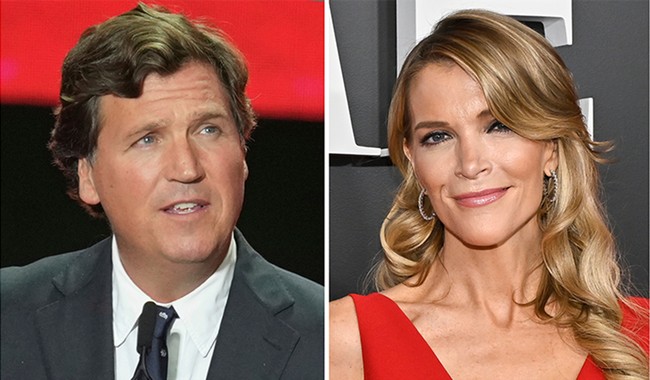
The more amusing results come from direct comparisons of support for Trump and two of his most recent inside-the-tent critics. Not only do Republican voters overwhelmingly trust the president, but support for Tucker Carlson and Megyn Kelly also falls into the realm of statistical noise:
Compared to prominent podcasters Tucker Carlson and Megyn Kelly, both of whom have criticized the president over the Iran war, the poll found 83% of likely Republican voters trust Trump’s judgement, while just 6% place more confidence in the former Fox News hosts.
Even more respondents (84%) agree with Trump’s foreign policy views over Carlson and Kelly (6%), while 85% say they take the president more seriously on world affairs than media commentators and podcasters (6% again).
Again, a sample of likely GOP voters, rather than strictly self-identified MAGA voters, provides an instructive look at Trump’s support. Even among voters who don’t closely identify with Trump or his movement, trust in the president for this war is remarkable. If anything could shake that support, a war of choice in the Middle East would qualify, and yet it has had no deleterious effect on Trump’s standing.
What does this say about Carlson and Kelly? It shows that their persuasion efforts have had little impact, likely for different reasons, but essentially to the same effect. Republicans who don’t trust Trump support his critics, which is hardly surprising, but at least thus far, the critics have not converted those who support Trump either. Their marginal support in this poll and its overlap with the topline question of support for the war suggest that the disaffected have found each other, and nothing more, and that the disaffected amount to a political fringe … within the GOP, anyway.
As I warned last week, though, the question for the general election in the midterms is not just how united the GOP will be behind Trump. The more pressing question will be how independents will choose in November, as well as whether this united support among Republicans will translate to turnout. Much of that will depend on the economy, which is being hammered in the short run by the war, thanks to sharp increases in gas prices. If the war is still an issue in November, that may spell doom for the GOP’s midterm hopes, which are already growing more modest in recent weeks.
Even so, Trump has some good news regarding primary voters in the GOP:
Elsewhere, the poll found that 78% of Republican voters were more likely to support a congressional candidate in this year’s midterms who backs Trump’s military action against Iran, while just 10% said they were more likely to support a candidate who opposes the war.
Trump may face some headwinds from the secondary and tertiary effects of the war if he can’t get oil prices to fall within the next few weeks. He’s not facing a MAGA split on the war, however, and certainly doesn’t have to worry about Carlson or Kelly undermining his support.
Editor’s Note: The 2026 Midterms will determine the fate of President Trump’s America First agenda. Republicans must maintain control of both chambers of Congress.
Help Hot Air continue to report on the Democrats’ radicalism and inform voters as our nation faces a crossroads. Join Hot Air VIP and use promo code FIGHT to get 60% off your membership!