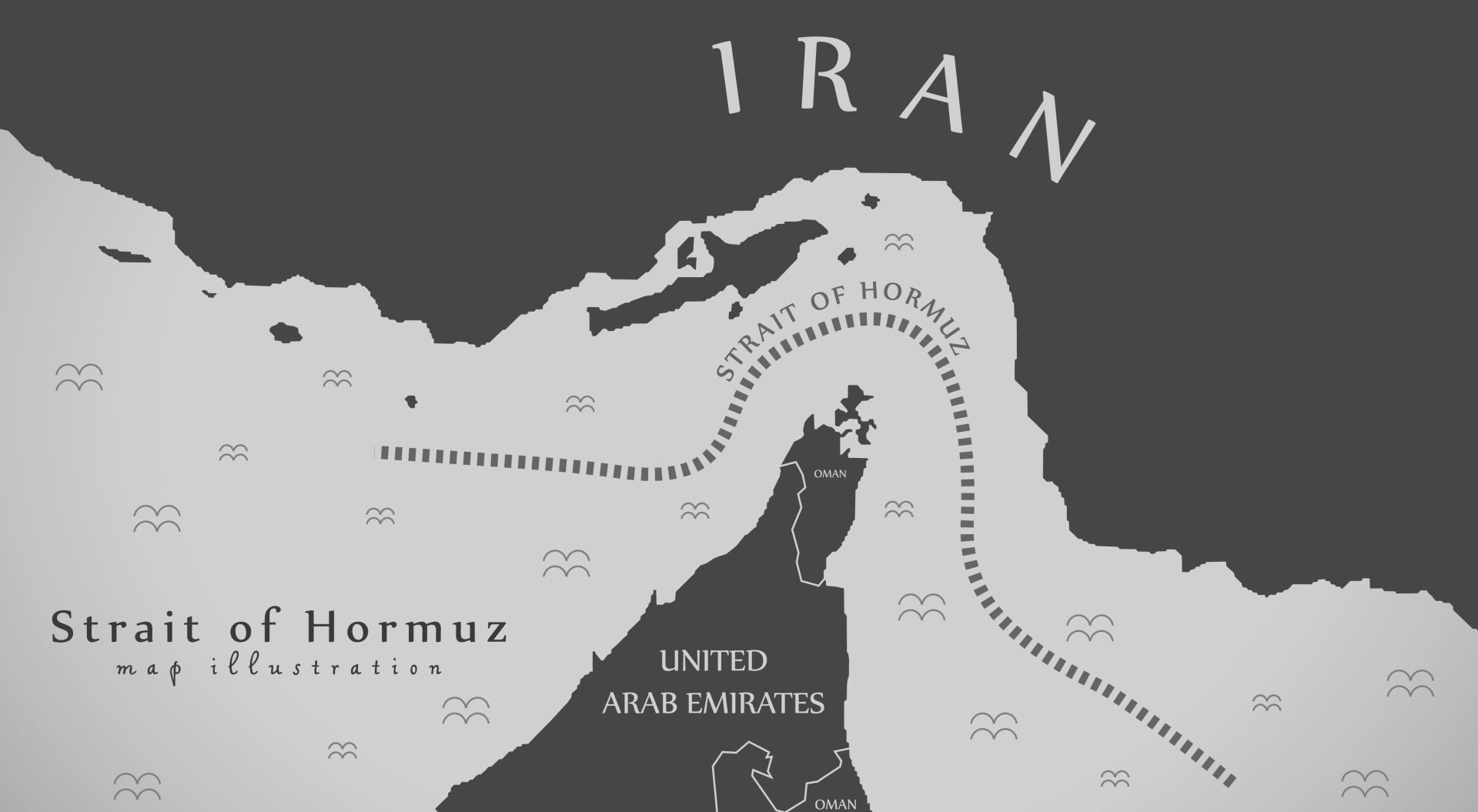
DOZENS of countries have now committed to reopen the Strait of Hormuz, but they still haven’t decided when, who would lead, and whether defensive operations include counter-attacks on the capabilities that Iran uses to close the Strait.
Under-reported is the fact that the US still expects Britain to lead, while the British government continues to deny it is even under attack.
The need to reopen the Strait is urgent. Since the US and Israel started striking Iran on February 28, oil prices jumped from $71 per barrel to a peak of $120 (on Wednesday of the second week, March 11, when Iran struck five tankers in the Strait). In the fifth week of war, oil prices hovered around $105. They are expected to climb beyond $120 by a sixth week of war.
Reopening the Strait is most urgent for Britain, given its over-exposure to the global price of energy (thanks to its net-zero policies).
While the US doesn’t depend on the Strait for energy imports, global inflation makes Donald Trump’s economy look as bad as Joe Biden’s. On Tuesday, average gasoline prices at the pump in the US hit $4 a gallon for the first time since 2022.
The US government is calling out Britain most. For decades, Britain took a leading role within Nato for the security of the waters from Greenland to North-West Europe, and contributed secondarily to freedom of navigation around the Middle East.
For 50 years, a British minesweeper was kept on rotation in the Middle East. Just before the current war, the government recalled its regional minesweeper for maintenance, without preparing any replacement.
Why not now?
At the end of the second week of war (Saturday March 14), Trump called on allies, Britain most of all, to help reopen the Strait militarily. The next day, he and Keir Starmer spoke by telephone. Canada’s premier (Mark Carney) visited. Everybody agreed that the Strait should be reopened, but not how. On the Monday, Trump complained to journalists about Starmer’s attitude.
On that same day, Starmer called a press conference to reject the US call to reopen the Strait militarily, in favour of a vague diplomatic-humanitarian ‘collective plan’.
Yet, two days later, the UK, France, Germany, Italy, the Netherlands, Japan, and Canada indicated they would help to reopen the Strait militarily after all, although not until the war stops.
Within days, more than 30 countries joined that commitment.
The trouble is, no country is leading or scheduling. The US government says it has already shouldered most of the burden for knocking back Iran’s unlawful activities, and doesn’t need the Strait as much as other countries.
Although British officials have joined US Central Command in planning to reopen the Strait, the British government is still committed to defensive operations, still interprets defensive operations as stopping at the borders of its allies, and still rules out sending warships beyond Cyprus.
In the meantime, Trump resorted to unilateral bluster.
On Sunday March 22, Trump gave Iran 48 hours to reopen the Strait, or the US would attack Iran’s energy infrastructure.
But on Thursday March 26, he said he was extending the deadline by ten days, to meet a request from the Iranian government. (The Iranian government repeatedly denies it is negotiating with the US.)
On that same Thursday, Trump said: ‘I’m so disappointed in Nato, because this was a test for Nato. This was a test. You can help us. We’re going to remember.’
Trump called out Britain for belatedly offering to send an aircraft carrier. ‘Don’t bother. We don’t need it,’ he said he had replied. For good measure, he dismissed the UK’s two aircraft carriers as ‘toys compared to what we have’.
Trump called out Starmer personally for refusing US use of Diego Garcia and RAF Fairford in Gloucestershire for strikes on Iran. ‘I think he’s a lovely man but I think he did something that was shocking. He didn’t want to help us.’
The next day, the G7 (Canada, France, Germany, Italy, Japan, the UK and the USA) agreed to organise an international mission to escort vessels, ‘once calm has been restored’.
US Secretary of State Marco Rubio clarified that the US is asking allies to prepare to reopen the Strait on the day after the war ends. ‘We’ve always viewed it as a post-conflict necessity,’ Rubio said. He claimed that this message had enjoyed a ‘good reception’.
International law both justifies and bounds the mission. The G7 invoked the law of the sea and declared Iran’s attacks on commercial traffic as unlawful.
The G7’s foreign ministers were hosted by France, whose foreign affairs minister Jean-Noël Barrot said: ‘There is a very broad consensus within the international community to preserve the common good of freedom of navigation. It is out of the question to live in a world where international waters are closed to navigation, particularly in the context of conflicts that do not concern the countries that need this navigation to continue.’
Similarly, UK Foreign Secretary Yvette Cooper said: ‘Iran cannot be able to just hold the global economy hostage. We need to protect our global economy from countries that want to weaponise our economy against us.’
But we’re left with three issues.
First, the commitment does not apply until after the war ends. This creates a paradox. Iran has closed the Strait by military action. Until Iran chooses to stop its military action, its victims need to choose military action to force Iran to stop its military action.
International law is no help here: Iran’s intervention in international sea lanes is already unlawful. Waiting for Iran to choose when to stop and start its intervention is normalising Iran’s illegality.
Nobody has defined what counts as the end of the war. This is not a semantic or operational quibble. The British government still denies it is at war, and even denies that Iran has deliberately attacked British territory and assets. With politically convenient denials such as this, who could trust the British government to concede the war is over when everybody else says it is?
The second issue is that the G7 commits to ‘a strictly defensive posture,’ in conformity with the international right of self-defence. Yvette Cooper said the international mission would be focused on ‘defensive action’ and ‘the protection of international shipping’.
The G7 left hanging the question of whether defensiveness includes attacks on the Iranian sources of the attacks on commercial traffic. Such (counter-)attacks are lawful under the right of self-defence.
The third issue is that nobody is leading any practical implementation of the commitment to reopen the Strait. The forces would take weeks to organise and gather.
The US government is blaming Britain most. On Tuesday, the Wall Street Journal reported that Trump has told staff that he is willing to end hostilities even if Iran doesn’t reopen the Strait, in hope that other countries will take most of the burden, led by Britain.
Trump started that same Tuesday by calling out Britain again. ‘All of those countries that can’t get jet fuel because of the Strait of Hormuz, like the United Kingdom, which refused to get involved in the decapitation of Iran, I have a suggestion for you: Number 1, buy from the US, we have plenty, and Number 2, build up some delayed courage, go to the Strait, and just TAKE IT.’
Later on that Tuesday, the US Secretary of War, Pete Hegseth, referred back to Trump’s post, in an off-the-cuff reply to a journalist: ‘I think the president was clear this morning in his Truth [Social] that there are countries around the world who ought be prepared to step up on this critical waterway as well. It’s not just the United States Navy. Last time I checked, there was supposed to be a big bad Royal Navy that could be prepared to do things like that as well.’
Trump’s deadline for Iran to reopen the Strait expires on Sunday. If Iran doesn’t comply, the various countries committed to reopening the Strait won’t be ready to make good on their commitment. Britain isn’t ready to lead them. And that spells more weeks of damage to Britain’s peculiarly exposed economy and special relationship with the US.