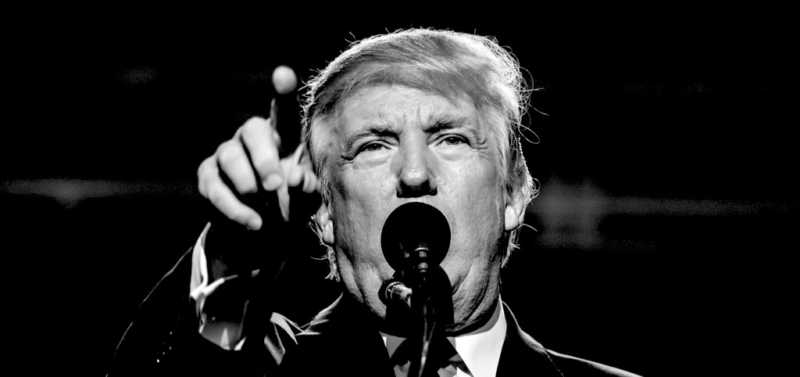
IN A televised address last Wednesday, President Trump reiterated the aims of the campaign against Iran. It was clear from his speech, and a video message from Secretary of State Marco Rubio a day earlier, that the US intends to finish destroying the arsenal and factories of Iran’s ballistic missile programme while predicting an end to the war within ‘two to three weeks’ regardless of any deal with Tehran.
Trump’s schedule seems clear. Although Iran seems unwilling to go quietly into the night Western elites’ catastrophism is unwarranted. ‘It is a strange kind of victory which has seen Iran fail to shoot down a single US or Israeli manned plane or sink a single ship,’ Allister Heath rightly opined a week or so ago. The first came yesterday five weeks into the war.
The reality remains that Iran has been downgraded from regional superpower to a worrying pirate terror state, still able to shoot missiles and drones at civilian targets, threaten crimes against humanity, and blackmail the shipping industry. But this, as Heath says, far from amounts to US defeat.
However controlling the Strait of Hormuz and threatening Gulf oil and gas facilities is a potent form of asymmetric warfare that is indeed inflicting devastating damage. Yet this residual power matters to Europe more than to the US. The idea that Iran would move to block the Strait of Hormuz was probably the best-rehearsed risk in geopolitics. Trump probably accepted it as a necessary trade-off, an inevitable hit.
Meanwhile investors, economists, historians and the International Monetary Fund are forecasting global recession by June without the resumption of normal energy supplies.
Trump has made clear that other countries need to clear the Strait of Hormuz of hazards, restore normal supplies through the bottleneck, and repair the damage to terminals and refineries on each side of the Strait. This will take weeks to months.
He and Israeli premier Benjamin Netanyahu have also made it clear they won’t be satisfied until they have devastated Iran’s nuclear capacity. This always was the primary objective for the US and Israel, despite critics’ pretence that the two countries were as aimless as the George W Bush administration in 2003. If French President Macron is right that ‘targeted military action even for a few weeks’ will not resolve Iran’s nuclear programme – a forecast he made within an argument against the war – Trump will surely extend the war. He has already extended the war beyond his initial prospect of a few weeks. And dissatisfaction with Iran’s nuclear programme might not be his only reason.
Trump’s deadline for Iran to re-open the Strait expires tomorrow, April 5, a deadline that seems moot.
Trump’s many ‘Western elite’ critics claim that his objective of regime change has failed, and are keen to remind the public that Trump’s war is unpopular, suggesting that Trump might be motivated to end the war under democratic pressure alone.
These commentators forget that although the war and Trump are net-unfavourable, he still earns more favourability from the general public than either Congress and the Democratic Party. In fact his popularity among Republican voters has increased. According to a recent AP-Norc poll, trust in Trump remains high among Republicans, with about three-quarters of Republicans approving of Trump’s handling of the presidency, and a similar 70 per cent approving of how he’s handling Iran. https://www.ap.org/news-highlights/spotlights/2026/how-the-war-in-iran-is-landing-with-republicans-according-to-a-new-ap-norc-poll/ Furthermore, Trump cannot re-run for re-election in 2028. So the greatest hit his administration can take at the polls is indirect, during the midterm elections this November. Weakened Republican representation will make Congressional approval of Trump’s agenda more difficult. But Trump was hardly perturbed by the same switch in 2018.
So, no, unpopularity won’t curb Trump’s war.
Economic consequences won’t stop Trump’s war either. The US is less exposed than other countries to its consequences. As Trump said last Wednesday, the US produces more oil and gas than Russia and Saudi Arabia combined, thanks to the President’s liberalisation of the energy sector. Yes, average gasoline prices at the pump in the US hit $4 a gallon on Tuesday for the first time since 2022. However, Trump has often said that he is prepared to carry the commercial cost in order to stop Iran’s illegal activities – which prior administrations tolerated, until last year when Iran was, according to the International Atomic Energy Agency, months away from a nuclear bomb. Trump repeated that message on Wednesday evening.
And while rising energy prices certainly cost votes, the fact is that Trump isn’t running for re-election.
For Europe the worry should be that whenever the war ends, the Strait of Hormuz won’t open as easily or quickly or ‘naturally’ as Trump promised. Reportedly, and worryingly for Britain in particular, he told staff that he is willing to end hostilities even if Iran doesn’t re-open the Strait, in hope that other countries will take most of the burden. On Tuesday he pointed the finger at the UK: ‘All of those countries that can’t get jet fuel because of the Strait of Hormuz, like the United Kingdom, which refused to get involved in the decapitation of Iran, I have a suggestion for you: Number 1, buy from the US, we have plenty, and Number 2, build up some delayed courage, go to the Strait, and just TAKE IT.’ In response Starmer insisted: ‘This is not our war and we’re not going to get drawn into it.’
Trump then singled out France: ‘That’s not for us. That’ll be for France, for whoever’s using the strait.’ Why? Because he’s given up on Britain, America’s historic primary partner in maritime security. Macron, in return, said reopening the Strait by force is ‘unrealistic‘. Like Starmer, Macron prefers diplomacy. But diplomacy without force is slow to work, if it works at all.
On Wednesday, Starmer announced that his Foreign Secretary, Yvette Cooper, would lead a telephone conference with 35 nations on re-opening the Strait – but still insists it cannot start until after the war ends. A deadlock that necessarily leads to the energy crisis that investors predict.
The Starmer administration’s malicious intent is in part a manifestation of incapacity. On Monday, the First Sea Lord, General Sir Gwyn Jenkins, told a Swedish newspaper that the Royal Navy would go to war if it needed to. But: ‘Are we as ready as we should be? I don’t think we are.’
No wonder the US government has given up its long-running hope that Britain would lead the re-opening the Strait.
Thirty-five states (other than the US) have now signed up to a commitment to re-open the Strait by force, but insist it won’t start until after the war has ended, and will remain purely defensive (even though they admit that Iran’s closure of the Strait is unlawful).
Their leader might be the United Arab Emirates (UAE) according to the Wall Street Journal which reports the UAE is preparing to help the U.S. to prepare for a United Nations Security Council resolution that would authorise force to re-open the Strait. The UAE doesn’t have much military to contribute, but it surely expects other countries to follow, given a Security Council resolution, the sight of the UAE sallying forth and further energy price rises. It is likely to take weeks, putting the normalisation of energy prices some time in June at the very earliest.
But if Iran retains its current regime and capabilities, it can intervene in the Strait whenever it likes. The Institute for the Study of War predicts that it will seek to use the Strait of Hormuz and energy flows around it as points of leverage to use after the war to extract concessions and secure strategic aims. Thence the cost of securing the channels, securing the ships, and insuring those ships will remain at warlike rates, so energy supplies will remain much slower and more expensive than normal.
This would leave Starmer with a particular problem as the re-opening the Strait is the most urgent of all for Britain, given Britain’s over-exposure to the global price of energy, the catastrophic result of its Net Zero policies.