MAINSTREAM punditocracy often assumes that when large organisations behave in a distorted way for a long time, it is because they have lost their way. This is a comforting theory that oversimplifies what is complex to avoid troubling large audiences with serious and realistic analysis. It suggests error, confusion, perhaps even incompetence. What it does not suggest is intention. Yet intention is usually a better explanation.
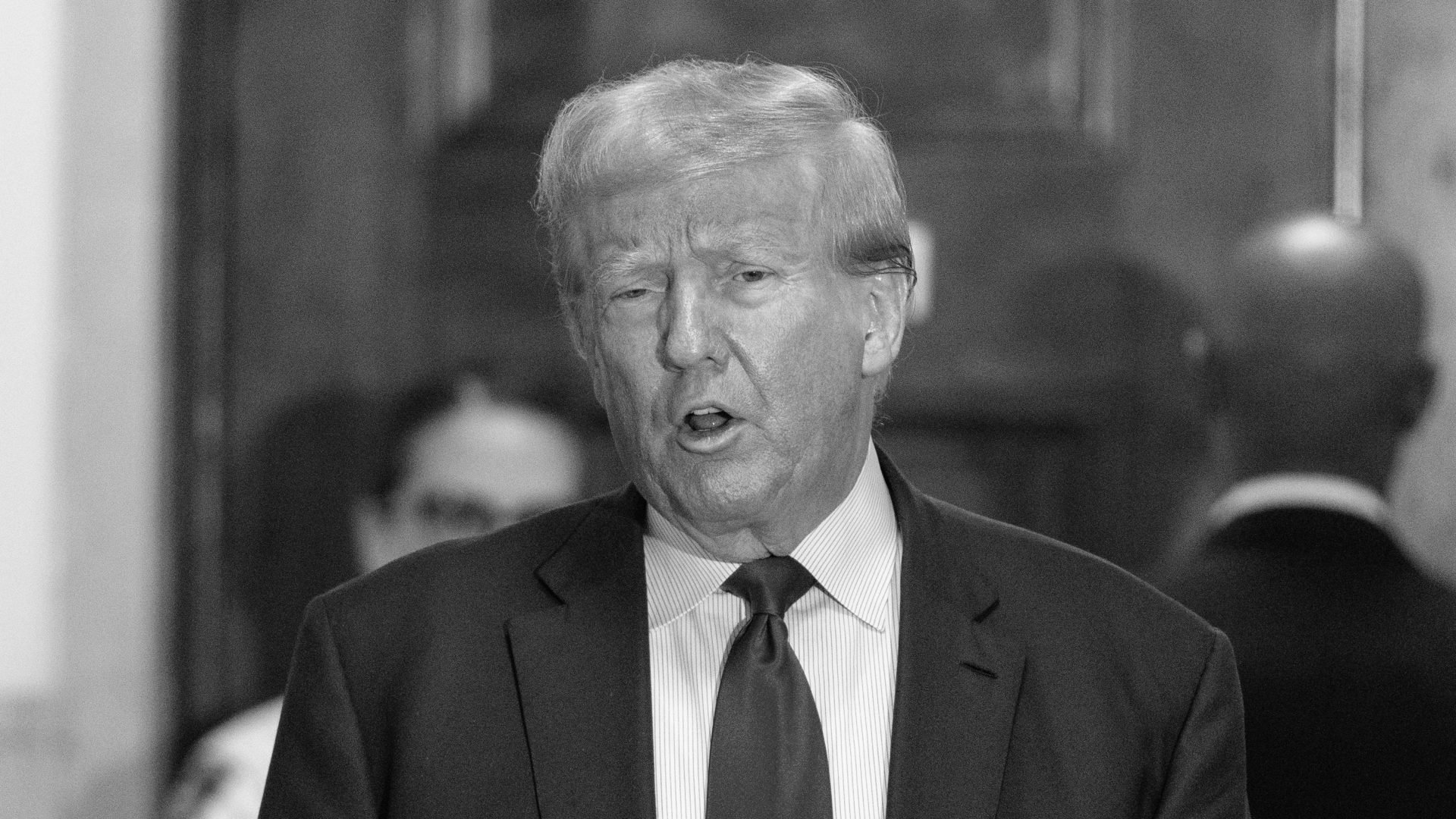
Media corporations rarely persist in error for years. On the contrary, they excel at strategy. The persistence of the anti-Trump posture is not a misunderstanding, nor a temporary excess of passion. It is a business model and an organising principle. Trump is not merely a character in this drama; he is the axis around which the narrative turns. Everything inside the Big Media nebula must, in one way or another, oppose him and warn against him. Remove the axis and a great deal of contemporary media chatter – corporate journalism is a contradictio in adjecto – would lose its structure overnight.
Seen in this light, mainstream media coverage becomes easier to interpret. To Big Media, the current Middle East conflict is another episode of a tacky melodrama called Trump. His decision-making is never analysed as the product of a world-class team of aides and a broad network of foreign policy and national security experts – advisers, think-tank allies as well as current and former officials. It is presented instead as a series of spasmodic fits, tantrums and bouts of anger from a deranged individual. Even in wartime, Trump comes first and logic last.
This rationale produces a predictable pattern. If tensions rise, the emphasis falls on the risks created by Trump. If negotiations fail, the focus shifts to his rhetoric. If the enemy escalates, the analysis quickly returns to what he did to provoke or mishandle the situation. Iran remains present in the story, but rarely at its centre. If he talks, he is a petulant daredevil. If he remains silent, he is hesitant. Within this framework, Iran becomes a secondary actor in a soap opera whose villain is invariably the man with the red tie.
Whatever judgment the president deserves for his actions, Big Media has generously demonstrated that it does not have one.
Narrative gravity has consequences. When coverage consistently emphasises the recklessness, danger or unpredictability of one side while presenting the other largely in terms of reaction and context, the foundations of the story begin to weaken. One side appears as the source of instability; the other as the product of circumstances. No explicit defence is required. Emphasis does the work that argument ought to do.
Once a media ecosystem defines itself in opposition to a public figure, it must maintain that opposition across issues, crises and entire years. Otherwise the strategy fails, the audience fragments, the brand dissolves and business evaporates. Consistency is not merely a virtue: it is central to any commercial enterprise.
Media institutions tend to create scenarios in which Trump is the central problem. If this storytelling sometimes tilts towards Iran’s messaging, that is collateral alignment, not ideological conversion. When the story becomes mainly about the dangers of American leadership rather than the menace of Iranian leadership, the strategic environment has already shifted in Tehran’s favour, regardless of what pundits believe they are doing. In a play where truth is, at best, an extra, perception is what counts in the end.
The persistence of the anti-Trump portrayal therefore shapes more than domestic opinion. It shapes the interpretative lens through which international conflicts are understood. And the longer persistence continues, the more the framework hardens into something like orthodoxy.
There is an old rule in the realm of power: if you define your identity entirely by opposition to one man, you will eventually interpret the entire world through him. Mountains, wars, treaties, revolutions – everything becomes a commentary on that person. Reality shrinks to the size of your enemy.
This, more than bias or ideology, explains the strange alignments one sees in modern media coverage. They are not betrayals, and they are not mistakes. They are the natural consequences of building an entire narrative edifice around a single figure and then refusing to dismantle it. Ultimately, the system rewards outrage, simplicity and repetition far more than accuracy, nuance or proportion.
To describe the direction mainstream media has adopted, one might borrow Winston Churchill’s remark in the House of Commons in 1944 about a friendly country: ‘We all feel deep regret and also anxiety that in this testing time for nations she has not seen fit to declare herself whole-heartedly, unmistakably and with no reserve or qualification upon the side of freedom, and has chosen to dally with the evil, and not only with the evil, but with the losing side.’