Quelle surprise. What would the French have contributed to the discussion anyway – other than their decades-long demand that Israel refuse to fight a war that Hezbollah has spent the same decades continually provoking?
The Israelis and their counterparts in Lebanon will take part in historic talks next week in Washington as a way to settle 80 years of enmity, not to mention the rescue of Lebanon from Iran’s occupation. The government in Beirut began frantically signaling for direct talks with Jerusalem, the first ever, as a way to avoid yet another massive war initiated by Iran’s proxies. Israel agreed to the talks but not to a cease-fire during them, but the Jerusalem Post reports this morning that Benjamin Netanyahu wants the French excluded from the talks:
Israel has refused to allow France to be involved in the direct talks between it and Lebanon, which are set to begin next week in Washington, two sources told The Jerusalem Post on Friday.
An Israeli official said that “France’s conduct over the past year – including initiatives aimed at limiting Israel’s ability to fight in Iran, and a complete lack of willingness to take concrete steps to help Lebanon disarm Hezbollah – has led Israel to view France as an unfair mediator.”
The Israeli decision follows growing anger over France’s behavior in recent months, particularly since the joint Israeli-American strike against Iran. France refused to allow US aircraft carrying weapons to Israel to pass through its airspace.
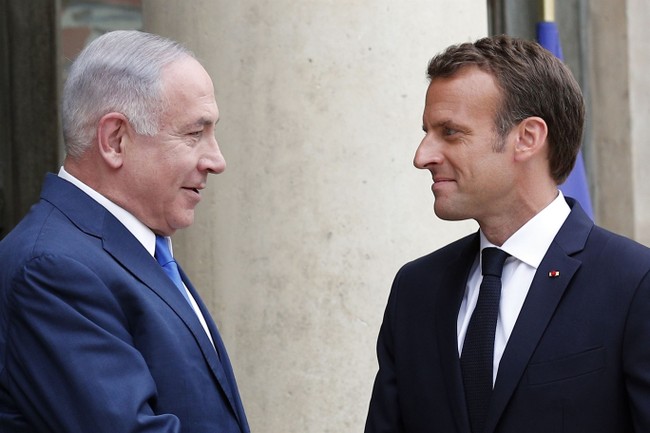
The Israelis are sore about more than just those issues, too. When Hezbollah joined the war, Emmanuel Macron practically broke a leg getting to a podium to lecture the Israelis over their response:
In addition, since Hezbollah began firing a day after the Israeli-American strike on Iran, French President Emmanuel Macron and other senior French officials have been pressuring Israel not to launch a ground operation in Lebanon.
This snub will sting. France considers Lebanon as a client state based on centuries of engagement in the Levant, and usually assumes it will sit at the table when Lebanese interests are involved. The Israelis’ exclusion of France from the talks is insult enough, but it’s also likely that the Lebanese contingent will not object to it either. For one thing, France hasn’t lifted a finger to push Iran and its proxies out of their country, which is bad enough. France pushed Lebanon into the 2006 agreement that ended up cementing Hezbollah’s grip on the sub-Litani and in the government in Beirut, and didn’t offer any help in enforcing the disarmament clauses of agreements from 1982 forward.
More to the point, though, Lebanon likely knows that France brings nothing to the table. They are no longer a Great Power, and they aren’t even close. Macron’s weakness in confronting Iran in this war and in its run-up is a big tell as to whose interests France would represent in any negotiation. The choice of venue matters here, too. The Israelis and Lebanese agreed to meet in Washington, rather than more convenient options such as Paris, London, Madrid, or Rome. Why? None of these Western nations have the testicular fortitude to stand up to Tehran, which is exactly what Lebanon wants and why they want an alliance with the two militaries that both will and can confront the Iranians.
France, in other words, is useless for what Lebanon needs. In fact, they’re worse than useless in that they want Israel and Lebanon to maintain the Iranian-occupation status quo rather than finally enforce the agreements both countries have endured for 40-plus years while France twiddles its thumbs on compliance.
In other talks, Vice President J.D. Vance has flown to Pakistan to lead the delegation in negotiations with Iran. Tellingly, the Iranians are still engaging in this forum even though they earlir claimed Israel’s continued war on Hezbollah negated the cease-fire and negotiations. Vance expressed optimism about getting a deal, but also issued a warning:
He told reporters before departing for Pakistan that “if the Iranians are willing to negotiate in good faith, we’re certainly willing to extend the open hand. If they’re going to try to play us, then they’re going to find the negotiating team is not that receptive.” He added that he expected the talks to be positive.
Vance said President Trump “gave us some pretty clear guidelines” for the weekend talks aimed at reopening the Strait of Hormuz and maintaining the fragile cease-fire with Iran.
If the Iranians keep attempting to “toll” traffic in the Strait, the US should respond by seizing ships carrying Iranian oil. It is still sanctioned, after all, and the Iranians need the revenue more than we need the oil. If that doesn’t get their attention, then perhaps seizing Kharg Island will. A bad deal in Islamabad is worse than no deal at all.