If we are to be truly inclusive and truly representative, we need to hone in on what it is to be truly human? What is it that unites all people across all races, all generations, and all classes at all times?
 The Great Books of Western Civilization are not merely artifacts to be respected and revered. They are also, and crucially, the means by which each new generation takes up the Great Conversation with the giants of the past. They are the very voice of tradition, which as G. K. Chesterton reminds us, is the extension of the franchise through time, the proxy of the dead and the enfranchisement of the unborn:
Tradition means giving votes to the most obscure of all classes, our ancestors. It is the democracy of the dead. Tradition refuses to submit to the small and arrogant oligarchy of those who merely happen to be walking about. All democrats object to men being disqualified by the accident of birth; tradition objects to their being disqualified by the accident of death…. I, at any rate, cannot separate the two ideas of democracy and tradition.
Respecting tradition and accepting this qualified understanding of democracy, let’s look at the idea of “representation” in education. Does the Great Books tradition truly represent humanity in its entirety or does it marginalize people? Is it an extension of the franchise or does it disenfranchise sections of the population?
If we are to be truly inclusive and truly representative, we need to hone in on what it is to be truly human? What is it that unites all people across all races, all generations, and all classes at all times? In philosophical terms, this is to focus on the essence of humanity, that which is essentially human. This essential humanity needs to be distinguished from those things that are only true of some people or are only true some of the time. In philosophical terms, these things are not essential to our humanity but are accidental to it. They are attributes which do not define us as human beings. A person’s race is accidental in this sense because our humanity is not defined by the colour of our skin. The time in which we happen to be living is accidental because our humanity is not defined by the period in which we live or lived. The social class to which we belong is accidental because our humanity is not defined by our position in society in terms of wealth or power.
Having made this necessary distinction between that which is essentially human from those things that are accidental, we can see that the essential things unite us to each other in our common and perennial humanity whereas the accidental things are divisive in the sense that they divide us into subgroups which separate us from each other.
Keeping this distinction in mind, let’s look at some of the Great Books with a view to judging them in terms of whether they are truly representative and truly inclusive of all humanity at all times.
The Iliad by Homer is about the pride of Achilles and how that pride manifests itself in destructive anger. It is also about adultery and lustful passion and their destructive consequences. These are not things that were only true in Homer’s time. They are true of all times, all races and all classes. They are essentially human themes that are representative and inclusive of all peoples at all times.
Antigone by Sophocles is about the rights of the individual and the rights of the family and how they might conflict with the rights of the state. Are there limits to the moral authority of the state over the moral lives of individuals? If the state strips individuals and families of their political or religious liberties, to what extent should people resist? Should we conform to unjust laws or should we rebel against them? These questions are not peculiar to the age or culture in which Sophocles wrote. They are not accidental to his time but are essential questions that need to be asked and answered in all times.
Moving from the classical to the early modern period, to the works of Shakespeare, we can see how they continue to speak timeless truths about who we are as human beings?
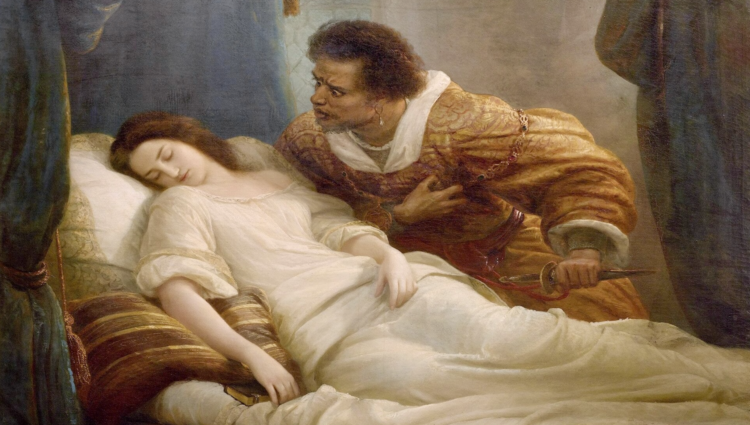
Othello shows how jealousy can poison minds and hearts and relationships; Macbeth shows how unbridled political ambition and the lust for self-empowerment leads to murder, mayhem and madness; King Lear asks whether the pursuit of comfort and the avoidance of suffering is the path to wisdom and happiness, or whether wisdom is to be found in the acceptance of suffering.
We could go on but this representative sample should show that the Great Books represent and include all that is essentially human. They allow us to see ourselves in the light of all our brothers and sisters across all the generations. They are like us. We are like them. They also allow us to see our own time in the light of all times, enabling us to see those things about our own time that are peculiar because they are merely fads and fashions, and therefore merely accidental and incidental to the essential humanity that we share with all our brothers and sisters across the ages.
Chesterton was right; or, more correctly, he is right. His words are as alive as he is because they speak the living truth that his ancestors spoke and which the generations yet unborn will speak. Tradition in general, and the Great Books tradition in particular, is representative and inclusive of all peoples at all times because it is the extension of the franchise, the proxy of the dead and the enfranchisement of the unborn.
__________
The Imaginative Conservative applies the principle of appreciation to the discussion of culture and politics—we approach dialogue with magnanimity rather than with mere civility. Will you help us remain a refreshing oasis in the increasingly contentious arena of modern discourse? Please consider donating now.
The featured image is “Othello” (1859) by Christian Köhler, and is in the public domain, courtesy of Wikimedia Commons.