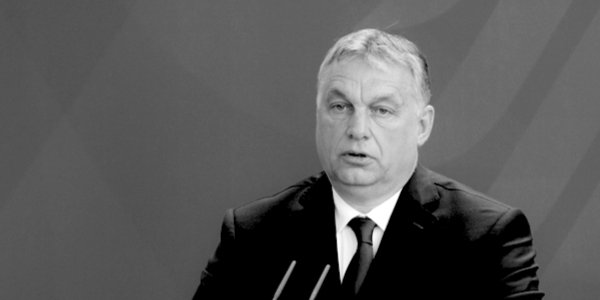
IN 2010, when Viktor Orbán led the then Hungarian opposition to victory, we all recognised that it was the end of an era.
It was an era marked by the theft of nigh on 100 per cent of the money provided from EU funds for the construction of the Budapest M4 metro scheme – a ‘textbook example of fraud’ which implicated previous municipal and national leadership in widespread embezzlement.
It was an era marked by police violence against peaceful demonstrators, some of whom were blinded by rubber bullets fired at shoulder height into crowds. An era where we suffered the ignominy of having water and energy bills dictated by foreign companies who automatically moved their profits out of Hungary, benefiting anyone but the very people who created their profits.
In 2026, another era came to an end with Viktor Orbán’s defeat at the polls. Unable to stop themselves, Hungarians hit the self-destruct button. Many of those who did so are young Hungarians with whom the governing parties didn’t connect; young people who have adopted the fashionable victimhood of the West, and as such, complain bitterly about their lot.
Yes, it was a failure of government. But how can those who have lived through dictatorship relate to young people gifted free education and provided with fixed interest loans but claim to be barely living and complain bitterly about the chances they don’t have as a result of being oppressed? With the man they loved to hate removed from the hot seat, the youth of Hungary are finally free. What that means, in terms of the country’s predicted submission to the EU, is pretty clear. The EU’s Ursula von der Leyen is already in talks with the election winner Péter Magyar, enthusing about new EU loans, about ‘immediate priorities’ in its relations with the EU.
Yet British journalists believed Péter Magyar to be a carbon copy of Orbán, one even that the EU will rue supporting. They missed the fact that Magyar was not initially the choice of the Hungarian electorate, but always the choice of the EU. As a newcomer with no presence in parliament, Magyar’s party Tisza was not entitled to funding from the Hungarian state. The EU bankrolled his campaign. An investment which they can expect to bear fruit.
Hungarian conservatives, however, see a totally different picture. Magyar is not a conservative, but an EU-sponsored opportunist who appears ready, willing even, to undo that which he once enthusiastically applauded. Toeing the EU line will replace the Hungarian policy of resisting measures that would damage the country. The future holds nothing more than our worst nightmares. The pendulum has begun its return swing. People fear that the achievements and progress of the last 16 years will be erased, sending us back to the dark days of indebtedness to the IMF, a chain of dependency on international credit institutions we fought so hard to detach from.
I am unable to agree with those in the British media who opine that Magyar will seek to impede decisions as his predecessor did. The bottom line is that Magyar, sponsored by Manfred Weber, aligned his party to the EPP (European People’s Party). Weber arguably runs the EU in tandem with his German compatriot von der Leyen. Their gushing messages of congratulations for Magyar’s victory reveal what they expect of the new Hungarian leadership. Compliance will now be the policy that Hungary follows. Funds will no longer be held back, but there will be a price to pay.
Magyar has stated that we need to ensure that the EU releases the funds long overdue to Hungary. He has therefore agreed implicitly that he will comply to release the funds. Orbán, by contrast, used the country’s right to disagree as a tactic to force the EU to release the funds due to Hungary. Magyar may well increase the speed at which these funds are released, but it will be the EU that wins primarily. If Magyar has decided to lie down with the leaders of the EU, the battles concerning common (loan-based) funding for Ukraine, the planned 30 per cent reduction in the next seven-year budget, the price caps which ensure that Hungarians pay less for energy, and the obsessive pandering to a tiny minority of non-heterosexual society, are over and done with. That is, they will no longer be fought. The Hungarian constitution which so defiantly declared that there are only two genders, and that marriage exists only between a man and a woman, is likewise in danger of being rewritten in a more EU-compliant manner. Magyar’s majority in parliament makes this not only possible, but likely. He has already promised to rewrite the constitution.
The EU’s blackmail campaign against Hungary long since moved past mere horse-trading. Funds which were due to Hungary were unlawfully held back. Even now, as countries all over Europe ignore the EU’s directives on migrants, it is only Hungary that has, for years, been subjected to a daily fine of €1million for being bold enough to deny the EU in a purely sovereign, national, matter. It is to be expected that with Magyar’s election, the fine will stop. That presumably also means that Hungarian resistance to illegal migration will also stop.
The EU’s message was clear: replace Orbán and his party and the EU’s objections will disappear, the money will flow. It is now up to Magyar to show submission to the EU in order to release the long-overdue funds.
This could however be tricky. Although Magyar is a product of Weber and von der Leyen, the fact is that many Hungarians who voted for him remain less than supportive of the idea of submission to the EU. He will find it hard to sell the idea of immigration to Hungarians, but we will have to wait and see. Likewise, how many Magyar supporters will agree with Ukraine’s accelerated accession to the EU?
The Hungarian economy has been hard hit by the Russo-Ukrainian war and the sanctions brought in by the EU. Even though much was achieved with a 1 per cent growth rate (doubling of family tax allowance, reintroduction of 13th monthly pension, introduction of 14th monthly pension, etc), Hungarians were dissatisfied with their economic prospects and envious of higher wages in foreign lands (not considering the higher price of living which typically accompanies these higher foreign wages). There is pressure on Magyar to improve the economic output of the country, but again he will be walking a tightrope. He is a creation of the powers that control the EU, and answers to them. And the EU is presently suffering from its own self-imposed economic malaise, with energy costs rocketing as a result of detaching from cheap Russian gas and oil.
The EU is in a slump like none other. Ideologically-driven policies have led to decreasing importance and influence around the globe. As the EU withers, so do the member states. The EU’s answer, the one they always give, is international credit. The €90billion loan for Ukraine which was, until now, blocked by Hungary, is a thinly veiled loan from London credit institutions presented as an EU project. Orbán suggested that those EU members who wanted to send their money to Ukraine should at least be honest with their populations, making clear to them that it would not be the EU who would repay the loan, but rather the citizens, and for generations to come. Needless to say, this was also seen as behaviour not fitting of an EU member state.
Now that Orbán has been replaced with an EU clone, such challenges about transparency and democracy will come to an end. One big happy family, they may choose to think, albeit one headed for disaster.