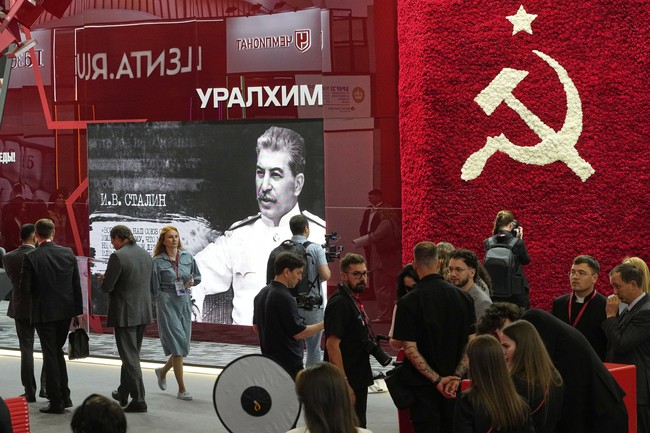
Later this year, the Victims of Communism Foundation is sponsoring an Anti-Communist Film Festival. We are finalizing the details of film licensing and theatre rental. We’re showing anti-communist movies and throwing a big party.
Several people have suggested we screen Kiss Me Deadly, the 1955 film based on the book by Mickey Spillane. Spillane and his hard-boiled detective character Mike Hammer were two of the most anti-communist figures in books in the 1950s.
There’s only one problem: Hollywood writers, producers and directors watered down or even eliminated the anti-communism of Spillane and Hammer. As film critic Alan Vanneman put it, Hollywood “took Spillane’s killing/[screwing] machine and made him both more conventional and complex, with lots of artsy-fartsy touches that reflect an LA scripwriter’s idea of ‘class’ back in the fifties, but which were anathema to Spillane’s relentlessly blue-collar Mike Hammer.”
In other words, leftists in Hollywood ruined Mike Hammer.
Spillane agreed, often criticizing the way the movie depicted the character he had created. He disliked how Kiss Me Deadly downplayed Hammer’s anti-communism and replaced the novel’s narcotics plot with a “great whatsit” – an atomic bomb. “It is a funny thing that communism murdered over 100 million people and somehow it is a bad thing to have them as villains,” Spillane once said.
It’s been twenty years since the death of Spillane. People have forgotten how massively popular he once was. His books sold twenty-four million copies between 1947 and 1952. At one point, he was responsible for seven of the ten best-selling titles in the history of American fiction. As critic J. Hoberman notes in his notes to the Criterion edition of Kiss Me Deadly, “In Mike Hammer, Spillane imagined a new sort of hero—a vigilante enforcer who was detective, judge, jury, and executioner in one. Spillane offered his readers God’s Angry Man—a function that would later be satisfied by irate evangelists and talk-radio personalities, as well as fictional characters like Dirty Harry. Hammer was the personification of rage, a self-righteous avenger whose antagonists were gangsters and Communists. At the end of One Lonely Night, he exults, ‘I killed more people tonight than I have fingers on my hands. I shot them in cold blood and enjoyed every minute of it . . . They were Commies.’”
Hoberman adds this:
Hammer knows he is rotten, and he knows why his rottenness is tolerated: “I was the evil that opposed the other evil.” This ends-justify-the-means brutality had its contemporary political manifestation in Senator Joseph McCarthy, described by one colleague, in suitably Hammer-esque terms, as a “fighting Irish marine [who] would give the shirt off his back to anyone who needs it—except a dirty, lying, stinking Communist. That guy, he’d kill.” In late 1954, the Saturday Review published an essay by poet Christopher LaFarge comparing Hammer to McCarthy, also a “privileged savior.”
LaFarge added that, however “soft, homosexual, stupid, gullible, childish, or easily tricked,” Hammer’s villains represented “the Most Dangerous Thing in the United States,” i.e. communists, and “any means which will, with Hammer, lead to their extirpation and in particular their death by his hand are Good.” Similarly, “with Senator McCarthy, any means that will expose Communists, including the derogation of all public servants, the telling of lies, the irreparable damaging of the innocent, the sensational and unfounded charge, are justified so long as he thinks it is the right thing to do. Each, then, reflects the other.”
In some interviews, Kiss Me Deadly director Robert Aldrich characterized Hammer as “a cynical fascist” and called Spillane “an antidemocratic figure”who showed that “justice is not to be found in a self-anointed, one-man vigilante.” Screenwriter A.I. Bezzerides never mentions drugs or communists in the movie. “I wrote it fast,” Bezzerides once said, “because I had contempt for it. It was automatic writing. Things were in the air at the time, and I put them in.” A screenwriter should not have contempt for the source material.
Liberals are still depicting the “Red Scare” of the 1950s as a “witch hunt.” In his recent book Red Scare: Blacklists, McCarthyism, and the Making of Modern America, New York Times journalist Clay Risen argues that the Red Scare was about American authoritarianism which has its modern version in Donald Trump. “Around the time I graduated high school,” Risen writes, “the federal government revealed the Venona program, which had captured secret Soviet communications and which, once decoded, offered compelling proof that figures like [Alger] Hiss and the Rosenbergs and the leadership of the American Communist Party had, in fact, worked for the Soviet Union and against the United States. There was substance to concerns about Soviet infiltration. But it remained clear that the response, in the form of blacklists and congressional investigations and book bans and loyalty tests, went so far beyond what was necessary that something else was in the mix. Explaining that ‘something else’ became a driving force for this book.”
No, “something else” was not in the mix. Americans like Mickey Spillane saw that the Soviet Union was out to destroy us, and that their spies and sympathizers were evil and needed to be confronted and defeated.
In their book Venona: Decoding Soviet Espionage in America (Annals of Communism), John Earl Haynes and Harvey Klehr detail just how extensive the spying was during the Cold War, and how damaging to America. The media and Hollywood didn’t help. “Communists were depicted as innocent victims of an irrational and oppressive American government,” Hayne and Klehr note. “In this sinister but widely accepted portrait of America in the 1940s and 1950s, an idealistic New Dealer (Alger Hiss) was thrown into prison on the perjured testimony of a mentally sick anti-Communist fanatic (Whittaker Chambers), innocent progressives (the Rosenbergs) were sent to the electric chair on trumped-up charges of espionage laced with anti-Semitism, and dozens of blameless civil servants had their careers ruined by the smears of a professional anti-Communist (Elizabeth Bentley). According to this version of events, one government official (Harry White) was killed by a heart attack brought on by Bentley’s lies, and another (Laurence Duggan, a senior diplomat) was driven to suicide by more of Chambers’s psychiatric problems.”
In fact, as Spillane knew, the communist threat was real. Maybe the Anti-Communist Film Festival will attract a young filmmaker who wants to do Kiss Me Deadly right.
Editor’s note: We now have the room to run outside commentary by some of our favorite and most provocative thinkers on the Right. That only happens because of the support of our readers, who ensure that we have the resources to keep providing an independent platform and independent voices in a sea of Protection Racket Media domination.
Help us maintain that fight! Join Hot Air VIP and use promo code FIGHT to get 60% off your membership.