When P J O’Rourke (1947-2022) published Parliament of Whores in 1991, his diagnosis of modern government was delivered with a sneer. At first sight it was a foreboding satire of American politics – its excesses, its absurdities, its gaudy posturing. Yet along with the wisecracks lay a thorough examination and a harsh judgment: that institutions meant to serve the people had become self-serving organisms, sustained by inertia, insulated from consequence, and increasingly indifferent to the ordinary citizen who funds them. Though the book is a powerful swing at the US establishment, it has universal value nonetheless.
More than three decades later, one is struck less by the strength of O’Rourke’s observations than by their durability, even in a world transformed by the digital tsunami. What once seemed an exaggeration now reads like an accurate description written by a punctilious travel chronicler. Across much of the Western world, governments stagger from crisis to crisis, their performances marked by sterility, grandstanding and a persistent failure to address the basic anxieties of the people they claim to represent.
The phrase ‘the man in the street’ has itself become something of a cliché, yet it points to a reality that Western regimes can neither ignore nor fully comprehend. Ordinary citizens worry about wages, housing, safety – concerns stubbornly resistant to abstraction. Men and women crammed into the Underground do not use elaborate words on stationery engraved with thermographic letterheads. Yet, they feel directly and without mediation the aftershocks of reckless power games played at the top of the food chain, not as theory but right in their flesh and pockets. The consequences are decided by people who neither know nor particularly care about the texture of their lives.
O’Rourke’s great insight was to recognise that governments, once removed from their original purpose, operate according to their own logic and self-interest. They expand because expansion justifies their existence. They legislate because legislation has become their own kind of Morse code. They debate because heated exchanges are posture at its finest. Within such an environment, the appearance of action becomes more important than action itself. Performance replaces purpose and perception overtakes truth.
‘So when can we quit passing laws and raising taxes? When can we say of our political system, “Stick a fork in it, it’s done”? When will our officers, officials and magistrates realise their jobs are finished and return, like Cincinnatus, to the plough or, as it were, to the law practice or the car dealership? The mystery of government is not how Washington works but how to make it stop,’ we read in one memorable passage.
Deliberations at the top of the circus are conducted less to persuade than to impress the bystander. Speeches are delivered not to illuminate but to signal allegiance to one faction or another. The urgency that animates ordinary life – the need to secure, to improve, to endure – is translated into a vocabulary so abstract that it loses its force. Committees proliferate, inquiries are launched, reports are issued, and yet the fundamental problems remain untouched, or worsened. It is not that nothing happens; rather, what happens rarely corresponds to what is needed.
There is, too, a growing sense that the distance between representatives and the represented has become not merely geographical or social, but psychological. The professionalisation of the bureaucratic corps – genuine politics effectively absent – has produced a class of individuals who have spent most of their lives within the confines of the leviathan-like state.
In this, O’Rourke’s satire acquires a darker resonance. Parliament of Whores is not merely about a corrupt system in the narrow sense; it depicts an order that resembles a mercantile enterprise leaving the man on the street standing on the pavement, watching through a double-glazed window. Since 1991 the substance remains the same. What has changed is the scale, the brazenness, and the visibility. The modern electorate, more informed, more sceptical and increasingly indifferent, sees through the performances in a way that was not possible 30 years ago.
It would be comforting to attribute this condition to particular leaders or parties, to imagine that new personnel might restore vitality to the system. But the problem appears structural. Parliaments are designed to mediate between competing interests, to deliberate, to compromise. These would be virtues in a sound environment – or in a vacuum chamber. However, in the real world, inside the folds and meanders of the unbridled state, a caste of untouchables is constantly being reproduced at an alarming rate. This sedimented stratum of office clerks operate according to their own interests, without term limits or meaningful constraint. The ideal combination for a perfect nightmare.
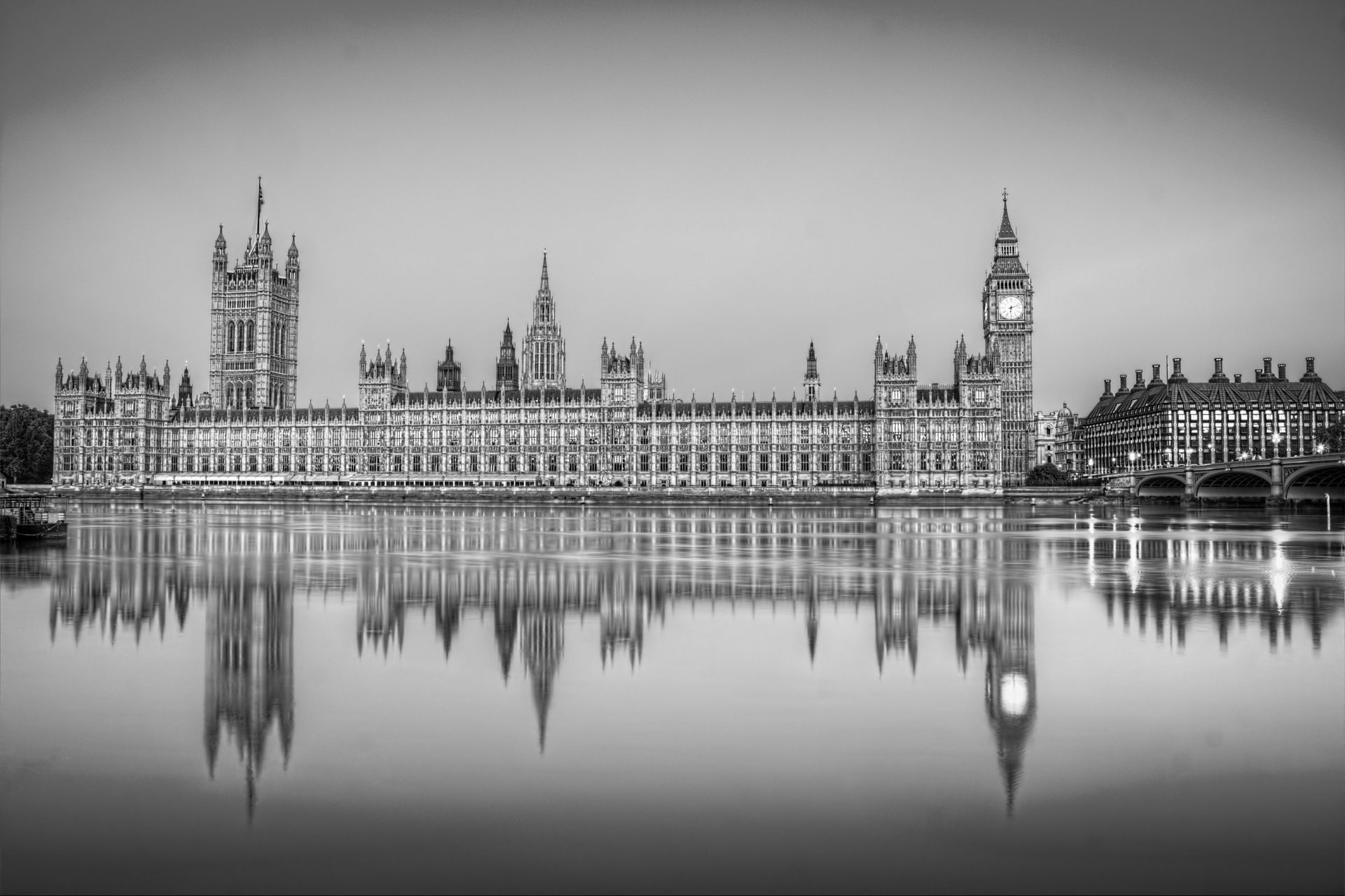
When institutions fail to respond, people seek other avenues – sometimes constructive, often not. The rise of heterodox movements across the Western world is, in part, a reaction to this indifference. They promise immediacy, efficiency and chainsaws. Whether they can deliver is another question. But their appeal lies precisely in their rejection of the status quo that O’Rourke so gleefully skewered, using Parliament both literally and as a metonym for the broader machinery of power.
True democracy today looks more like a chimera than a functioning reality. Worse still, as time goes by and populations multiply unchecked, it seems the chances of its being meaningfully realised appear increasingly slim. What we witness every day is what can be called agonocracy: a system of perpetual competition and contested leadership – a tyranny of an entrenched minority over an indifferent majority that accepts the arrangement so long as water flows from the tap and the Wi-Fi keeps working.
Is parliamentary agonocracy already beyond redemption? O’Rourke himself understood that the alternative to flawed institutions could be something far worse. Can these failed institutions recover a sense of purpose, a renewed connection to the people they are supposed to serve?
Such a recovery would demand a recognition that real politics is not merely a game of position and advantage, but a responsibility grounded in the lived reality of citizens. It would require representatives on paper to become real representatives by stepping outside their insulated enclosures and re-engaging with the disorderly, demanding and uncomfortable world beyond mahogany panelled walls, five-star hotels and private jets.
Whether this metamorphosis is possible is doubtful. Those who have learned to live pampered by a machine that provides immunity, impunity and all the comforts power can buy are rarely inclined to alter the regime under which they prosper. It is often said that elected officials should leave office poorer than they entered it. Regrettably, such cases are the exception rather than the rule. As the wit had it, ‘Now and then an innocent man is sent to the legislature.’
In 1991, Parliament of Whores made readers laugh. Today, it suggests that the joke has run its course, and that what remains is a failure of substance. The laughter has faded; questions persist.