I RARELY listen to podcasts and when I do they seldom hold my attention to the end. But one did this weekend, an edition of The Jeremy Boreing Show, and I recommend all sceptics or would-be sceptics to watch it all the way through. Boreing is an American right-wing political activist, film director, a founder of and contributor to the conservative news and opinion website the Daily Wire.
He opens with the assertion that ‘A lot of people believe they independently woke up to the truth about Israel, the Jews, and who really runs the world over the last two years.’ Boreing proceeds to make the case that they didn’t ‘wake up’, rather that they were sold a worldview using the same rhetorical machinery that’s fuelled every social contagion from eugenics to the population bomb to covid-era hysteria.
It’s timely. It’s been impossible to ignore the rise and spread of anti-Semitic, anti-Zionist, and Israel-hating social media postings over this last year. I have seen one person after another, people I previously thought were decent, independent ‘free thinkers’, falling victim to this. One after another, they joined the clamour of hateful pro-Hamas, pro-Iran, anti-Israel, anti-US propaganda, denying or ignoring the facts about Iran’s decades-long promotion of terrorism, and denying its nuclear threat. Even accusing me of being in the pay of Zionist interests!
These are people who uncritically see ‘Zionists’ controlling every political and international decision, who accept stories with obvious red flags as proof of their theory, without any hard evidence. People who consider themselves scientists who should therefore understand the components of critical reasoning, but have been swept along on this wave.
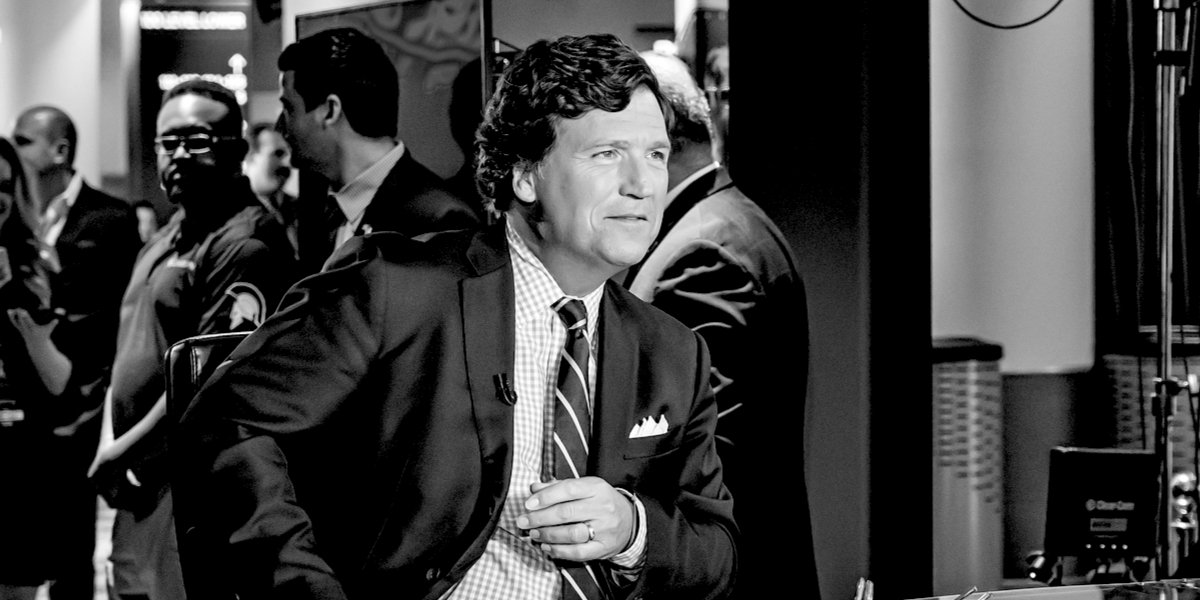
How has this happened? How have people become so gullible and un-questioning? Boreing explains. First he identifies two primary influencers behind this spread of ideas: Tucker Carlson and Candace Owens. He analyses their methods. Using dozens of examples, he breaks down the specific techniques deployed by them and the wider ‘black-pilled’ online right. These are pre-suasion, presupposition, assertion stacking, asymmetric scepticism, authority transfer, and the manufactured feeling of ‘waking up’ that hijacks real scepticism and turns it into religious conviction.
His video is not a defence of Israeli policy. Nor does he claim that conspiracies don’t exist. Rather he takes a clinical look at how conviction is engineered, alerting the viewer/listener to notice it when it’s being engineered on you.
You can watch it here.
What follows is a summary of the manipulation techniques which Jeremy Boreing identifies and dissects from the rhetorical strategies of Carlson and Owens, their specific verbal patterns, and the psychological effects these have on an audience:
Pre-suasion (03:06): Shaping how an audience interprets evidence before they even see it, ensuring they accept a specific narrative rather than evaluating the facts objectively.
Presupposition (06:36): Stating a controversial claim within a sentence as if it is an already established, non-debatable fact.
Connected to both of the above is something Boreing denotes as an assumptive close – a sales technique whereby a speaker talks as though the listener has already made their decision and agreed with the speaker (6:49). Thus the presenter avoids debating or sourcing their claims, instead assuming them into existence. This tactic is used to:
a) bypass critical evaluation – because the claim is presented as a settled fact, the audience is less likely to challenge it;
b) create social pressure – implying that reasonable people have already agreed, making disagreement feel like a sign of ignorance or stupidity (6:19).
Boreing highlights this technique using the example of Tucker Carlson’s frequent use of phrases like ‘it’s clear’, ‘obviously’ or ‘of course’ to frame his statements as universally accepted truths rather than as personal opinions or arguments requiring evidence (6:04-6:45).
Assertion stacking (13:14): Layering multiple signals of certainty (e.g. ‘of course’, ‘obviously’, ‘it’s the truth’) so rapidly that the brain stops tracking whether actual evidence was provided.
False consensus / social proof (04:16): Using language that suggests ‘everyone knows’ or ‘the world is turning’ to make disagreement feel like stupidity or social isolation.
Epistemic closure (10:03): Language designed to signal that a question is settled, effectively shutting down the possibility of legitimate debate or requests for evidence.
Illusory truth effect (11:04): A psychological phenomenon where hearing a claim repeated frequently, especially with extreme confidence, makes the listener more likely to believe it regardless of its validity.
Burden-shifting (12:03): Inverting the standard of proof so that instead of the accuser providing evidence, the listener/target must explain why the accusation is false.
Motivated reasoning (15:42): Starting with a desired conclusion and then retroactively constructing a narrative to support it, often while admitting the evidence is lacking (e.g. Candace Owens’s ‘We don’t know, but we know’).
Asymmetric scepticism (17:42): Demanding an impossible burden of proof for one side while treating the opposite claim as self-evident truth without requiring any verification.
Authority transfer (29:15): Leveraging trust earned from one legitimate or compelling point to ‘smuggle in’ a series of other unverified, radical, or conspiratorial claims.
These specific rhetorical techniques are employed to bypass critical thinking, to create an ‘illusion of insight’ that feels like personal awakening but is actually engineered by the narrator (3:32 – 3:57) – the exhilarating, emotional feeling of ‘waking up’ to a secret truth – which hijacks rational scepticism and converts it into a form of rigid, religious-like conviction.
Dissection of Tucker Carlson’s statements:
Boreing highlights how Carlson embeds unproven claims (such as FDR having foreknowledge of Pearl Harbor) within subordinate clauses, treating them as established facts to bypass debate (6:21 – 6:55). He points out how Carlson layers multiple signals of certainty, like ‘it’s clear’, ‘of course’ and ‘obviously’ to create an air of authority that makes requesting evidence feel like an act of ignorance (9:30 – 10:40). He also points up Carlson’s frequent inversion of the standard of proof, requiring the listener to disprove his assertions rather than providing evidence to support them, such as his claims regarding the CIA and Ukraine (12:03 – 12:24).
His dissection of Candace Owens’s statements:
Boreing critiques Owens’s repeated use of the phrase ‘We don’t know, but we know,’ noting that she admits a lack of evidence but explicitly invites the audience to reach a firm, pre-determined conclusion regardless (15:42 – 16:28).
He analyses how she demands extreme proof for one side (e.g. funding for pro-Palestinian activists) while simultaneously treating the opposite perspective as common knowledge that requires no evidence (17:42 – 18:07).
Boreing argues that both figures leverage trust earned from previously stated truths to ‘smuggle in’ subsequent, unverified conspiracy theories, essentially spending their credibility to push deeper narratives (29:05 – 29:38). By using language that implies a widespread, intuitive agreement, the speakers manufacture an ‘illusion of insight’ which makes the audience feel they have arrived at a hidden truth through their own organic awakening (3:32 – 4:16).