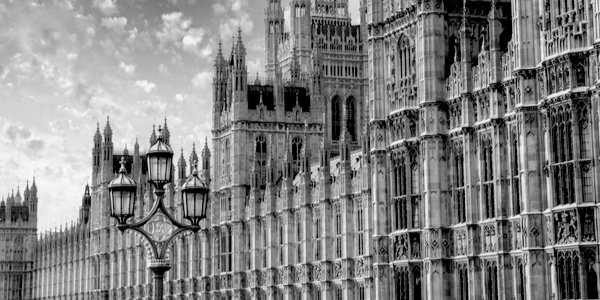
AS the final 88 hereditary peers are abolished by Sir Keir Starmer this week, ending almost 1,000 years of history, I feel a combination of ambivalence and utter despair. ‘How can the two co-exist?’ you might ask. Let me explain.
I was born in 1987, the daughter of a hereditary peer, one of the 750 unceremoniously thrown out of the House of Lords in 1999. I remember my father’s last day in ‘the House’ as if it was yesterday. It was such a sad time for him and us – the final nail in the coffin for our ancient Scottish baronial family, generations of whom had served our nation in Britain and around the world.
It was also an enormous nail in the coffin for Britain. The policy to remove the hereditary peers, my father said in a debate in February 1999, was ‘part and parcel of a more sinister movement which will, whether or not by intention, destroy the United Kingdom’. How right he was.
So the root of my ambivalence is obvious. The departure of the final 88 will not fundamentally change the state of our nation, which is already festering in a moral abyss. The country has changed irreversibly since the day Tony Blair and his government decided, in the name of democracy and fairness, that an upper house stuffed with former MPs, party donors and government cronies was what Britain needed.
This latest move is just more petty Labour and more spiteful, calculating Starmer, who prioritised this particular manifesto pledge over those which might actually benefit the nation (what happened to ‘kick-starting the economy’, Keir?). Of course it will not have escaped him that his own party, which has only four hereditary peers compared with the 39 Tories and the 29 crossbenchers, will now increase its power in the upper chamber as a result.
Starmer of course is oblivious to the sense of duty and responsibility most of the hereditary peers have besides their so-called ‘privilege’ (although it must be noted that those original 92 who stayed in – ‘Cranbourne’s cronies’ – were not the best of them, but that is a story for another day).
At least the Lord Speaker Michael Forsyth gets it and was not afraid to criticise Starmer’s decision. At a farewell drink for peers, he said that their departure was a ‘profoundly important moment in the constitutional history of our nation’, arguing that hereditaries had brought independent thinking to the chamber. Indeed, a key point as to why ejecting them is so nonsensical is that none of the hereditaries owed anything to governments and so were by definition going to be more impartial and detached than any life peer could possibly be.
‘Hereditary peers have brought distinctive qualities to this House – an ethos of service, a long view and, not least, independence of mind. They have shown a willingness to speak plainly, to resist passing fashions, and to act according to conscience rather than convenience,’ added Lord Forsyth.
‘But the contribution of hereditaries has not all been about high politics. What is best in the traditions is the sense of obligation and stewardship and the understanding that privilege brings duties.
‘For close to a thousand years, hereditary peers and their families have helped shape our institutions, defend our country, preserve our culture and strengthen the spirit of public service without which no nation can flourish.’
My father was not a politician, nor was he rich, although his ancestors had been. He was a hard-up farmer, close to penniless for most of life after his family’s money was sucked up almost entirely by death duties imposed by Clement Attlee’s Labour government in the 1940s. He was not the only hereditary peer with a story like this, so the idea that they were all rich and privileged is an anachronism. The 14th Duke of St Albans, for example, who has recently died, had no private fortune or estate and worked all his life as an accountant while living in a modest flat in London.
In this sense, I can guarantee that my father and the Duke of St Albans were far more representative of ‘the people’ than any of the life peers in the House of Lords today.
He saw his seat in the House of Lords as the utmost privilege and honour because it gave him the opportunity to serve his country, something which he felt was his duty – a concept which Sir Keir and his Labour friends will never be able to get their thick heads around. Although my dad sat on the Conservative benches, apart from a short stint when he joined the SNP in protest against Ted Heath’s government, he did not toe the party line if his conscience told him not to: he didn’t have to because he didn’t owe them anything.
My father took his seat in the Lords seriously, turning up especially when he felt had something to add, such as for debates on agriculture, Scotland, Tibet and Poland. He didn’t turn up for the money as there wouldn’t have been any point at £31.50 a day for expenses, compared to the £371 a day, not including travel and overnight expenses, that peers – all 822 of them – get today. Most of the hereditaries back then rarely claimed their expenses, especially the ones whose families had managed to hold on to their fortunes.
And so, alongside the ambivalence, I weep. I weep with nostalgia for a Britain I barely remember, a Britain where people like my father were valued – people with strong moral principles who did not seek out power or recognition, but served their country out of duty. These were people who understood the fabric of this country before that fabric disintegrated, people with a long familial tradition of service.
The Duke of St Albans’s obituary in the Daily Telegraph this week, which brought tears to my eyes as I read it, notes that ‘when hereditary peers were being removed from the House of Lords, during the final debate [the Duke] was seated on the first step of the throne, as was his right as the eldest son of a peer, and leapt on to the Woolsack crying: “Vote this treason down!”.’
As my father said in the same debate: ‘When we engage in all this grand talk of the hereditary principle being unacceptable, let us bear in mind one fact: democracy is new and comparatively untried. We do not know what will come of it over the decades and centuries to come.’