THE ceasefire between the US and Iran continues, but the war between them will return, despite the Trump administration’s declaration of formal termination of hostilities, arguing that the April 7 ceasefire paused and then stopped the clock.
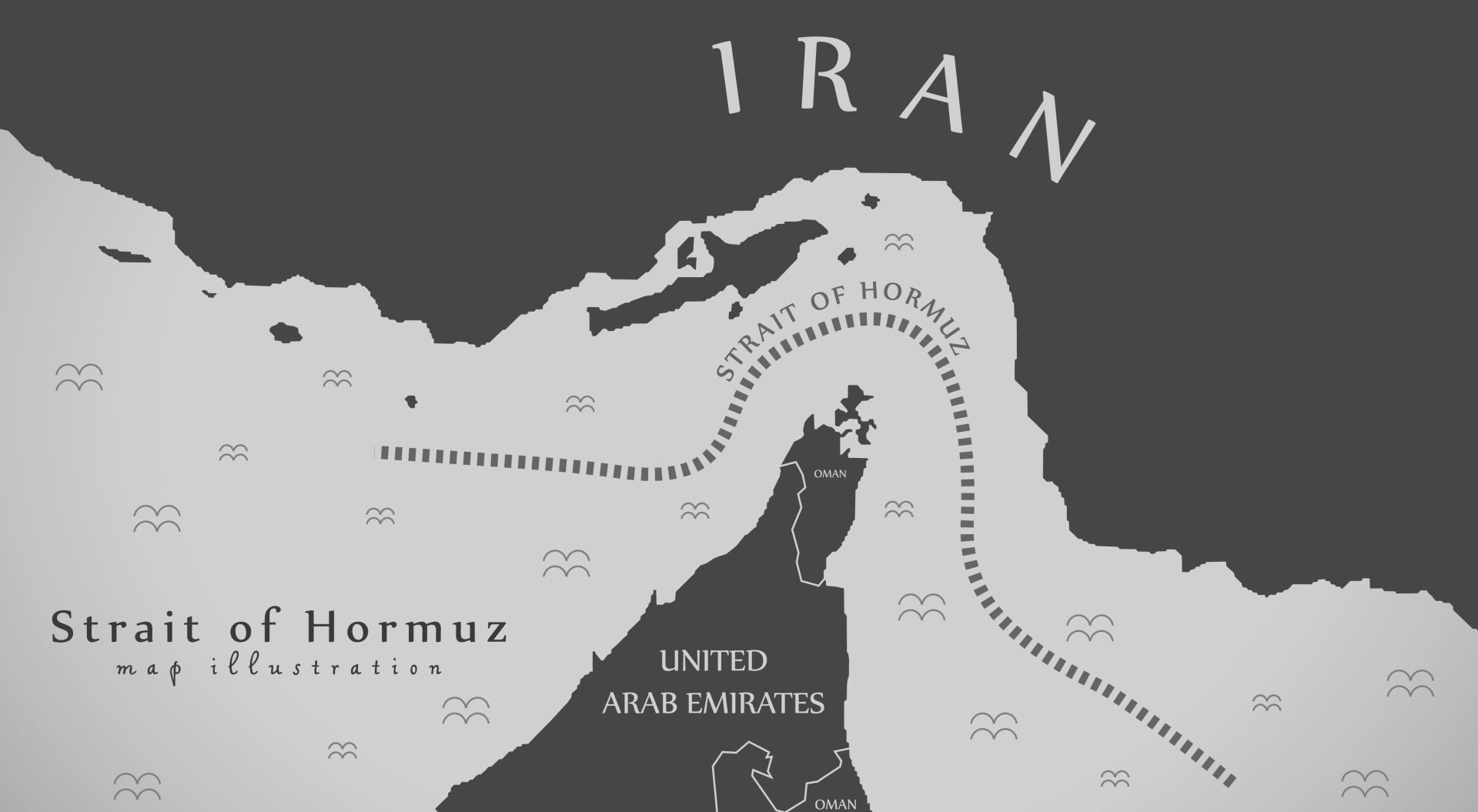
The Strait of Hormuz remains mined by Iran, blockaded by the US and effectively closed, with shipping at approximately 5 per cent of pre-conflict levels. Iran’s oil sits in containers and rail cars. The pressure ledger described in these pages four days ago has not shifted in Tehran’s favour. However Iran retains its uranium and the US has not shifted in its demands that all uranium be surrendered and its enrichment stopped.
There is no doubt that US and Israeli strikes and internal struggles have dramatically if not catastrophically weakened Iran’s regime. They have also achieved regime change, though not the one hoped for. The strikes have left Iran dominated by Iran’s Revolutionary Guard Corps (IRGC). International sanctions continue, though Iran continues to export oil and import arms over its territorial waters and land borders (particularly via a ghost fleet of Chinese and Russian carriers that most Western governments are wary of confronting). Iran and the US continue to signal proposals for peace and prepare delegations for Pakistani-mediated talks, but don’t send those delegations. The three-phase proposal Iranian Foreign Minister Abbas Araghchi floated via Pakistani mediators was rejected publicly by US Secretary of State Marco Rubio and quietly by the White House Situation Room.
At first glance, this impasse is perplexing.
The new Iranian regime’s highest objective is survival. It could sacrifice its nuclear programme and its piracy in the Strait in return for some peace agreement that it can call victory – because the agreement would be made with the regime, which is to say that the US would have dropped its demand for regime change. Iran has asked also for guarantees against further attacks, which in effect would guarantee the regime.
Yet what appears sensible in theory is impossible in practice. For the IRGC, survival this year is not enough. The IRGC needs nuclear weapons to deter foreign meddling – a lesson from Moammar Ghaddafi’s overthrow in Libya, after Ghaddafi gave up his nuclear programme, and from North Korea’s long survival despite similar international terrorism. The IRGC commands Iran’s international terrorism (linked with a recent spate of anti-Semitic attacks in Europe), ballistic missiles (which bombarded neighbours initially uninvolved in the war, except to host US bases), and proxies in Iraq, Lebanon, Yemen and Oman.
It will not give up its regional imperial ambitions, or the original revolutionaries’ aims to export revolution, or its export of a peculiarly Iranian politicised Shia Islamist quest for global domination.
Those ambitions are rooted in the character of the Islamic Republic itself. Since its founding in 1979, the regime has pursued a revolutionary religious and geopolitical agenda. It has consistently invested resources in advancing that agenda, despite failed wars, economic sanctions and internal unrest.
The Iran regime’s persistency is perversely self-reinforcing, even as its economy contracts. It has survived despite its diabolical behaviour and despite the severe reactions including two pre-emptive wars against it since 2025. The regime believes that it can survive and prevail. Here it takes lessons from Afghanistan, ruled by the Taliban (in alliance with Iran), after mostly Western forces withdrew in 2021, 20 years after they toppled the Taliban.
On the other side, Iran’s ambitions are explicitly unacceptable to the US, Israel, and recently the UAE (the United Arab Emirates). Implicitly, Saudi Arabia and Qatar agree, having waged their own wars against Iran’s proxies, although their alignments are always ridiculously complex with linked issues, such that sometimes they are funding the same proxies as Iran, just to stick it to some splitter or another.
For all these states, the problem is Iran’s regime, not just its policies. The policies cannot be negotiated away until the regime falls. The regime is in the habit of negotiating compromises, international inspections, commitments to do this or that, while going on about its prior business.
Israel has realised this for decades. For Israel, the Islamic Republic is a persistent and existential threat. More surprising is the shift among Gulf Arab states. Iranian attacks unintentionally prompted their further alignment with both the United States and Israel. Tehran’s coercion has backfired, producing resistance rather than compliance.
Despite the importance of these allies, ultimate authority for this war rests in Washington. US policy is shaped by national interests, not just regional needs. But the US shares the region’s revulsion against the prospect of a nuclear-armed Iran (if only because so many US assets are in the region), and shares the regional needs and thence international needs for free passage of the Strait and around the coasts of Oman, Yemen and Lebanon.
Intractability suggests war is not over. But it will look increasingly like attrition – more like the counter-insurgency that dominated the so-called war in Iraq from summer 2003, less like the invasion that toppled Saddam Hussein in spring 2003. The decisive factor will not be which side can deliver the most spectacular kinetic effects, but which can sustain pressure over time.
Iran’s vulnerabilities are real. Its economy is under increasing strain. It has been forced to store large amounts of unsold oil in improvised storage containers and is attempting to move it via rail, according to industry reports and analysts – a direct result of a US naval blockade in the Strait of Hormuz. The regime fears a nationwide spread of protest like the one it put down brutally in January. It has lost a lot of principals to airstrikes. Its proxies are struggling against Israeli bombardment, incursions and smart strikes (such as exploding pagers).
The US still hopes for internal revolution. Iran is not homogeneous: it relies on Sunni and Arab identities to play nice with a Shia Persian majority. Even within that majority, discontent is rising, particularly over drastic price surges and acute food shortages (food inflation has risen by 40 per cent in the past year, with staples such as rice increasing sevenfold). The regime is suffering in a way it never has under previous sanctions. However, it’s still a long step from discontent to revolution. The IRGC and allied militias are well-armed and have demonstrated a willingness to execute civilians summarily.
For the United States, the costs of waiting for regime change are mostly domestic and political (certainly war is materially costly too, particularly as the US replaces stocks of ordnance already depleted by donations to Ukraine). Mid-term elections are coming up in November, and they are non-trivial. The Republicans were already likely to lose one House of Congress. They might lose both. Democrats are debating stopping the war under the War Powers Resolution. But as has been noted elsewhere Congress has never successfully used the War Powers Resolution to end a military campaign in 50 years of trying, and it is unlikely that Trump is going to be the first President to yield to it.
Trump will also have his eye to the markets which, according to this analysis by Bepi Pezzulli, foresee not chaos but consolidation. The war in Iran, he argues, is interpreted ‘less as a singular shock than as a catalyst accelerating trends already under way, namely the the fragmentation of globalisation’, the rise of strategic blocs, and the reassertion of state power over markets: ‘The Middle East, long a theatre of managed instability, is now undergoing a sharper realignment, one that promises, paradoxically, a more predictable structure. Investors tend to prefer order over ambiguity, even if that order emerges from conflict.’
So gird up for continued conflict and its perhaps only short-term economic costs.