SUNDAY was Day 65 of Operation Epic Fury. The ceasefire holds in the technical sense that American bombs are not falling on Iran. In every other sense, the pressure is tightening. The blockade is strangling Tehran’s oil revenue. Gas prices at the American pump have climbed 50 per cent since February 28. Twenty thousand sailors from countries that had nothing to do with this war are sitting in the Strait of Hormuz watching their food supplies run low. And the President of the United States has announced something called Project Freedom, which began yesterday morning Middle Eastern time. So what is the diplomatic picture beneath the public statements, and what is really happening? I break it down into six parts:
I. PROJECT FREEDOM: WHAT IT IS AND WHY IT MATTERS
Mr Trump’s Truth Social announcement on Sunday afternoon US time is worth reading carefully, because it does several things at once.
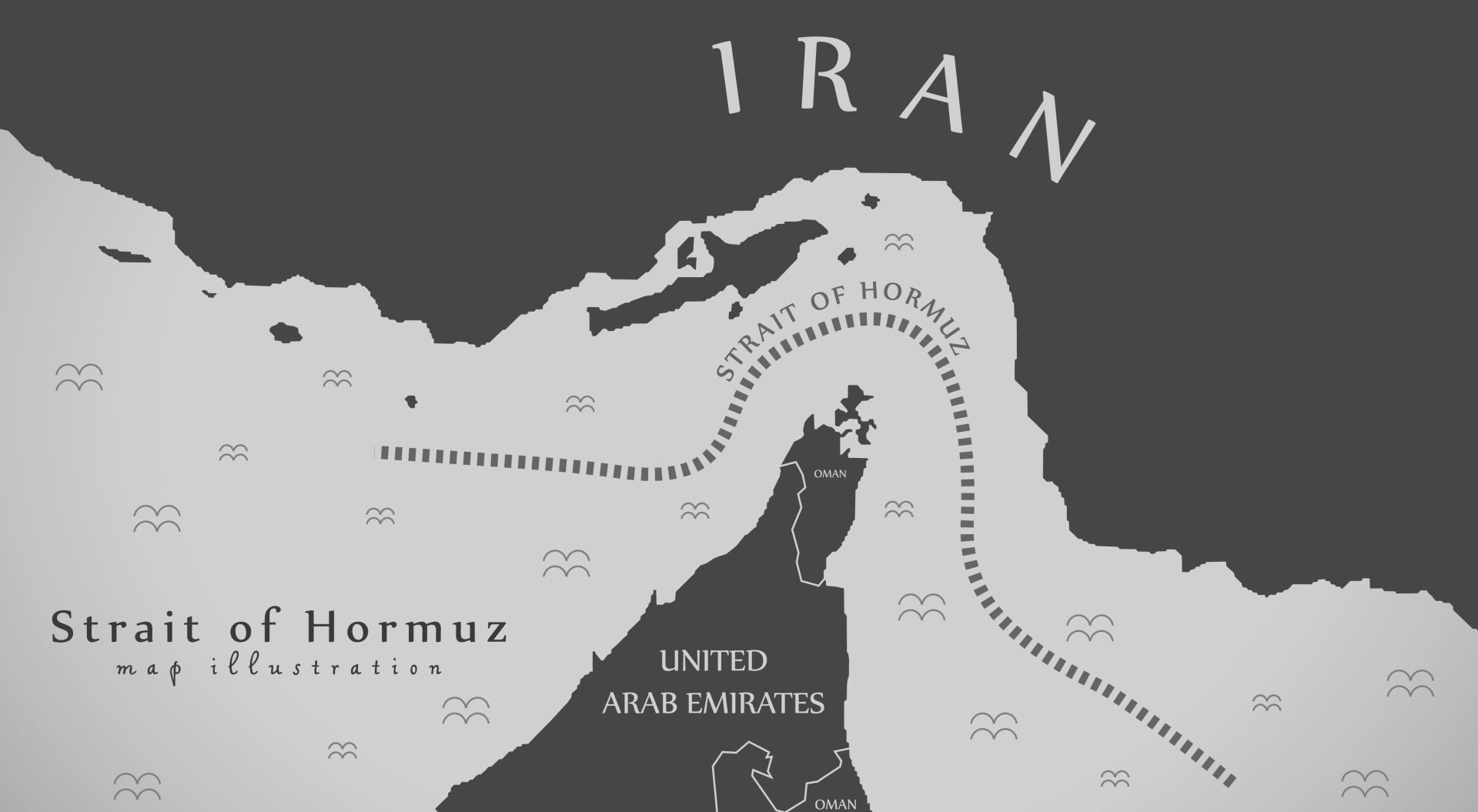
On the surface, it comes across as a humanitarian action. About 20,000 sailors from neutral nations have been stranded in the strait for weeks, some with dwindling food and supplies. The International Chamber of Shipping has been screaming about this. A cargo ship has been attacked by multiple small craft near Sirik, Iran, the first reported strike in the area since April 22. The crews of these vessels are real people, from countries that made no decision to be part of this war, trapped in a chokepoint because two governments cannot agree on the terms of an ending. The humanitarian framing is real. It is also strategically brilliant. This is what Project Freedom accomplishes with a single Truth Social post.
First, it reasserts American control of the corridor. Iran has been claiming sovereignty over the strait and charging tolls for ships to pass. Trump’s announcement directly contests that. The United States is not asking Tehran’s permission to escort ships. It is announcing that it will, and warning that anyone who interferes will be dealt with forcefully. That is not the language of a party seeking access. It is the language of a power asserting authority.
Second, it fractures Iran’s tollbooth narrative. Tehran has maintained that neutral ships can pass safely if they pay Iran a fee, thereby presenting itself as a responsible administrator of a vital waterway. Once American naval escorts are moving neutral ships out of the strait without paying that toll and without asking permission, Iran’s tollbooth collapses as a concept. The Iranians either let the escorts proceed, which destroys their leverage, or they interfere, which gives the United States a casus belli for resumed strikes.
Third, it applies domestic political pressure at exactly the right moment. Gas prices hitting $4.39 (£3.24) a gallon and rising are not a policy abstraction. They are a number every American sees on a sign when they fill up. Trump knows that the blockade is costing him politically even as it costs Tehran economically. A visible, named operation to free trapped ships is the kind of concrete action that speaks to an audience that has been watching the numbers at the pump for two months. Iran’s deputy parliament speaker Ali Nikzad said while visiting Larak Island’s port facilities that Iran will not return the strait to its pre-war conditions. That is the hardest line Tehran has staked publicly. Project Freedom is a direct answer to it. Not with words. With ships and escorts and a warning that interference will be dealt with forcefully.
2 THE DIPLOMATIC PICTURE: FOURTEEN POINTS AND A STALEMATE
Iran has now submitted a 14-point response to the American nine-point proposal.
Iran wants the war ended and resolved within 30 days, rather than extending the ceasefire through a two-month cooling period as the United States proposed. Iran wants the naval blockade lifted. It wants US forces withdrawn from the region surrounding Iran. It wants frozen assets released and sanctions lifted. It wants reparations. It wants fighting in Lebanon halted. And in what appears to be a significant shift, it is proposing to separate the Hormuz question from the nuclear question, offering to reopen the strait and end the shooting war first, with nuclear negotiations to follow in a later stage.
That sequencing is important. A senior Iranian official described it as a meaningful concession designed to facilitate movement. The nuclear programme is the hardest problem. Setting it aside temporarily to get the guns quiet and the ships moving is a structurally rational move. Trump’s team has publicly rejected it, with the President saying Saturday he could not imagine the proposal would be acceptable. Privately, Steve Witkoff, the US envoy to the Middle East, confirmed that conversations are continuing.
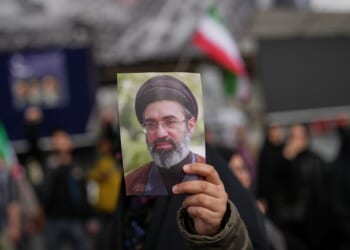
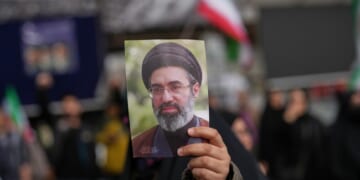
The structural problem remains unchanged. The IRGC is now running Iran’s negotiations. The institution with the most to lose from denuclearisation is the institution at the table. Even if Abbas Araghchi, the Iranian foreign affairs minister, wants a deal, Mojtaba Khamenei, the supreme leader, is issuing statements from somewhere in Iran declaring nuclear and missile capabilities as national assets that will be protected. He is not negotiating. He is performing for the domestic audience that still controls whether he survives. A deal which saves the IRGC’s institutional survival at the cost of the nuclear programme is a deal Iran cannot make regardless of what its diplomats say in Muscat or Islamabad.
‘Our plan focuses exclusively on ending the war and does not contain any details about the nuclear programme,’ Iranian foreign ministry spokesperson Esmaeil Baghaei confirmed in a Sunday broadcast.
That is not a serious proposal. The United States made it clear that this entire operation is not about Israel (although ending the funding to Hamas and Hezbollah is welcome to Israel and Lebanon, and ending the funding to the Houthis is welcome for Saudi Arabia) or regime change (though tens of thousands were killed as they protested without weapons) but the decapitation of regime that negotiates to buy time to continue to pursue nuclear weapons it can never be allowed to have.
Meanwhile Trump said Friday that the United States might be better off if no deal is reached. That is the pressure language of a negotiator who believes time and economic pain are on his side. He is not wrong about the economics. He may be underestimating how long the IRGC can endure on ideology and institutional survival instinct even as the economy collapses around it.
Germany’s foreign minister called his Iranian counterpart to emphasise that Berlin shares Washington’s goal: Iran must completely and verifiably renounce nuclear weapons and open the strait. That alignment matters. It is harder for Iran to frame this as American imperialism when Germany is saying the same thing.
III. THE MILITARY PICTURE: OPTIONS ARE ON THE TABLE
The United States Central Command (Centcom) has not been idle during the ceasefire. Let me give you what the open-source record shows.
The blockade is holding. Centcom has confirmed it intercepted and redirected 45 commercial vessels that attempted to breach the naval blockade of Iranian ports. US Marines from the 31st Marine Expeditionary Unit boarded MV Blue Star III on April 28, a commercial ship suspected of attempting to transit to Iran in violation of the blockade. The blockade is not a line on a map. It is a physical enforcement operation with real consequences for ships that try to run it.
Three carrier strike groups remain in theatre: USS Abraham Lincoln, USS George H W Bush, and the replacement for the departing Gerald R Ford, the USS Tripoli-anchored Carrier Strike Group 10, which arrived on April 23. Three carriers is the largest concentration of American naval power in the Middle East in decades. Admiral Brad Cooper visited sailors and Marines aboard the Tripoli this weekend. That is not a ceremonial visit. It is a commanding officer keeping his finger on the pulse of a force actively enforcing a blockade and may shortly be escorting ships through a contested waterway.
Centcom also briefed Trump on new military options earlier this week. The Axios reporting is specific: a plan for a short and powerful wave of strikes on Iran, likely including infrastructure targets, designed to break the negotiating deadlock. Options including ground force components are reportedly on the table at the presidential level for the first time. The Dark Eagle hypersonic weapons request remains on record. The military planning apparatus is not standing down. It is preparing for the scenario where diplomacy fails.
Trump said that there is a possibility the US could restart strikes on Iran. He has said this repeatedly. At some point, the warnings become a test. Iran knows that. The question is whether Tehran’s leadership, managing both IRGC institutional pressure and genuine economic collapse, can reach an agreement before Trump decides the warning needs to be demonstrated rather than stated.
IV. THE ECONOMICS: $4.39 AND CLIMBING
The American people are paying a war tax they did not vote for and cannot easily avoid.
Gas is now $4.39 a gallon on average, up nearly 50 per cent since February 28. That is the highest it has been since the conflict began, and economists at Moody’s and EY-Parthenon are telling CBS News and anyone else who will listen that the damage already done will linger even after the shooting stops. Spirit Airlines ceased all operations on May 2, citing rising fuel costs. Jet fuel is up 95 per cent since the war began. The economic pressure is not theoretical. It is closing businesses (though a merger that would have saved Spirit was killed under the Biden administration).
Brent crude has traded near $105 to $125 per barrel during various points in the past weeks. Oxford Economics cut its global GDP forecast by 0.4 per cent. The European Central Bank postponed planned rate cuts. The GCC (Gulf Cooperation Council) states, which import more than 80 per cent of their caloric intake through the strait, have faced genuine food supply disruptions.
Here is the strategic paradox worth naming plainly. The United States, as a major energy producer, is actually benefiting from high oil prices in some respects. American crude and petroleum product exports hit nearly 12.9million barrels a day in April. The American energy industry is having a good quarter. The American consumer is not. That tension is a real political problem for the administration, and the Democrats will keep hammering it until gas prices come down.
The blockade’s economic pressure on Iran is real, profound and working in the direction of weakening the regime. But the American political tolerance for $4.39 gas has a shelf life. Trump needs a resolution before the midterms or a visible series of wins that can be framed as progress. Project Freedom is the first of those visible wins. It says: The ships are moving. We are doing something.
V. THE HORMUZ FRAMEWORK: A CORRIDOR, NOT A PEACE
Something worth understanding about the nature of Project Freedom.
Escorting ships out of the strait is not the same as reopening the strait. The distinction matters. Iran has mined sections of the waterway. It has boarded vessels. It has attacked ships with small craft. Simply escorting neutral ships through does not clear the mines, neutralise the IRGC Navy, or restore the legal and physical conditions for normal international commercial shipping. It evacuates the people who are trapped. That is the humanitarian element that is genuine.
The Maritime Freedom Construct that the State Department has been quietly pitching to allied nations is the longer-term architecture. That multilateral framework, organising allied nations to co-ordinate the reopening of the strait, is how you lock in a durable outcome rather than a temporary escort operation. A blockade the United States enforces alone can be challenged. A coalition that the United States leads is harder to argue against politically.
Whether Project Freedom proceeds peacefully will tell us a great deal about where this conflict goes next.
VI. WHAT I AM WATCHING
The next 72 hours are likely to be the most consequential since the ceasefire began.
The IRGC will have to decide whether to let American-escorted ships transit or to fire on them. There is no middle option that does not cost Tehran something. If they stand down, the tollbooth is over. If they fire, the ceasefire is over.
Iran is reviewing the American response to its 14-point proposal, submitted through Pakistan and Trump’s summit with Xi remains on the horizon. A deal in which China plays a visible stabilising role, collects economic reward for reconstruction, and gets the nuclear material out in exchange for face-saving terms for what remains of Tehran’s government is not an impossible outcome. Xi has no interest in a nuclear-armed Iran. He has every interest in being the man who rides in to stabilise the situation.
Watch whether Iran fires or folds. The answer will tell you more about the next chapter of this conflict than any diplomatic statement issued in the next 48 hours.
UPDATE: IRAN RESPONDS TO PROJECT FREEDOM
Within hours of Trump’s announcement, Ebrahim Azizi, head of the national security commission in Iran’s parliament, posted on X that any American interference in what he called the new maritime regime of the Strait of Hormuz will be considered a violation of the ceasefire.
Note what he said. Not a violation of international law. Not an act of war. A ceasefire violation. That is telling. Iran is not threatening to sink American warships. It is trying to put the United States in the position of being the party that broke the truce. That is a negotiating move, not a military one.
The United States has been standing off not because it lacks the power, but because escalation forces hard choices depending on what Iran does next. Both sides understand what comes after the first exchange of fire.
The A-10 Warthog was designed to destroy Soviet armoured columns. It fires 3,900 rounds per minute from a 30mm rotary cannon and has been putting gun runs on hardened targets since the Gulf War. The IRGC small boat swarm tactic was designed against adversaries who could not put low-altitude gun runs on fast attack craft. A fiberglass speedboat does not improve those odds in any way that matters.
In the next 12 hours, some IRGC men in boats smaller than wealthy Americans use for pleasure cruising will have to decide whether they are willing to die for this regime. That is not a rhetorical flourish. That is the actual decision in front of them when Project Freedom escorts move into the strait.
If they fire, the ceasefire is over on their terms and the options briefing Centcom gave Trump last week becomes a conversation about timing and target sets. If they stand down, the toll regime Iran has been running collapses, the humanitarian framing wins the information war, and Tehran loses the strait as a leverage instrument without a shot being fired.
The regime sent those men into those boats. Whether it has given them orders to die for a position that is already diplomatically untenable is the question that gets answered first.