You can read the first part of this article here.
THE China piece of this story has evolved in real time and requires honest acknowledgment of what appears to have changed in the last week.
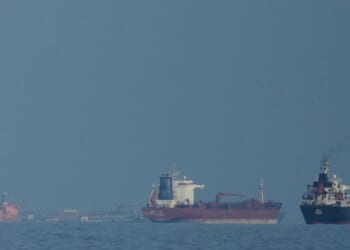
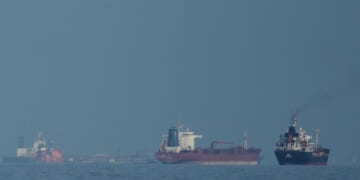
I have speculated in prior essays that the Trump administration was allowing a calculated leak in the blockade for Chinese-connected vessels as a deliberate pressure valve ahead of the current summit with Xi Jinping. The pattern of Chinese-linked tankers moving through or around the blockade perimeter, ships hugging the Iranian coastline, AIS transponders spoofed, flags of convenience flying from vessels with Chinese beneficial ownership, was documented through satellite shipping data and appeared to reflect at least tacit tolerance at the presidential level. With roughly 98 per cent of Iranian oil exports bound for China, a total blockade that cut off China entirely risked being a summit-killing provocation. A blockade with a quiet exception gave Xi something to manage domestically while keeping him at the table.
That calculation appears to have changed.
Beijing announced it will not comply with American secondary sanctions targeting Chinese entities involved in the Iran oil trade. That announcement appears to have ended whatever tolerance had existed for the quiet exception. The ships that were slipping through are being turned back. The valve that was providing China with limited relief from the blockade’s full economic consequences appears to be closing. China drew a public line on sanctions compliance, and the administration appears to have responded by enforcing the blockade with less tolerance for the exceptions that had been moving through.
Wang Yi’s public statement calling for a prompt resumption of strait traffic, his published assertion that Iran had pledged not to pursue nuclear weapons, and the gap between Beijing’s statement about the meeting with Abbas Araghchi, the Iranian foreign affairs minister, and Tehran’s statement of the same meeting all point in the same direction. China told Iran to open the strait and told the world it did so. China is positioning itself as the constructive party ahead of the Trump summit. The secondary sanctions announcement may have accelerated that positioning by forcing Beijing to choose between public solidarity with Tehran and economic relief from a blockade that is costing Chinese refiners real money every day.
The Trump-Xi summit today and tomorrow is now the most important diplomatic event of this conflict. Xi has no interest in a nuclear-armed Iran. He has every interest in arriving at that summit as the man whose mediation produced movement. Whether the next six days deliver something workable, or whether Trump arrives in Beijing with a military option he has already decided to execute, is the question the world is asking.
The economic costs of more than two months of conflict in the world’s most critical energy chokepoint are severe and they are real. I will not minimise them.
Brent crude peaked above $120 per barrel and trades near $106 at present. The European Central Bank postponed planned rate cuts. Germany and Italy face high risks of technical recession if the strait closure extends through the summer energy refill season. The Philippines declared a national energy emergency. Bangladesh approached recession conditions. New Zealand released strategic petroleum reserves. Qatar declared force majeure on LNG exports after Iran’s attack on the Ras Laffan complex caused a 17 per cent reduction in production capacity requiring three to five years to repair. The Gulf Cooperation Council (GCC) states, which import more than 80 per cent of their caloric intake through the strait, absorbed genuine food supply disruptions. The UAE absorbed missile and drone attacks that struck the Fujairah Oil Industry Zone, triggered four missile alerts inside the country, forced commercial aircraft to turn around in mid-air, and shifted schools to remote learning.
The American consumer has been paying at the pump. Gas is $4.54 a gallon on average compared with $3.48 to $3.59 at the start of the war. Spirit Airlines ceased all operations citing fuel costs. Jet fuel is up 95 per cent since February 28. Oxford Economics cut its global GDP forecast by 0.4 per cent.
Thirteen American service members have died. Each name represents a family, a community, a loss which does not diminish because the cause was just or the victory was significant. Thirteen is also the lowest combat casualty rate of any sustained American military campaign against a significant adversary in modern history. The people telling you America lost need to explain what winning looks like to them, because the standard they appear to be applying would require them to call the Second World War a defeat.
Remember also the Iranian people, the ones who burned their hijabs in the street and stood in front of Khomeini statues with protest signs. They are living through rolling blackouts, near 100 per cent inflation, a collapsed currency, and an information blackout imposed by a regime whose survival depends on keeping them ignorant of how badly it has failed them. They are bearing costs that structurally insulate the IRGC (Islamic Revolutionary Guard Corps). The institution with the guns does not suffer from the blackouts. The people do.
There is a category of player in this conflict that deserves direct attention: the nations and institutions that spent years paying danegeld to the IRGC rather than confronting it.
The GCC states watched Iran fund and arm proxy forces that destabilised Yemen, threatened Saudi oil infrastructure, and menaced Israeli and American assets for years while maintaining back-channel relationships with Tehran, resisting pressure to freeze Iranian assets, and avoiding the confrontation their own security required. The IRGC held their economies hostage and the GCC paid the toll rather than fight the collector.
Operation Epic Fury ended that calculation. When Iranian missiles started landing on UAE soil, the GCC states discovered that appeasement had not purchased immunity. It had purchased time – time for the IRGC to build the capability it then used against them anyway. Saudi Arabia and the UAE are now publicly aligned with the coalition demanding strait reopening. The GCC banks that had been quietly continuing to service Iranian transactions froze Iranian accounts when the pressure became unavoidable. The lesson is not subtle. The cost of confronting Iran earlier would have been lower than the cost of confronting Iran later, plus 70 years of proxy terrorism and this war.
The frozen bank accounts matter practically. A significant portion of what remained of Iran’s accessible financial reserves was held in accounts outside the country, accessible to regime-connected entities precisely because the GCC banking system had not been willing to enforce sanctions with real conviction. That convenience is now gone. The IRGC cannot access money it used to access. That is a durable strategic constraint that outlasts any ceasefire agreement.
The international maritime community absorbed the consequences of depending on a chokepoint that was always one bad actor away from closure. The IEA called this the greatest global energy security challenge in history. Japan bought oil from Texas for the first time. Panama Canal traffic surged as Asian energy buyers rerouted around the blocked strait. The permanent reorientation of energy supply chains toward American production that this conflict has accelerated will outlast the conflict by decades. The infrastructure of diversified supply routes now being built will not be unbuilt when the strait reopens.
Trump also saw clearly and demonstrated to everyone else that, outside Israel, US allies are much more willing to pay extortion than to fight. That was true of some previous administrations as well. But when the US has been protecting nations at great cost for decades, their failure to answer a call to help open the strait whose closure is hurting them vastly more than it is hurting America was met with a very loud no.
The rules-based international law order is in effect dead. The people who know all about international law in gleaming European buildings where brilliant representatives wear earpieces at big summits decided they would be fine with ignoring laws and treaties and would just pay whoever is left alive in Iran as long as they get theirs. Treaties are meaningless unless the people screaming for enforcement have the power to act.
American energy producers are having a good quarter. The American consumer is not. That tension is real. But the strategic consequence of the reorientation is that the Middle East’s ability to hold the global economy hostage through a single chokepoint has been permanently diminished.
No one can challenge American military power. That sentence is not rhetoric. It is the operational conclusion that every defence ministry on earth has been required to update its threat assessments to incorporate.
China could not stop American air assets when we came to Caracas and Tehran. Russia cannot break the blockade. Iran’s most sophisticated air defence systems, Russian-supplied S-300 batteries and domestically produced Bavar-373 systems, were among the first things destroyed in the opening hours. Iran’s navy ceased to exist as a combat force. Its missile production infrastructure was eliminated. Its air force was grounded. The American military accomplished all this with 13 combat deaths.
US Central Command has requested deployment of the Dark Eagle Long Range Hypersonic Weapon to the theatre. The missile has reached initial operational capability and Centcom is requesting it before testing is complete. That is not the posture of a command tucking tail and running. It is a message to every adversary watching: what has been displayed is not the ceiling. The classified inventory is deeper than this war has shown. A weapon that flies at over Mach 15 and reliably hits targets from 1,500 miles away changes every adversary’s calculation about what sanctuary looks like. Does the United States have classified weapons no one else in the world can match and that it has not shown off yet? It does. The big stick Teddy Roosevelt described has got considerably bigger.
The nations that have been freeloading on American security guarantees, writing cheques their own defence budgets cannot cash, and counselling restraint when American action was required, watched 38 days of major combat operations produce the destruction of a regional power that had menaced them for four decades. Most of those nations could not or would not contribute meaningfully. Israel helped. Almost no one else committed forces. The UAE accepted Israeli Iron Dome batteries operated by IDF personnel on its soil, the first time the system has ever been used outside Israel, and that co-operation is the most visible signal that the Abraham Accords have produced something more durable than a diplomatic document. Countries that share real enemies are building real military co-operation regardless of the history that used to prevent it.
The nations that counselled appeasement, funded Iranian rehabilitation through nuclear deals that bought time rather than safety, and looked the other way while IRGC proxies murdered people across seven countries are now watching the consequences of that choice. The danegeld did not prevent the invasion. It financed it.
In the final part of this series tomorrow Clayton Wood exposes the myth of Iran’s skilful management of the conflict, the changing balance of power and relationships imn the Middle East and, finally, the significance of the China summit.