IN this final part of my audit I address three things: the myth that the Islamic Revolutionary Guard Corps (IRGC) have cleverly and effectively prosecuted their response to the US attack on Iran, the changing balance of power and relationships in the Middle East, and the significance of the China summit.
First, the IRGC. The fact is they have no big tricks up their sleeves. However there is a genre of analysis circulating in certain corners of the internet, in certain congressional offices and in the media that continues to describe Iran as managing this conflict skilfully, as having preserved its core capabilities, and of positioning itself for a recovery. All this is worth addressing directly because it is wrong in every particular.
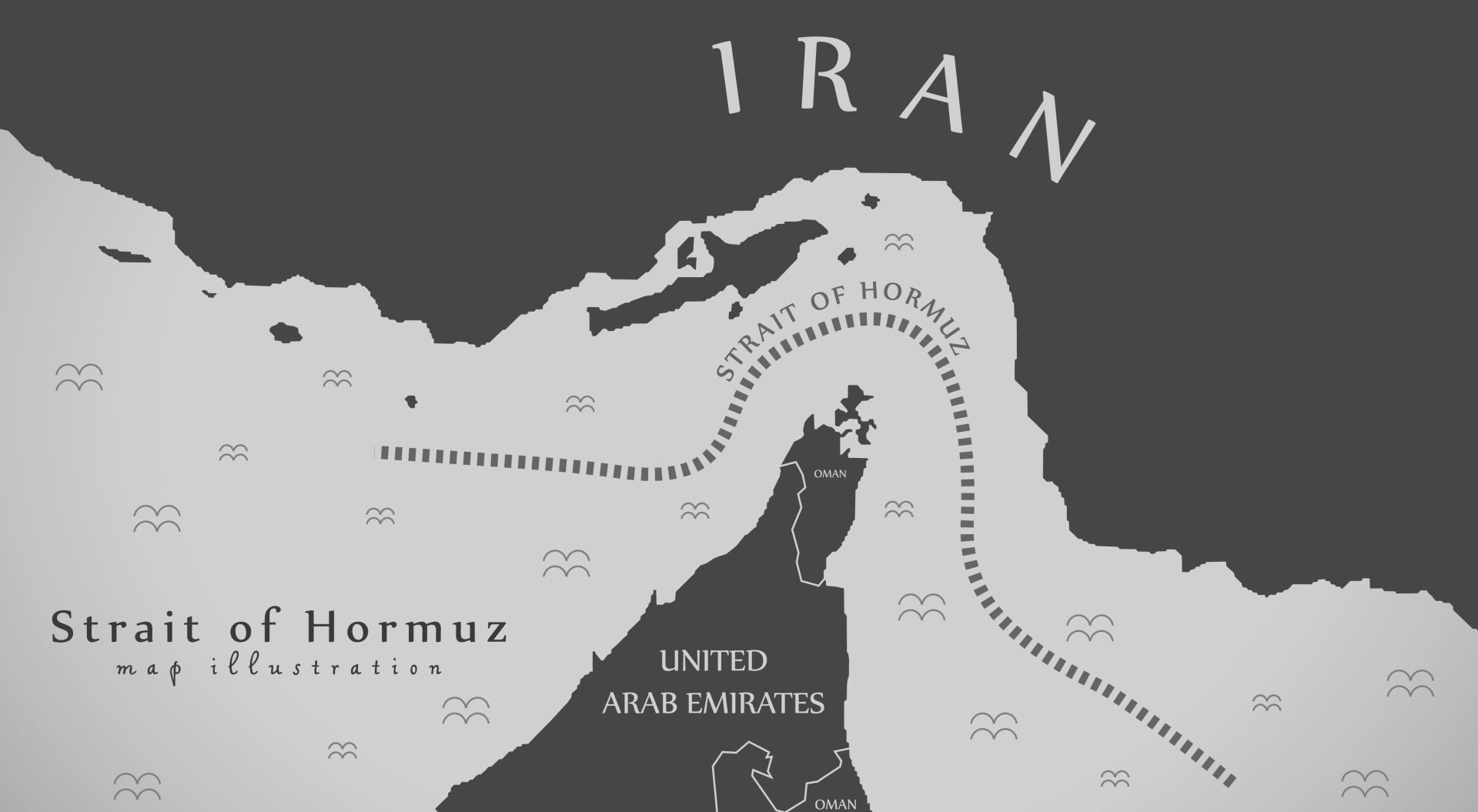
The IRGC do not have a secret capability held in reserve. Consider what they have thrown at American warships in the Strait of Hormuz over the past several weeks. Cruise missiles. Ballistic missiles. Drones. Small boat swarms. Layered attacks combining multiple modalities simultaneously. The USS Truxtun and USS Mason transited under sustained Iranian barrages described by Centcom officials as fiercer and more sustained than earlier exchanges. Zero American ships were struck and zero American sailors were killed in those attacks.
Let me be precise about what Iran’s naval threat actually represents at this moment. The IRGC small boat swarm tactic was designed against adversaries who could not put low-altitude gun runs on fast attack craft. AH-64 Apache helicopters destroyed six to seven Iranian small craft in a single engagement. A glassfibre speedboat moving at 40 knots against a 30mm rotary cannon firing 3,900 rounds per minute is a horsefly biting a thoroughbred right before it is swatted to death by a mighty tail.
That does not mean the US takes it casually. When you are talking about missiles hitting ships, a lucky strike would be a devastating thing for the American sailors aboard. The threat deserves respect at the tactical level. What it does not deserve is strategic weight. Iran is not going to sink an American carrier. It is not going to drive American warships out of the strait. It demonstrated every capability it has across multiple sustained engagements and did not connect once.
The information apparatus that was supposed to project Iranian strength is so degraded it cannot distinguish its own fabrications from enemy operations. A fake account posted a statement attributed to Iran’s army chief on social media and Iranian state media amplified it before catching the error. That is not a sophisticated adversary playing a long game. That is an institution in distress performing competence for a domestic audience that increasingly does not believe the performance.
The submarine strike that was promised never came. The powerful blow against the Great Satan that was threatened repeatedly was not delivered. What the IRGC had, they used. What they used failed. The people telling you Iran is winning need to explain their definition of winning. The IRGC entered this conflict with a navy, an air defence network, a missile production infrastructure, a proxy funding mechanism, and a set of external operations commanders. They now have none of those things. The oil storage is filling. The wells approach permanent damage. The economy is losing $500million per day. That is not winning. That is the final performance of an institution trying to look dangerous while its country drowns.
Secondly, something is happening in the regional architecture of the Middle East following this war that deserves more attention than it is getting.
The IRGC spent four decades building a regional empire through proxy. Hezbollah was supposed to be an existential deterrent against Israel. Hamas was supposed to make Gaza ungovernable and keep the Palestinian question permanently open as a lever against normalisation. The Houthis were supposed to make the Red Sea corridor expensive enough to keep Saudi Arabia off-balance. The Shia militia networks in Iraq were supposed to make American presence in the region permanently costly. The whole system was designed to make the Middle East too complicated for anyone to reorganise against Iranian interests.
All of it is now damaged or destroyed.
Israel can fight in Lebanon and finish the fight. For the first time in decades, Hezbollah’s missile inventory is being drawn down faster than it can be replenished, because the replenishment corridor through Syria is severed and the IRGC that funded it is bankrupt. Hezbollah has shifted to fibre optic FPV drones as its main strike platform because it is running low on the rockets it used to have in unlimited supply. That is not a threat posture. That is an organisation in logistical decline. Hamas cannot reconstitute at scale as long as the Iranian funding mechanism remains broken. It cannot be rearmed by sea as long as the blockade holds.
Saudi Arabia and Israel have been moving toward normalisation for years. The Abraham Accords produced UAE, Bahrain, Morocco and Sudan normalisations. The missing piece was always Riyadh. The IRGC understood what Saudi normalisation would mean for Iranian regional influence, which is why it spent years trying to prevent it. With the IRGC’s proxy network dismantled and its funding mechanism broken, the argument inside Saudi Arabia against normalisation becomes harder to make.
The Middle East that emerges from Operation Epic Fury is not a peaceful Middle East. It is not a resolved Middle East. But it is a Middle East in which the main engine of regional instability has been degraded to the point where the countries that want a different future have a window they did not have before. America bought it. The cost was 13 lives and $4.54 a gallon. Whether those prices produce something durable depends on decisions that will be made in Riyadh and Tel Aviv and Ankara and Abu Dhabi, not in Washington.
Finally, President Trump’s summit with Xi and what comes next
Trump landed in Beijing on Wednesday. The context in which a summit happens matters as much as the headlines it produces. This one followed on from the Chinese intervention in the war when Wang Yi told Iran publicly to reopen the strait and the meeting between Iranian foreign minister Abbas Araghchi and explicitly supported Iran’s pledge not to pursue nuclear weapons. The gap between Beijing’s statement about the meeting and Tehran’s of the same meeting told you everything about where the real pressure is being applied. China told Iran to open the strait. Iran did not want that on the record. It went on the record anyway.
Xi has no interest in a nuclear-armed Iran. He has every interest in being the man who rides in to stabilise the situation, collects the economic reward for reconstruction, and arrives at the next decade of US-China competition having demonstrated that Beijing can manage crises that Washington cannot resolve alone. Whether a deal is achievable in the next few days is the question that cannot be answered with certainty. What is clear is that the pressure architecture all points in the same direction. Iran cannot sustain its current position indefinitely. The IRGC cannot protect Iran from the arithmetic of $500million a day in lost revenue.
The first day of the Trump-Xi summit produced three things worth evaluating clearly.
Both the United States and China agreed publicly that Iran can never have a nuclear weapon. A White House official confirmed that both sides also agreed the Strait of Hormuz must remain open to support the free flow of energy. Xi expressed interest in buying more American oil to reduce China’s dependence on the Strait. That last detail matters: Xi publicly signaling interest in American oil as a hedge against Strait dependence is an acknowledgment that the current situation is not sustainable on China’s terms. When China goes on record in a bilateral summit readout agreeing that Iran can never have nuclear weapons, it constrains Beijing’s future posture. The IRGC cannot pretend that China considers Iranian nuclear capability legitimate after this statement.
On trade, the two sides agreed to develop what Beijing’s official readout called a constructive China-US relationship of strategic stability as the guiding framework for the next three years. The business delegation, Musk, Cook, Fink, Ortberg, and others, points toward the predictable deliverables: Boeing aircraft purchase commitments, agricultural agreements, some form of rare earth export control relaxation. These are real and worth having.
On Taiwan, Xi reserved his sharpest language for the bilateral relationship’s most dangerous flashpoint. He called Taiwan the most important issue in US-China relations and warned that if not handled well it could push the relationship to a dangerous place. He invoked the Thucydides Trap. The Taiwan arms package worth 14 billion dollars has reportedly not moved forward ahead of the summit.
Day One of the talks has not resolved the structural tension. China has leverage over Tehran and will not use it for free. The thing Beijing most wants is movement on Taiwan. If Trump trades the Taiwan arms sale for a Chinese diplomatic commitment on Iran, he will have purchased a headline at the cost of the only democratic society China explicitly intends to absorb by force. I will have more to say about the summit when day two concludes. What I can say now is that the joint nuclear statement is more than expected, the trade deliverables are real, and the Taiwan question is still open.
The one story of this conflciet is about a world order being remade around a principle that should be obvious but was abandoned for decades: people respond to incentives, and consequences are what make incentives real.
Iran’s regime exists because it has faced insufficient consequences for forty years of terrorism, proxy warfare, hostage-taking, nuclear deception, and the deliberate murder of American soldiers and Israeli civilians. Hezbollah existed at the scale it did because Iran faced no consequences for funding and arming it. Hamas carried out October 7 in part because the international community’s response to Palestinian terrorism has consistently rewarded rather than punished it. Turkey continues running Iranian financial corridors because it has faced no consequences that outweigh the profit. Pakistan continues its double game because it has faced no consequences since hiding Bin Laden in a military compound a few hundred yards from its equivalent of West Point. The Kurds are not engaging because they have been given no rational reason to trust that engagement produces protection rather than abandonment. The New York Times publishes Hamas propaganda because Kristof has faced no professional consequences that would change his calculation.
Trump’s instinct, applied correctly, resolves all of these simultaneously. Not through a grand strategy document. Through making the incentives real for each actor.
The blockade is making the incentives real for Iran. The summit is beginning to make the incentives real for China. The IDF is making the incentives real for Hezbollah. The October 7 commission report is the beginning of making the incentives real in the information war.
What remains unfinished: making the incentives real for Turkey, for Pakistan, for the Iraqi government that blocks Kurdish options at Iranian request, and for the international press that launders terrorist propaganda through legacy credibility.
The ceasefire is a legal status. The Strait is contested. The IRGC is still firing. Iran has cut production by 400,000 barrels a day and counting. Turkey is running money. Pakistan is sheltering assets. The Kurds are watching and calculating. The IDF is dismantling Hezbollah’s tunnel network south of the Litani. Northern Israeli communities are not running to shelters the way they were for decades. Trump and Xi just agreed publicly that Iran can never have a nuclear weapon. Day two of the summit begins tomorrow, and the Taiwan arms question remains unanswered.
That is where we are on Day 76. More good news than most coverage suggests. More unfinished business than most cheerleading acknowledges. Both things are true at the same time.
Something will break before the month is out. The question is whether it breaks toward a deal or toward resumed major combat operations. The summit is the last real window for the first option. America is not going to leave this undone. The strait will be open. Iran will not retain the enriched uranium or the capability easily to make more. Between that outcome and the outcome the Iranian people deserve, there is a great deal of space. The blockade creates that space. The summit is the moment that may determine whether something fills it.
The pressure ledger has not shifted. The accounting is clear.