ABU-Bilal al-Minuki, alleged to be the second-in-command of Isis globally, was killed in an operation conducted by United States and Nigerian forces, it was announced at the weekend.
President Donald Trump heralded the joint operation with Nigerian forces in a Truth Social post late on Friday night: ‘Brave American forces and the Armed Forces of Nigeria flawlessly executed a meticulously planned and very complex mission to eliminate the most active terrorist in the world from the battlefield.’
The announcement deserves more acknowledgment than it received, not least for the operational achievement. Al-Minuki was a Nigerian national. He was a senior official in Isis’s General Directorate of Provinces, the administrative body that directs finances and operations globally, and designated as a global terrorist in 2023.
Removing him mattered. But praising the joint operation without giving the full picture is a little dishonest.
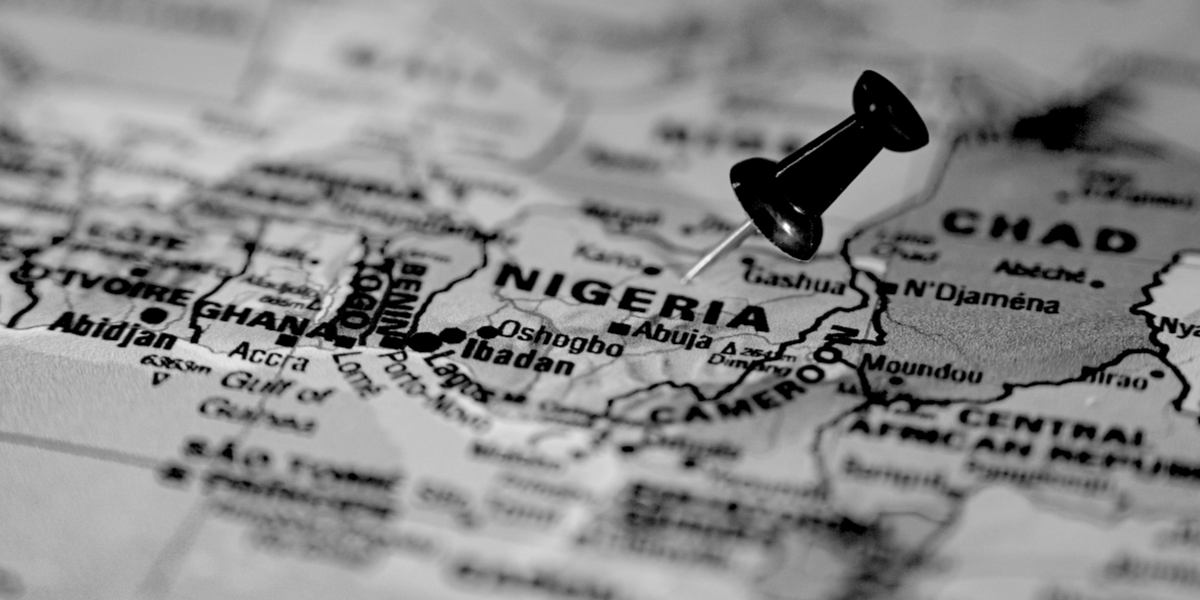
Nigeria accounts for 72 per cent of all Christians killed for their faith worldwide. That is not a regional statistic. That is three out of every four Christians martyred anywhere on earth are dying in a single country. According to Open Doors, out of 4,849 Christians killed for their faith globally in the year ending September 2025, 3,490 were murdered in Nigeria. In the first 220 days of 2025 alone, more than 7,000 Christians were killed, an average of 35 per day.
By and large the rest of the world has ignored this awful persecution but last November US President Donald Trump did what Joe Biden had consistently refused to do and designated Nigeria a ‘Country of Particular Concern’ because it engages in or tolerates ‘particularly severe violations of religious freedom’.
A House resolution introduced in the 119th Congress placed the cumulative toll since 2009 at between 50,000 and 100,000 martyred Christians, with more than 19,000 churches attacked or destroyed. This is not a land dispute or an ethnic conflict that happens to involve religion. In Benue State, 1,310 Christians were killed compared with 29 Muslims in a recent reporting period. In Plateau State, 546 Christians died compared with 48 Muslims. Christians are 2.7 times more likely to be targeted and killed in Fulani militant attacks than Muslims. This is targeted killing of Christian farming communities by organised militant groups, some of which have formal Isis and Boko Haram affiliations.
Trump’s warning was clear: ‘If the Nigerian government continues to allow the killing of Christians, the USA will immediately stop all aid and assistance to Nigeria, and may well go into that now disgraced country “guns-a-blazing” to completely wipe out the Islamic terrorists who are committing these horrible atrocities.
‘I am hereby instructing our Department of War to prepare for possible action. If we attack it will be fast, vicious and sweet, just like the terrorist thugs attack our cherished Christians! Warning: the Nigerian government better move fast!’
The Nigerian government has responded to decades of this violence with promises, investigations, military deployments which arrive after one massacre and leave before the next, and periodic statements expressing concern. The pattern is identical in village after village. Militants arrive at night. They know the community is unarmed. They kill men, women and children. They burn homes and churches. They steal cattle and land. The army shows up days later. Nothing changes. The militants move on to the next village.
The law that has made this possible is Nigeria’s Firearms Act, a colonial-era statute from 1959 that has never been meaningfully reformed, which prohibits civilian possession of the firearms that could provide effective defence. The licensed categories available to ordinary Nigerians are heavily restricted, the licensing process requires presidential or inspector-general approval, and the penalties for unlicensed possession begin at ten years’ imprisonment. The people who need protection most, the Christian farmers of the Middle Belt who are being systematically killed, are legally prohibited from the means of defending themselves.
Meanwhile, the law does not disarm the Fulani militants or the fighters of the Islamic State West Africa Province who attack them. Those groups source weapons from an illicit market that is the largest in West Africa. Nigeria accounts for 70 per cent of the 500 million illegal weapons in circulation in the region. The Nigerian Police Force cannot account for more than 178,000 missing firearms from its own armouries. The Firearms Act disarms the law-abiding and does nothing to disarm the murderous.
Nigerian legal scholars have noted that this firearms law prohibits civilian self-defence while the government demonstrably fails to protect those civilians. This is not a public safety policy. It is a policy which renders certain communities helpless. One Nigerian legal analysis compared the situation directly to historical precedents such as Turkey’s disarmament of Armenians before 1915, the Soviets disarmament of dissidents before the purges and Nazi Germany’s disarmament of Jews before 1939. The details differ but the mechanism is the same. A population which cannot defend itself is a population which depends entirely on the willingness and capability of the state to protect it. When the state will not or cannot do so, that population has no options.
The US Second Amendment (the right to bear arms) is not an American cultural artefact. It is the answer to a question history keeps asking. The question is this: what happens to people who need protection and cannot get it from their government? The answer, everywhere and always, is that they die in the numbers that their killers choose. The American founding fathers understood this from their own experience. They incorporated the guarantee of the right to bear arms into the document to secure all the other rights because they understood that a people who cannot defend themselves cannot ultimately defend any of their freedoms. The Bill of Rights does not create rights. It secures them. The Second Amendment is the one that makes the security of all the others real.
The Nigerian government has a large and moderately capable military. It used that military, alongside American forces, to find and kill one of the most dangerous terrorists on earth this week. That is a genuine capability. The question I would put to the Nigerian government is a simple one: if you have that capability, why do the Christian villages of Benue and Plateau State keep getting massacred while you arrive afterward and express condolences?
And when you demonstrate repeatedly that you cannot or will not protect these communities with your military, by what principle do you also prohibit those communities from protecting themselves?
Praising the joint operation with Nigeria is appropriate. The Isis commander is dead and the world is better for it. But accepting the partnership while staying silent about the 35 Christians dying every day in that same country, many of them dying in part because the law prohibits their self-defence, is an unconscionable moral compartmentalisation. Both things are true. They both deserve to be said.