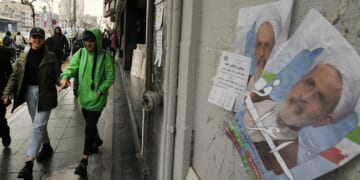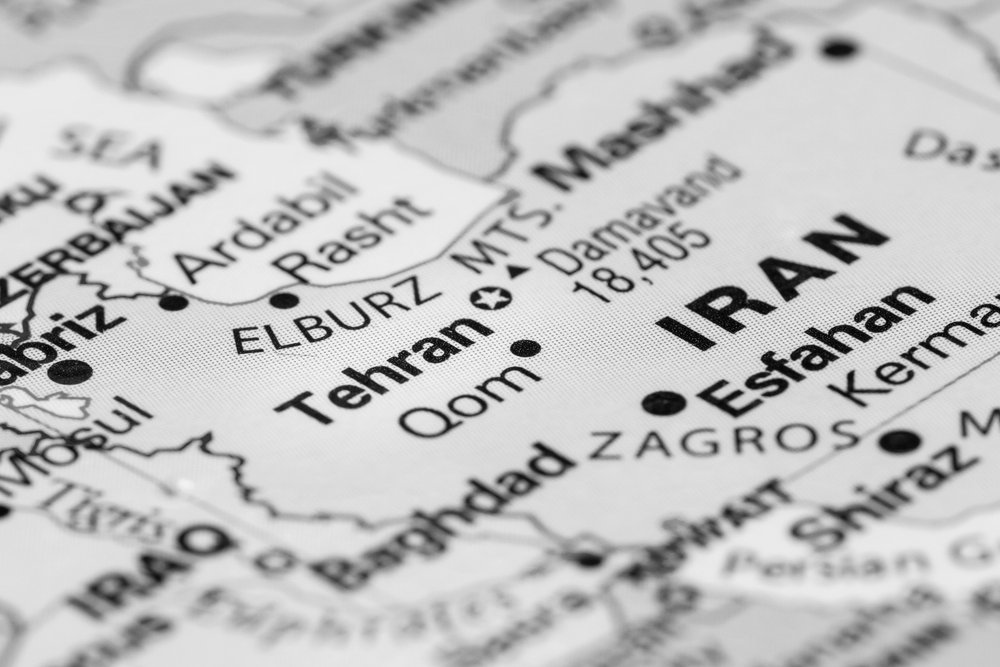
THERE is a three-minute video circulating from Tehran, and it is worth your time to watch it, though not for the reasons the Iranian government intended.
CNN’s Matthew Chance filed the report from inside Iran, operating under government-issued permission while retaining, the network says, full editorial control. That arrangement is itself the first thing you should understand before watching a single frame. What follows is not journalism conducted in spite of the Iranian government. It is journalism conducted at the pleasure of it.
The segment opens with a woman declaring she is ready to die for her country. Western audiences will receive this as patriotism, the kind of statement soldiers and their families make in every nation. That interpretation misses what is actually being said. This is the Twelver Shia theology of martyrdom, dressed for cameras and offered to an international audience that lacks the framework to recognise it. The Islamic Republic was built not on the promise of a prosperous life. It was built on the glorification of a sacrificial one. Death in service of the revolution is not tragedy in their framing. It is the point. That woman is not expressing grief at the prospect of war. She is expressing aspiration. That is what the regime wants you to export back to your living room and call resolve.
Then a man appears on camera. Iran, he says, needs nuclear weapons. Peaceful, he adds. Peaceful.
Then come the anchors with the AK-47s. It shows a woman awkwardly holding a rifle as if (it seems clear) she has no idea what to do with it. Then it shows a man firing a shot into the studio ceiling.
Here is what you need to understand about that image. Iran has 90million people. Tennessee has approximately 7.5million. Iran has fewer privately owned firearms than Tennessee. That is not an accident of culture or geography. The Iranian regime has deliberately kept its population disarmed for the same reason every authoritarian government does: it fears them. The guns are kept from the people not because the people might shoot at Americans. The guns are kept from the people because the people might shoot at the men who control the weaponry.
Those rifles on state television are a performance, and the performers are not intimidating. The entire scene is Tehran’s answer to the question of what propaganda looks like when the budget is gone and the options are running out.
This is what Iran wanted CNN to carry back to the world: crowds, chants, weapons training in public squares, television anchors performing readiness for a war they will not personally fight. It is a message composed for foreign consumption by a government that does not trust its own citizens with the firearms it was waving at the camera.
Now for what is actually happening inside that country, with one honest caveat stated at the outset. Iran has not published GDP data since 2024. The regime’s internet blackout has severed most domestic economic data from outside observation. The government lies as a matter of institutional habit. What follows is built from what the available evidence actually supports, not from what Tehran claims or what the most alarming projections assert.
Start with what an Iranian soldier is paid. The regime’s own Deputy of Public Military Service announced that conscript soldiers receive monthly salaries ranging from $60 to a maximum of $180, structured by location, marital status, and number of children. Documents reviewed by the Times indicate that IRGC soldiers, the regime’s ideological core force, average approximately $300 a month, less than a teacher and roughly half what a computer programmer earns in Iran.
Now translate that number into what it purchases. Food inflation in Iran has breached 115 per cent compared to the same period last year. Semi-official Iranian estimates indicate that a family of three requires at least $400 per month to meet basic needs. The top IRGC salary does not cover that. The bottom conscript salary covers less than half of it.
Americans are watching gas prices approach five dollars a gallon and feeling the pressure in their household budgets. That frustration is legitimate. It is also not comparable with what is happening in Iran, where the question is not whether to cut back on extras but whether to eat meat this month. Overall inflation is running near 70 per cent for the year. An Iranian economist speaking at a Washington panel put monthly inflation in a renewed conflict scenario above 20 per cent, implying annual price increases approaching five hundred per cent.
The blockade is where the story becomes unmistakable in its direction.
Iran exports 90 per cent of its crude oil through Kharg Island for shipment through the Strait of Hormuz. The US naval blockade imposed on April 13 cut off that export route. With nowhere to send the oil, Iran turned to floating storage, clustering ageing and in some cases derelict tankers off Kharg Island to hold crude that had nowhere to go. Analysis from late April calculated that Kharg Island had approximately 12 to 13 days of spare onshore storage capacity remaining at the then-current inflow rate, placing the saturation point in late April to early May. On May 7, US Energy Secretary Chris Wright confirmed that Iran had already cut oil production by approximately 400,000 barrels per day, with further reductions expected as storage continued to fill. We are now 11 days past that confirmation. The storage crisis that analysts were projecting in the conditional tense has become present-tense fact.
The reports of crude being dumped into the Persian Gulf near Kharg Island, visible in satellite imagery, represent exactly what desperation looks like in the petroleum industry. When a country cannot sell its oil, cannot store it, and cannot shut down its wells cleanly without causing long-term damage to the fields themselves, options disappear fast.
One correction worth making plainly: some early reporting described billions of dollars flowing to the IRGC from Strait of Hormuz tolls on passing ships. That revenue stream never existed. Iran announced a toll scheme. The Trump administration responded with the naval blockade. The tolls were an aspiration that met the United States Navy before the revenue rescue could happen.
Now consider the IRGC’s structural position, because this is where the regime’s deepest vulnerability lives. The IRGC is not a military in any conventional sense. It is an economic empire that also has guns. It controls construction companies, port infrastructure, telecommunications networks, and import monopolies. It processed roughly half of Iran’s oil exports before the blockade and built its financial power on that revenue. Without oil moving, without the crypto mining operations that sanctions and strikes have degraded, and without any realistic prospect that Russia or China will underwrite a paramilitary empire at the scale required to keep it functioning, the IRGC faces something that no amount of ideology resolves: payroll. An institution whose loyalty is purchased rather than genuinely given cannot survive that arithmetic for long. Authorities have already been reported to be worried about making it.
The historical comparison here is not rhetorical decoration. The Shah of Iran was not removed from power simply because Iranians became ideologically committed to Khomeini. He was removed in part because bread prices made daily life intolerable and the distance between what the regime promised and what citizens could actually afford became impossible to paper over. The Arab Spring a generation later followed identical logic across North Africa and the Levant. Those were not primarily democracy movements in their origins. They were hunger movements that became political ones when enough people decided that the risk of the street was lower than the certainty of the kitchen.
Regimes that cannot feed their populations lose the quiet, daily consent that keeps order without requiring constant force. The Iranian government understands this. That is why it is holding rallies it is paying for with money it does not have. That is why it arranged for a CNN camera to capture a woman talking about dying for her country rather than talking about what she ate for dinner. The regime needs the story to be about sacrifice and enemies. The alternative story, the one told by empty shelves and a currency worth a fraction of what it was five years ago and a fitness instructor who cannot buy meat, is the story that ends governments.
There are rich Iranians. The fast-food restaurants in downtown Tehran still have customers. The regime has its loyalists, its beneficiaries, its true believers. None of that changes the direction of travel. The majority of 90million people are living through an economic collapse being managed in real time by a government conducting weapons demonstrations on state television instead of answering for it.
They are not handing the people guns because they know exactly what the people would do with them.
The broadcast Iran wanted you to see was three minutes of performance. The story behind it is considerably longer, and it does not end well for the performers.
UPDATE: Even as I wrote this, I saw Trump writing on Truth Social that he had planned to attack tomorrow, but due to pressure from friends in other allied governments, he was going to give peace one more chance.
This is not the first time this has happened. It may not be the last, but I do think we have the strike packages prepared, and Trump won’t let the status quo continue for the summer.
Based on my understanding, Iran cannot let it continue either. What I am praying for is a resolution that removes not just the enriched uranium, but the lying and murdering regime that made it.
Keep praying.