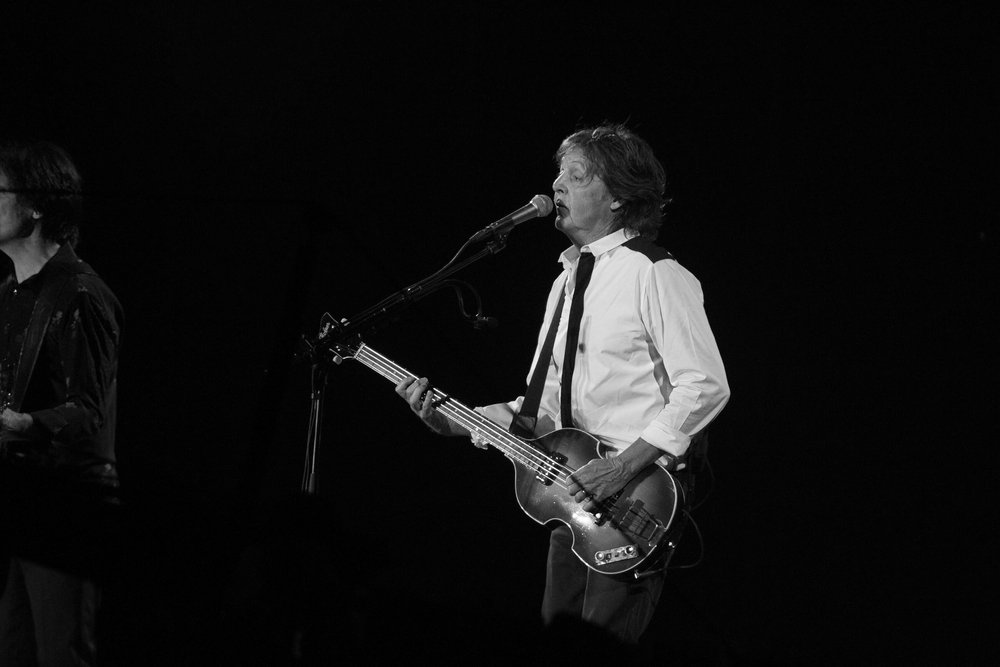
IN A nation in the midst of a social disaster, an 83-old-year British pop star of whose moral influence any sensible person should strongly disapprove has created a masterpiece.
It was a strange experience for a conservative Christian like me to listen to Paul McCartney’s latest album, The Boys of Dungeon Lane. He was one of the evangelists for the permissive society in the 1960s, particularly in popularising cannabis as a recreational drug.
Shortly after she launched The Conservative Woman, Kathy Gyngell described the devastating effects of this drug on young people in an article headlined ‘How much evidence do we need? Cannabis wrecks young lives’. In 2015 she wrote: ‘I have always loathed cannabis and what I’ve seen it does to people. From my very first encounter at university when I watched the making and the passing of the spliff ritual, I thought it was pathetic and that the people doing it were boring . . . So when, as a mother, I encountered teenage boys using the evil weed I was alarmed . . . Since then I have observed one tragedy after another: some in families anguished by their own naivety that they became aware of drug-taking or its risks too late; others distraught at the life-time sentences to which they and their sons had been condemned.’
McCartney cannot evade the responsibility he shares with the other architects of the permissive society of the 1960s in promoting this evil in Western society. I remember when I was 15 the Matron of Busby’s House at Westminster School excoriating McCartney when he was arrested in January 1980 for marijuana possession at Tokyo International Airport while he was touring with his band, Wings. He spent nine days in custody and could have got seven years’ hard labour for the offence, but after considerable diplomatic pressure the Japanese authorities chose not to prosecute the case and instead deported him. What a bad example he was setting to young people, Matron said. To criticise McCartney in front of a teenage Beatles fan was practically blasphemous then but Matron was of course quite right. A friend of mine suffered serious mental illness after smoking pot from the age of 14.
McCartney’s latest album describes the society before the disaster of the 1960s unfolded, the Britain of his early childhood in the 1940s when his devout Christian mother, Mary McCartney, worked as a nurse midwife in Liverpool.
McCartney’s website is unashamed about the retrospective intent behind the album: ‘These new songs find Paul in a candid, vulnerable and deeply reflective mood, writing with rare openness about his childhood in post-war Liverpool, the resilience of his parents, and early adventures shared with George Harrison and John Lennon long before the world had ever heard of Beatlemania. These were the years that historians continue to examine, the quiet, unguarded days that unknowingly laid the groundwork for a cultural revolution. Paul visits them not as myths or folklore but as his own memories.’
The song Days We Left Behind arguably contains the best lyrics McCartney has ever written:
‘Looking back at white and black, reminders of my past
Smoky bars and cheap guitars, but nothing built to last
Nothing ever stays
Nothing comes to mind
No one can erase
The days we left behind
See the boys of Dungeon Lane, along the Mersey shore
Some of them will feel the pain, but some were meant for more
In the skies, the skylarks rise above the sounds of war
Since that day, I knew they’d stay with me for ever more . . .’
Was that line inspired by his early childhood memories of the devastation caused by the Nazis’ bombing of Liverpool in the Second World War?
McCartney was 14 when his mother died of breast cancer in 1956. The song on the new album Momma Gets By seems to be a description of the Christian ethos of service and sacrifice his mother exemplified:
‘Momma gets by while papa gets high
She makes enough to raise a family
She’s working all day
To bring in the pay
She’s taking good care of me
Giving me every opportunity
And if it rains
She never complains
She’s tough enough to make it through the storm
Papa gets back
And heads for the sack
As soon as he steps inside the kitchen door
But she doesn’t mind
She’s seen it all before
She doesn’t care
She’s got her own philosophy of life
It wasn’t too long ago that she agreed to be his wife . . .’
One wonders in the light of this astonishing record by an apostle of the 1960s whether McCartney is in danger of defecting from the permissive society and embracing the Christianity of his remarkable mother.