This is the third in a three-part series. You can read the first two instalments here.
VIII. Who should pay, and why
Let’s talk about what the current model costs and who is actually paying for it.
The United States currently operates two carrier strike groups in the region at approximately $6.5million per day each per strike group, putting the combined daily bill at roughly $13million (£9.8million), a figure that has been running for months and by mid-March had already exceeded half a billion dollars before accounting for additional surface ships, submarines, and air assets supporting the operation.
But that number requires an honest asterisk. A large portion of those costs exist whether the Abraham Lincoln is patrolling off Oman or conducting exercises in the Pacific. The sailors get paid either way. The reactors keep running either way. The ships are maintained either way. The marginal cost of the deployment is real. The capital cost of the fleet is a sunk expenditure regardless of where it sits. The honest framing is not that America is spending $13million a day to keep the strait open. It is that America is spending $13million a day on ships that cannot be anywhere else while they are there, committing its most powerful naval assets to a threat environment those assets were not optimally designed to handle, against fiberglass swarm boats and tethered mines, while the nations who benefit most from the open corridor pay nothing toward the effort.
The United States is not being reimbursed. Not by the UAE, whose LNG revenues depend entirely on the strait being open. Not by Qatar. Not by Japan, South Korea or India. Not by Europe. America is subsidising the energy security of the entire Indo-Pacific trading system and the Gulf monarchies simultaneously, with ships that were already paid for, and collecting nothing for the service.
Lloyd’s of London is collecting something. Putin is collecting something. Iran is collecting leverage. The United States is collecting the bill.
The privateer model corrects this at every level simultaneously. The United States provides the legal architecture: the letter of marque authorisation from Congress, the targeting data, the ISR overhead, and the international diplomatic cover that makes the operation legitimate under the law of nations. American satellites and reconnaissance assets feed the targeting picture to contracted teams in real time. That is the American contribution, and it is largely infrastructure that exists and operates whether deployed to this mission or not.
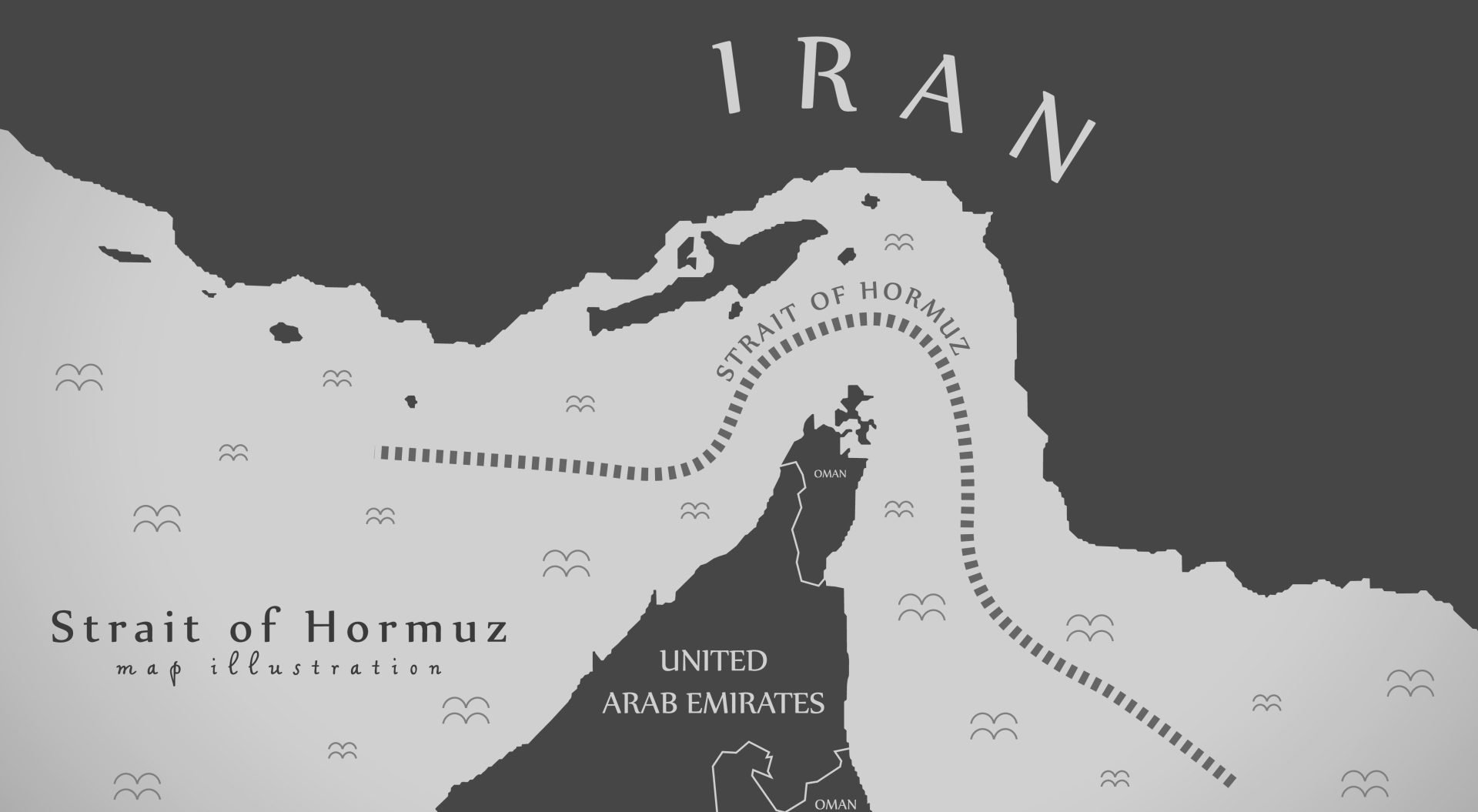
The funding comes from the nations that need the strait open most desperately. About 96 per cent of the UAE’s LNG exports transit through the strait. Qatar faces the same cliff. These are wealthy governments watching billions evaporate every month while Lloyd’s and Vladimir Putin collect the proceeds of their misery.
The conversation with Abu Dhabi is straightforward: an open strait is worth how much to you per month? The answer is a number with a lot of zeros. A billion dollars to eliminate the IRGC naval threat and $50million per month retainer to keep the strait open and secured is a rounding error against the LNG revenues that resume the moment the corridor is cleared. It is also a fraction of what the UAE currently pays in war risk premiums to Lloyd’s for the privilege of not quite getting its ships blown up.
Instead of that money flowing to towers in the City of London, it flows to the men maintaining their weapons, their drone boats, and their willingness to end any threat to the shipping lanes that are also their livelihood. The privateer force is self-sustaining because it is paid to keep open the thing that pays them to keep it open. That alignment of incentives is what Lloyd’s will never have and what a letter of marque makes structurally possible.
The UAE gets an open strait. Qatar gets its LNG exports back. India and South Korea get energy security. Russia stops collecting its windfall. Iran loses its leverage. The United States gets its carrier groups back for the missions they were designed for. And the men who risk their lives to make it happen get paid by the people who benefit most directly from their work.
IX. Call Erik Prince. Write the letter.
Prince is the founder of private military contractor Blackwater. https://en.wikipedia.org/wiki/Erik_Prince Put $50million on his leadership and a billion-dollar bounty pool for his teams. The man built a private army from scratch and ran logistics in some of the most hostile environments on earth. He lives in a place deeply impacted by this war and the closure. He knows how to organise lethal operations with private capital and minimal bureaucratic friction. You may disagree with everything else about him. He would have the IRGC mosquito fleet degraded within weeks, the mine clearance corridors opened within the same window, and the combined threat eliminated within months.
The Republican Congress is supposed to believe in American power, economic common sense, and the constitutional tools the founders gave them. Letters of marque are not a fringe idea. They are in the document. Washington and Adams tried paying tribute to the pirates threatening American commerce. The ransoms kept escalating. Jefferson stopped paying and started fighting. The lesson was learned two centuries ago and apparently needs to be learned again.
Stop paying Lloyd’s. Stop enriching Putin. Stop letting Iran collect leverage from a waterway it has no legitimate authority to close.
The founders wrote the letter of marque into the Constitution because they understood that the most efficient solution to a threat on the water is a motivated man in a capable boat who gets paid when the threat is dead and keeps getting paid as long as it stays that way.
Congress should write the letter. The UAE should fund it. The men will find the boats. The drones will clear the path.
Watch and pray.