AS WE enter July, my thoughts have been straying back to the shadows of corrupt and cover-up government, evident well before covid and lockdown, and to an anniversary – the unresolved death of Dr David Kelly, the highly respected British weapons expert and former UN inspector whose body was found in an Oxfordshire wood 23 years ago.
Readers will recall that in May 2003, he had an off-the-record conversation with BBC journalist Andrew Gilligan during which Kelly expressed unease about the 2002 Iraq weapons of mass destruction dossier, alleging that the government had ‘sexed up’ the intelligence to make it more compelling for war. When Gilligan broadcast this on the BBC Radio 4 Today programme, it triggered an explosive political war between the corporation and Prime Minister Tony Blair’s administration involving communications director Alastair Campbell. The government publicly outed Dr Kelly and forced him to appear before a hostile parliamentary Foreign Affairs Select Committee. Two days later, on July 17, 2003, Dr Kelly was found dead in woodland near his home in Oxfordshire.
To say this was an electrifying moment of Tony Blair’s decade in Downing Street is an understatement. Its sinister detail still has the power to shock today. All the more so because Blair’s fixers saw to it that no coroner’s inquest was ever held so it remains unresolved.
In 2018, I interviewed Miles Goslett, author of An Inconvenient Death: How the Establishment Covered up the David Kelly Affair. You can read the interview here.
Goslett’s book sets out in brilliant detail why the official non-statutory inquiry into this appalling event, chaired by Lord Hutton, was flawed.
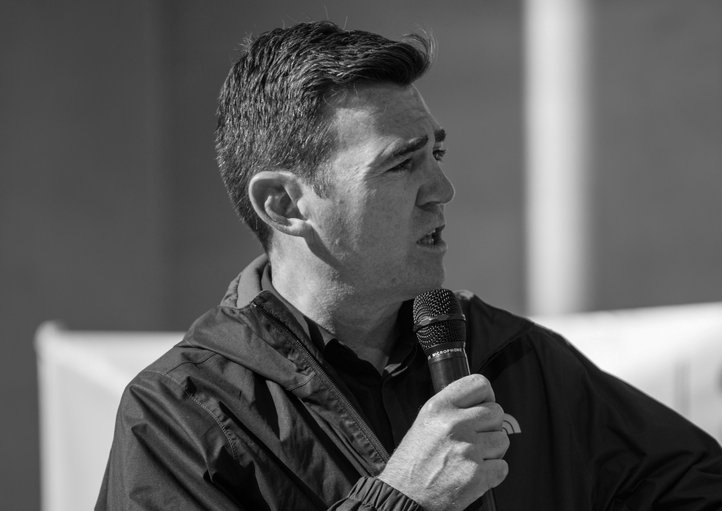
With the imminent arrival of Andy Burnham to the highest office in the land, I wondered whether he, then a young Labour MP, had ever said or done anything in relation to Dr Kelly’s death. What I discovered, and it is not to his credit, is that in January 2004 – a few months after Dr Kelly’s death, when the Hutton Report was published – Burnham tabled a toadying parliamentary motion defending Blair’s government from scrutiny and criticising journalist Rod Liddle, a former editor of the Today programme, for having the temerity to raise questions about Hutton’s probity during a Sky TV interview.
This is Burnham’s Early Day Motion: ‘That this House calls on Mr Rod Liddle to apologise to Lord Hutton for impugning his reputation on Sky television since if the report had criticised the Government, no doubt Mr Liddle would have accepted its conclusions; notes that, the report having entirely vindicated the Government, Mr Liddle described the report as “surreal” and that he further said that judicial enquiries always end up backing the Government; believes that this is a slur on Lord Hutton’s reputation, integrity and record; calls on Mr Liddle to withdraw those comments, admit the report was independent and have the good grace to recognise its findings were based on the evidence; hopes that this report will mark a watershed in relations between politicians and the media, moving to a debate based on respect for each other’s opinions and adherence to the facts; and further hopes that the rest of the media will not follow the example of Mr Liddle, who hired Mr Andrew Gilligan and was largely responsible for creating the culture of the Today programme which was so strongly criticised by Lord Hutton.’
Had Burnham known when he rushed to table this motion just how slipshod Hutton actually was – as Goslett shows so effectively in his book – would he have committed those thoughts to Hansard? Would he have cared? I rather doubt it. It speaks volumes about him that his mind was so closed to the possibility of anything other than the Establishment line on something that looked like a cover-up at best.
I have only just discovered that after Goslett’s book was published, he made a ten-part podcast on the Dr Kelly affair with producer Sam Eastall. In a media market saturated with podcasts it stands out. It is very listenable whether you just like mysteries or are deeply suspicious of government. It’s available free of charge on platforms including Spotify. It’s my top recommendation for a summer listen – and maybe, just maybe, it will spark a memory from someone in a position to fit another piece into the final-days jigsaw puzzle that Goslett painstakingly constructed.
You can find it here.